
When the votes are being counted — or in this case, the voters — every political party suddenly has opinions. And in Arunachal Pradesh right now, those opinions are getting very loud.
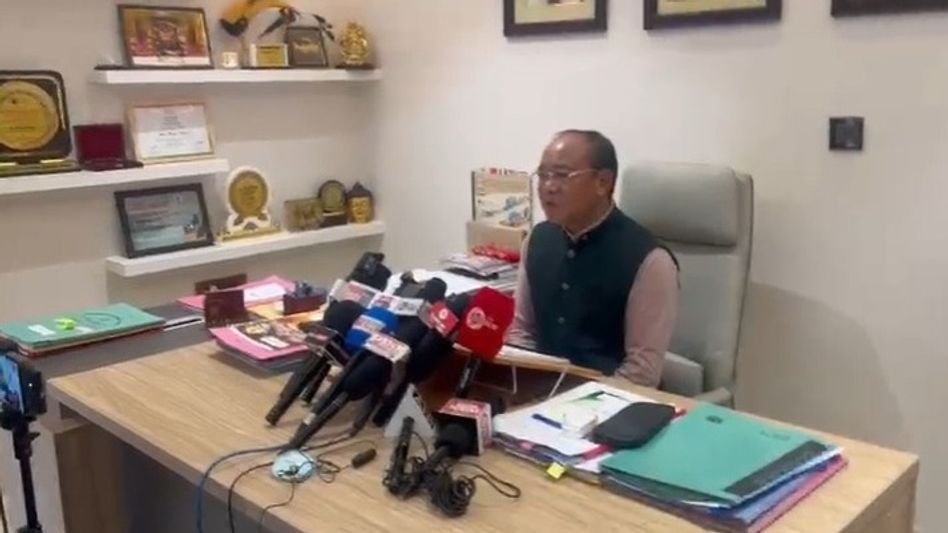
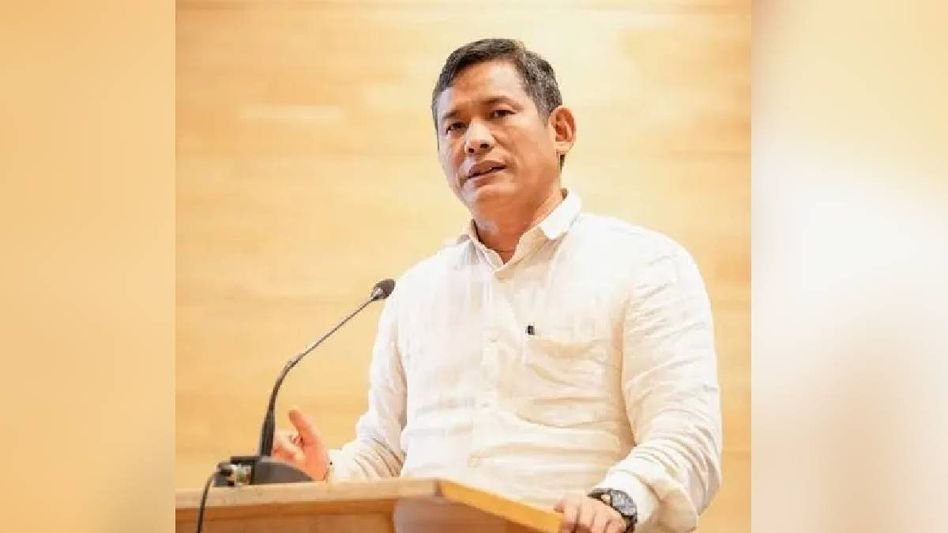
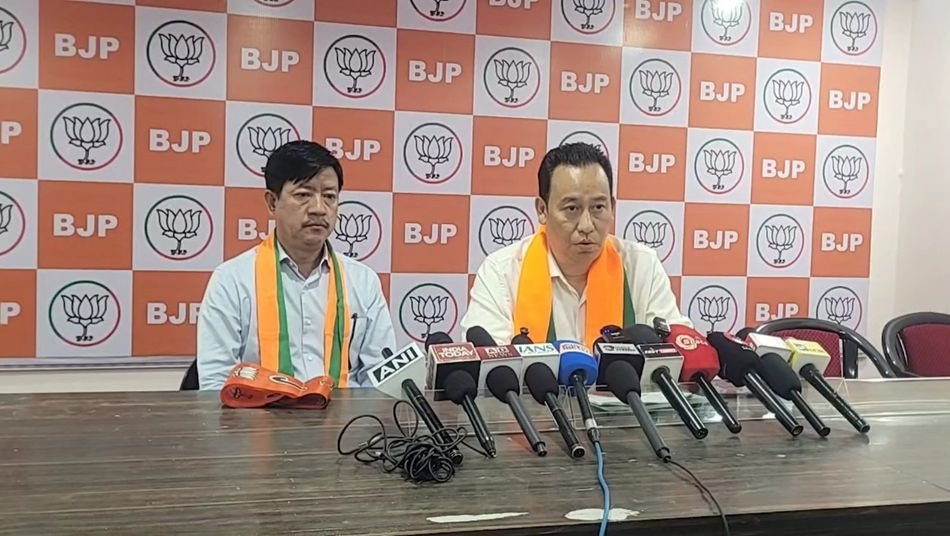
BJP MLA and party state spokesperson Topin Ete stepped before the cameras in Itanagar on Sunday, October 4, with one clear mission — shut down what he called a campaign of misinformation being run by the Congress and other opposition parties against the Special Intensive Revision (SIR) of electoral rolls. He didn’t mince words. The allegations, he said, were misleading, politically driven, and — perhaps most damaging — an attempt to erode public trust in India’s democratic institutions.
The Special Intensive Revision of electoral rolls is not a new concept. It’s a structured, legally prescribed process carried out under the supervision of the Election Commission of India (ECI) to verify, update, and clean up voter lists. It involves door-to-door verification, addition of new eligible voters, deletion of deceased or relocated voters, and general corrections to existing entries. In theory, it’s a housekeeping exercise every democracy needs. In practice, in the current political climate, it has become a battlefield.
Ete, who is also the BJP’s SIR co-in-charge for the state, took centre stage at the press briefing to defend both the ECI and the process itself. He maintained that the revision had been conducted transparently and in full accordance with prescribed procedures. Every step had been followed. Every concern, he insisted, had been addressed during the course of the exercise.
The opposition, however, had been raising red flags — questioning discrepancies, alleging manipulation, and suggesting that the revision exercise was not all it was being made out to be. These are serious charges in any democracy. The integrity of the electoral roll is, in many ways, the foundation of free and fair elections. If voters are arbitrarily removed or new names suspiciously added, the entire system of representative democracy wobbles. That’s not hyperbole — that’s the stakes.
Which is exactly why the BJP spokesperson’s response carried such weight. He pointed out that the process had reached its formal conclusion with the publication of the final electoral roll. The timeline had passed. The work was done. Raising allegations at this stage, he argued, wasn’t about accountability — it was about politics.
There’s something worth pausing on here. Topin Ete’s framing was deliberate and calculated. He didn’t just defend the process; he went on the offensive. The BJP leader accused the opposition of weaponising public doubt — of choosing to attack democratic institutions not because they found genuine flaws, but because it served a political narrative. Whether that reading is fair or not, it is certainly a pointed one.
“Political parties should focus on issues affecting citizens,” Ete said, rather than making claims that could undermine public confidence in the very institutions that make democracy possible. It’s a line that will resonate differently depending on which side of the political aisle you’re sitting on. For BJP supporters, it reads as a principled defence. For Congress and the opposition, it will likely be seen as deflection.
Ete was equally firm on the question of evidence. Allegations against the SIR exercise, he said, must be backed by verifiable proof — not political assertions. It’s a fair standard, really. In any debate about electoral integrity, specificity matters enormously. Broad claims of manipulation without specifics tend to generate heat, not light.
The broader context here is important to understand. The SIR controversy in Arunachal Pradesh is not happening in a vacuum. Across India, opposition parties — primarily the Congress — have raised similar concerns about the electoral roll revision process in various states. The debate touches on fundamental questions: Who gets to vote? Whose name stays on the list? Who decides? These are not abstract questions. For the people of Arunachal Pradesh, a state with its own unique demographics, geography, and governance complexities, they are deeply practical ones.
Arunachal Pradesh has long been a BJP stronghold. The party’s grip on the state’s political landscape is substantial, and it is perhaps that very dominance that makes the Congress’ posture understandable — opposition parties often have little to gain by silence and everything to gain by keeping scrutiny on the ruling establishment. But Ete’s counter-argument holds too: scrutiny must be grounded in specifics if it is to serve the public rather than simply the party.
The publication of the final electoral roll draws a line in the sand. The SIR process, at least formally, is behind Arunachal Pradesh now. What remains is the political fallout — and the question of whether the allegations raised by the Congress will find traction with ordinary voters or quietly fade away as the next news cycle takes over.
Topin Ete’s press conference was, at its core, a message to the people of Arunachal Pradesh: trust the system, trust the Election Commission, and do not be swayed by what the BJP sees as manufactured outrage. Whether voters will take that message to heart remains to be seen.
But one thing is clear. When it comes to electoral rolls and who gets to cast a ballot, no political party in India is willing to cede an inch. And in Arunachal Pradesh, that fight is very much alive.