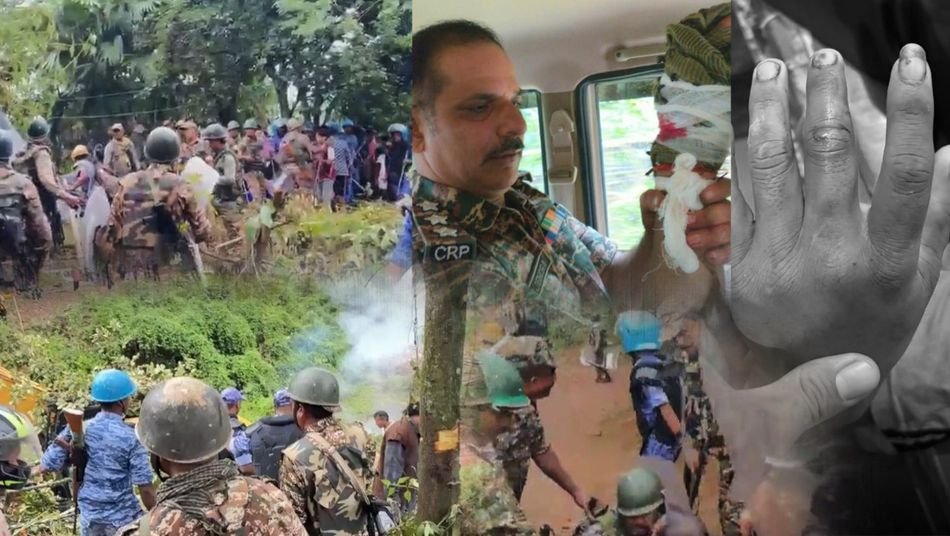

Clashes between anti-dam protesters and CRPF personnel at Riga and Ugeng have pushed the Siang Upper Multipurpose Project controversy to a dangerous new edge — and the state government is now scrambling to cool things down before they spiral further out of control.
The hills around the Siang valley have never been particularly quiet when it comes to the dam debate. But what happened at Riga village recently crossed a line that the Arunachal Pradesh government simply could not ignore. Protesters clashed with Central Reserve Police Force (CRPF) personnel deployed during survey work linked to the proposed Siang Upper Multipurpose Project (SUMP), leaving several people injured — including an Assistant Commandant and other paramilitary personnel. The exact numbers remain officially unconfirmed, but the incident was serious enough to draw a sharp response from the state’s top cop in the cabinet.
Home Minister Mama Natung stepped in, and he wasn’t mincing his words.
“Do not take law into your own hands,” Natung said, in a direct address to those agitating against the project. His message was clear — grievances are valid, but violence is not the answer, and attacking security forces is something the government cannot and will not overlook.
A Survey, Not a Death Sentence for the Valley
At the heart of the current tensions lies a deep mistrust between local communities and the government over what the ongoing Pre-Feasibility Report (PFR) actually means. Many protesters seem to believe that allowing survey teams into their villages is tantamount to accepting the dam. Natung pushed back firmly on that interpretation.
“The PFR is just a survey to know the capacity and feasibility,” he said. “If found negative, we can abolish the project.”
It sounds like a reasonable reassurance. But for communities in the Siang belt — people whose land, livelihoods, ancestral forests, and river-dependent way of life hang in the balance — a government saying “trust us, it’s just a survey” doesn’t quite cut through decades of accumulated anxiety about big dam projects in the Northeast. That history is long and bruising. No one in those villages needs reminding.
Still, Natung’s point stands technically. A pre-feasibility report is exactly what it says it is — a preliminary technical evaluation. It doesn’t bulldoze homes. It doesn’t sign construction contracts. If the survey returns negative findings, the project can indeed be shelved. The problem is perception, and right now, perception in the Siang valley is running hot.
Riga: The Incident That Sparked the Latest Alarm
The flashpoint at Riga village is being taken seriously at the highest levels. Natung specifically condemned the attack on paramilitary personnel there, calling it “condemnable” — a strong word in political parlance. When a Home Minister uses that term about incidents in his own state, it signals genuine alarm, not just routine condemnation.
Clashes were also reported from Ugeng, another location where survey teams had gone in to conduct PFR-related work. The pattern emerging across both sites is the same: teams arrive, locals resist, tensions boil over, and someone ends up injured. This is not a sustainable situation — not for the communities, not for the personnel deployed, and certainly not for a state government that is already walking a tightrope between national strategic interests and local democratic resistance.
Dialogue Is the Only Road That Doesn’t Lead to a Cliff
Natung didn’t just condemn. He also extended an olive branch. He called on anti-dam groups to sit across the table with the government and air their concerns through proper channels. “I urge all the anti-dam protesters to sit and talk with the government regarding their grievances,” he said, adding that Chief Minister Pema Khandu’s administration would not let the people down.
Whether that assurance lands well among communities who feel the state has repeatedly sidestepped their concerns is another question entirely. Protests against the SUMP have been sustained, organised, and deeply rooted — not spontaneous flare-ups. People in the Siang region have been vocal about their fears over displacement, the destruction of biodiversity, the loss of ancestral territories, and the long-term impact on the river ecosystem. These aren’t fringe concerns. They are the core identity of entire communities.
The minister also offered what might be his most quotable line of the day: “Only peace can bring development. If there is no peace, there is no development.” It has the ring of a poster slogan, but the underlying logic is sound. A project implemented against the will of thousands of people, in a conflict-riddled environment, with injured paramilitary personnel making news — that is not development. That is a recipe for prolonged unrest.
What Comes Next
The state government has maintained that the PFR process is routine and that no final decision on the SUMP exists yet. That may be factually accurate, but trust — once eroded — doesn’t rebuild itself through press statements alone. The communities of Siang deserve genuine, structured, and transparent dialogue. Not reassurances from a distance.
For now, the Siang valley is tense. Survey teams are moving in. Protesters are pushing back. And the government is asking everyone to keep the peace.
The real question is whether anyone in a position of power is ready to truly listen — before the next clash at the next village makes the choice even harder.