
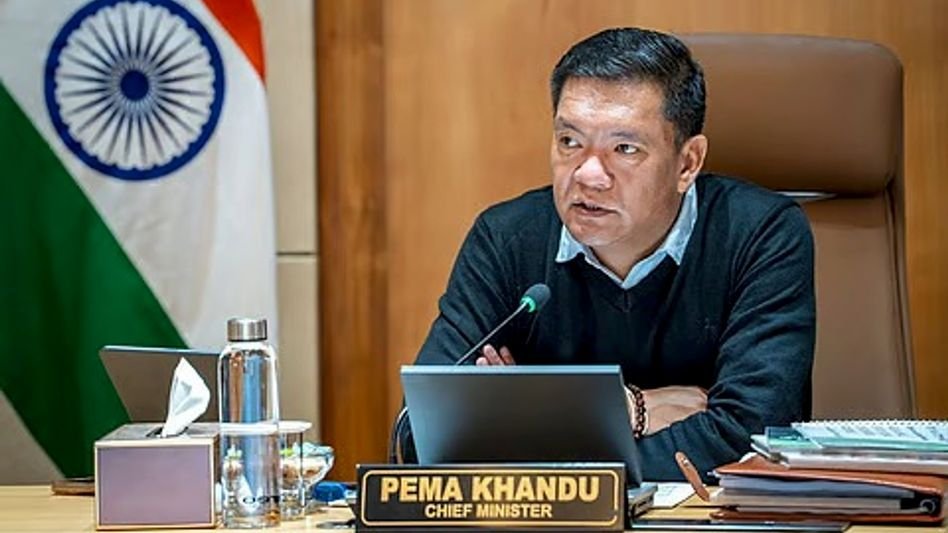
September 11 carries a lot of weight. For most people, the date immediately evokes a very different kind of memory. But in Arunachal Pradesh on Thursday, Chief Minister Pema Khandu reminded everyone that this date also belongs to something quietly profound — a young monk from India who walked into a hall in Chicago in 1893 and changed the way the West thought about humanity.
Marking Universal Brotherhood Day, Khandu paid tribute to Swami Vivekananda’s landmark address at the World’s Parliament of Religions, delivered exactly 133 years ago. The speech — which opened with Vivekananda addressing the audience as “Sisters and Brothers of America” — drew a standing ovation that lasted several minutes. It wasn’t just rhetoric. It was a shift.
Khandu’s message on Thursday was simple but deliberate. He said Vivekananda carried to the West a timeless idea rooted deep in Indian thought — Vasudhaiva Kutumbakam, the ancient Sanskrit principle that the entire world is one family. Not a slogan. Not a diplomatic nicety. An actual way of seeing the world.
What’s worth noticing is how Khandu framed it. He didn’t just repeat the usual tribute lines. He emphasized something more nuanced — that Vivekananda’s teaching was never about flattening differences or demanding everyone be the same. It was about harmony that makes room for difference. Respect without erasure. That’s a harder thing to practice, and probably why it still feels unfinished.
“May we keep alive this spirit of India, one that celebrates diversity, and recognises the oneness of humanity,” the Chief Minister wrote in a social media post on Thursday.
Deputy Chief Minister Chowna Mein joined in, also paying tribute to the monk whose words, he said, continue to inspire people well beyond the boundaries of any religion or region.
Arunachal Pradesh, it’s worth saying, is not a state you’d pick as an unlikely place for such a message. It is one of the most ethnically and culturally diverse states in the country — home to dozens of tribes, languages, and belief systems coexisting in the same geography. So when a leader from this land speaks about universal brotherhood, there’s a certain authenticity to it. It’s not borrowed language.
The observance of September 11 as Universal Brotherhood Day is specifically tied to that Chicago moment in 1893. Vivekananda’s emphasis on tolerance and acceptance didn’t just bring attention to India’s spiritual traditions — it introduced the West to the idea that no single path held a monopoly on truth. That was radical then. In parts of the world today, it still is.
Vivekananda lived only until 39. He packed more thought into those years than most manage in twice the time. And yet what survives him isn’t complexity — it’s the cleanest possible idea: that human beings, in their dizzying variety, are still one. Not despite their differences, but somehow because of them.
That idea is easy to nod at and very hard to live. But it keeps coming back. Maybe because the world keeps needing it.