When the Vice President of India visits your state, you’d expect the principal opposition party to at least get a seat at the table. That didn’t happen in Arunachal Pradesh — and the Congress is furious about it.
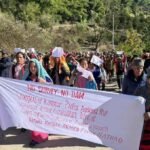
The Arunachal Pradesh Congress Committee (APCC) came out swinging on September 9, publicly protesting what it called a deliberate denial of access to Vice President C P Radhakrishnan during his two-day visit to the state. The party had wanted to hand over a memorandum packed with urgent concerns — border security, dam projects, indigenous rights, frontier road connectivity. Instead, it was left standing outside.
APCC president Bosiram Siram did not mince words. He said the party had formally requested an appointment through the Chief Secretary all the way back on September 4 — five days before the visit — and heard nothing back. Not a yes, not a no, just silence. He called the snub “deeply unfortunate” and raised the obvious question: why would the ruling establishment deny the state’s principal opposition party the basic opportunity to place the people’s concerns before a constitutional authority?
It’s a fair question. And the answer, whatever it may be, speaks volumes.
The memorandum the APCC had prepared was no small thing. At the top of the list was a demand for a dedicated Arunachal Regiment — a move the party believes would give local youth, especially those from far-flung frontier districts and villages, a meaningful path into the armed forces. Jobs and national security, in one shot. The Congress also called for an all-party parliamentary delegation to make the trek to Taksing and other vulnerable border areas, arguing that policymakers need to see the ground reality firsthand — the connectivity gaps, the strain on border communities, the state of essential services.
Road connectivity to Taksing featured prominently too. All-weather roads, reliable medical and educational facilities, emergency services — these aren’t luxuries in frontier areas. They’re the baseline of a functioning state, and the Congress says they remain painfully absent.
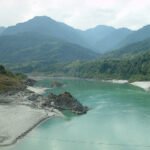
On the sensitive question of dams, the party held its ground. The APCC reiterated its firm opposition to the proposed 11,200 MW Siang Upper Multipurpose Project, the massive dam scheme that has been a flashpoint for communities along the Siang river. The party cited seismic risks, ecological damage, downstream disaster potential, and the threat to indigenous land and cultural heritage. It demanded a complete halt to the project’s advancement until an independent, transparent assessment is done — covering everything from rehabilitation needs to cumulative basin-level environmental impact.
The Congress also pushed for a comprehensive amendment to Article 371H to strengthen constitutional protections for Arunachal’s indigenous people — their land, forests, water, customary practices, traditional institutions, and cultural identity.
These are not peripheral demands. They go to the heart of what Arunachal Pradesh is, and what its people are worried about. And yet, the party was not allowed to formally place any of this before the Vice President.
Whether this was an administrative oversight, a political calculation, or plain indifference — the APCC is not willing to let it slide quietly. Rightfully so. An opposition that cannot speak is a democracy that cannot breathe.