
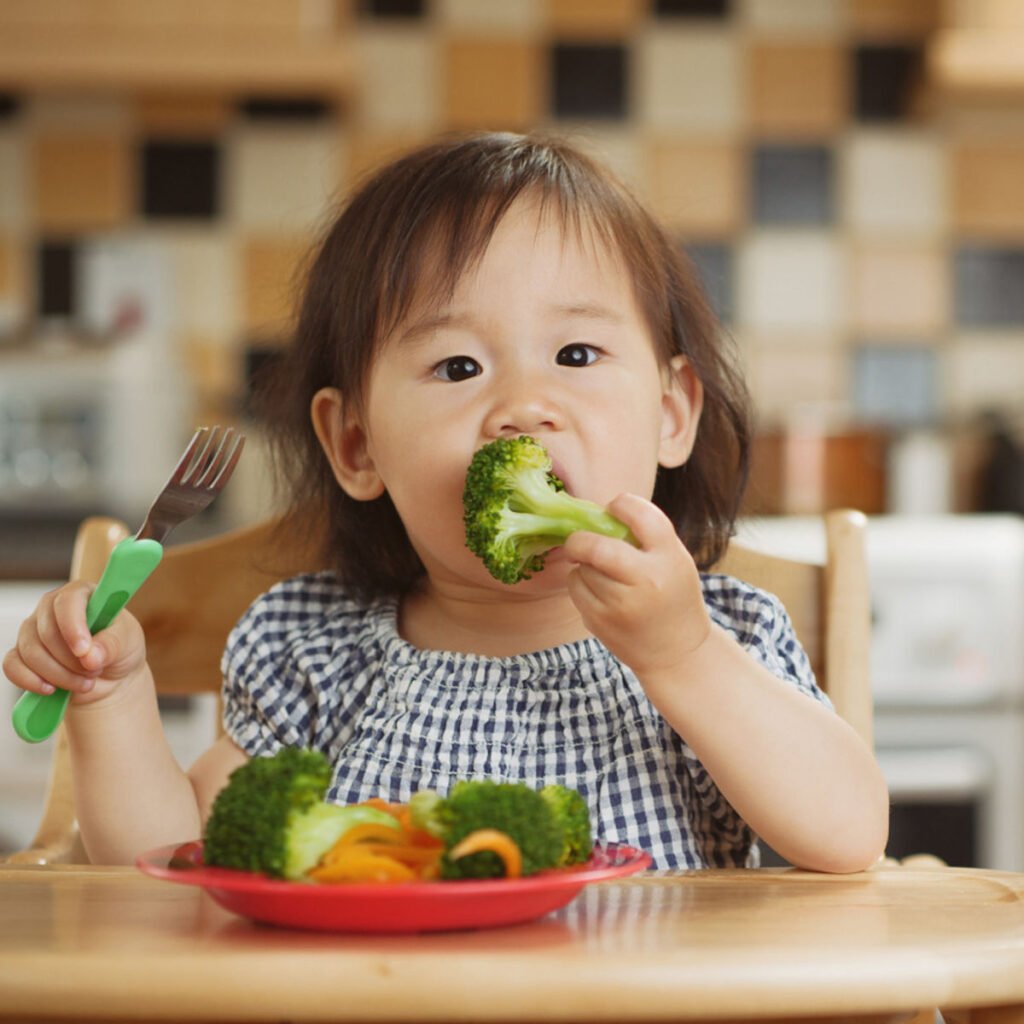
Dinner is on the table, the broccoli is right there, and your toddler has already pushed the plate away before you even sit down. If this scene plays out in your house most nights, you are not doing anything wrong. Learning how to get a toddler to eat vegetables without a fight is one of the most common challenges parents face, and the good news is that it rarely requires a new recipe or a clever trick. It requires a calmer approach, a bit of patience, and a strategy that respects how toddlers actually learn to eat. Your job is to keep vegetables on the table and mealtimes pleasant.
Why Toddlers Refuse Vegetables in the First Place
Before fixing the problem, it helps to understand it. Toddlers are not being difficult on purpose. Their taste buds are more sensitive than yours, so bitter flavors in vegetables like broccoli, spinach, and Brussels sprouts taste much stronger to them. Their brains are also wired to be cautious about new foods, a leftover survival instinct from a time when a small child who ate an unknown plant could get seriously ill. This caution usually peaks between the ages of two and four, which is exactly when most parents start worrying.
Control is another big factor. A toddler controls very little in life. Adults decide when they wake up, what they wear, and where they go. Food is one of the few things they can say no to, and they know it. When a parent pushes harder, the toddler pushes back harder, and the vegetable becomes a battleground instead of just food. That is why pressure almost always backfires. Appetite also varies day to day: some days a toddler eats like a teenager, and other days they survive on crackers and air. Both are normal.
The Mindset Shift That Changes Everything
The single most useful idea in feeding toddlers comes from dietitian Ellyn Satter and is called the division of responsibility. Parents decide what food is served, when meals happen, and where they happen. Children decide whether to eat and how much. That is the whole deal. When you take this seriously, mealtimes get dramatically easier, because you stop trying to control the part that was never yours to control.
In practice, this means you put vegetables on the table without a speech, a bribe, or a bargain. You eat your own vegetables with visible enjoyment. You do not comment on whether your child eats them. You do not count bites or praise a child for eating a pea. Praise turns eating into a performance, and performances create pressure. A calm, boring reaction to both eating and not eating is far more powerful than any reward chart. Accept a longer timeline too: a toddler may need to see a food ten, fifteen, or even twenty times before tasting it willingly, and every quiet encounter counts.
If you are also dealing with food being thrown or pushed around at meals, the same calm approach applies. Our guide on how to stop a toddler throwing food without punishment covers practical ways to handle mealtime behavior without turning dinner into a power struggle.
Repeated Low-Pressure Exposure: The Real Secret
Research on children and food is consistent on one point: familiarity is the strongest tool you have. Children learn to like foods they see often, in a relaxed setting, with no one watching them eat. The exposure does not even have to involve eating. Smelling, touching, squishing, and playing with a vegetable all count as steps toward tasting it.
Start by serving a vegetable your child already tolerates alongside one they refuse. Put both on the plate without comment. If they eat the familiar one and ignore the new one, that is a success, not a failure. They saw it, they sat near it, and nothing stressful happened. Next time, they may poke it. The time after that, they may lick it. These tiny steps are real progress, even though they look like nothing. Keep serving the refused vegetable regularly, in different forms: raw carrot sticks one week, roasted carrots the next, carrot grated into a pasta sauce the week after. Variety gives your child more chances to find a version they like.
One practical rule helps here: serve the new vegetable when your child is hungriest, usually at the start of the meal, and keep the portion laughably small. A single pea, one thin cucumber slice, or half a cherry tomato is enough. A mountain of green beans feels like a demand. One small piece feels like nothing at all, and nothing at all is easy to try.
Start Tiny: Portions That Do Not Scare Anyone
Adults tend to serve toddler portions based on what an adult thinks a serving should look like. Toddlers think differently. A full scoop of peas looks like a chore. Two peas look like a game. This is not a trick. It is respect for a small appetite and a small attention span.
Try the one-bite rule, but frame it honestly. Instead of insisting on a bite, offer a genuinely free choice: one tiny piece on the plate, no requirement attached. Many children will eat it simply because it was their idea. If they do not, leave it there and move on. The piece stays on the plate as a quiet invitation, not a demand.
You can also let your toddler serve themselves from a small bowl in the middle of the table. Children who choose their own food, even one piece, feel ownership over it. A serving spoon sized for small hands makes this easy. Some families use a divided plate so vegetables have their own small section rather than touching everything else, which bothers some toddlers more than the taste itself.
Never use the clean-plate rule. Forcing a child to finish food teaches them to ignore their own fullness signals. A child who stops eating when full is doing exactly what you want them to learn.
Dips, Sauces, and Crunch: Make Vegetables Easier to Like
Dips are a parent’s best friend. Most toddlers love dipping, and a dip turns a plain vegetable into an activity. Hummus, yogurt dip, guacamole, mild salsa, and ranch dressing all work. Let your child dip carrot sticks, cucumber rounds, bell pepper strips, and steamed broccoli florets. The dip adds flavor, masks bitterness, and gives the child control over each bite.
Texture matters as much as taste. Some toddlers reject mushy vegetables but happily crunch raw ones. Others hate raw crunch but love roasted sweetness. Roasting changes vegetables in a useful way: heat brings out natural sugars, so roasted sweet potato, carrots, and squash taste sweeter than their raw versions. A little olive oil and a pinch of salt on roasted vegetables is enough. Avoid heavy seasoning or spicy coatings that overwhelm a sensitive palate.
Pairing helps as well. Serve a less-liked vegetable next to a favorite food. The favorite food keeps the meal enjoyable, and the vegetable sits nearby without pressure. Over time, the positive feeling of the meal extends to the food beside it. This is the same reason family meals work better than cooking a separate toddler meal. When everyone eats the same food, the child sees vegetables as normal, not as a special punishment served only to them.
Let Your Toddler Help in the Kitchen and at the Store
Children are far more likely to eat food they helped choose or prepare. This is one of the most reliable patterns in feeding research, and it costs nothing. At the grocery store, let your toddler pick a vegetable. Give them a real choice between two options: red peppers or green beans. They will almost always pick one, and that choice creates investment in the food.
In the kitchen, give your toddler safe jobs. A two-year-old can wash lettuce leaves, tear herbs, or stir a bowl. A three-year-old can snap green beans, peel a banana, or sprinkle cheese. Use a sturdy step stool so they can see the counter. Expect a mess and plan for it. The mess is the point: hands in food is a form of exposure, and a child who has squished a tomato is much closer to tasting one.
Consider growing something, even one small pot of herbs or cherry tomatoes on a windowsill. A child who waters a plant every day and watches it grow develops a relationship with that food. Picking a tomato they grew themselves and popping it in their mouth is a completely different experience from being handed one on a plate. Even a failed plant teaches something, and the next attempt costs almost nothing.
Talk about vegetables in a neutral, factual way. Describe colors, shapes, and where food comes from. Avoid moral language that labels foods as good or bad. A vegetable is not a test of character. It is a crunchy green thing that grows in the ground, and sometimes it is tasty.
Mixing Vegetables Into Favorite Foods: Useful, With One Rule
Mixing vegetables into foods your child already likes is a legitimate strategy. Grated zucchini in muffins, blended cauliflower in macaroni and cheese, spinach in a smoothie, and finely chopped mushrooms in pasta sauce all add nutrition to meals your child already enjoys. This is a practical way to make sure they get nutrients while they are still learning to eat vegetables openly.
But there is one important rule: do not hide vegetables all the time. If every vegetable is secretly blended into something else, your child never learns to eat vegetables in their recognizable form. That is why many feeding experts draw a line between mixing and hiding. Mixing is fine and honest. Hiding, where the vegetable is deliberately disguised and never mentioned, teaches nothing.
The balanced approach is to do both. Serve a recognizable vegetable openly at most meals, and mix vegetables into other dishes as a bonus. Tell your child what is in the food in a matter-of-fact way. There is a tomato in this sauce, or these muffins have zucchini in them. When children know what they are eating, they build trust in food and in you.
For a deeper look at this balance, our article on how to get a toddler to eat vegetables without hiding them explains how to add vegetables to meals openly, and our earlier guide on how to get kids to eat vegetables without hiding them in food covers more recipes and serving ideas for families working on the same goal.
What to Avoid: The Tactics That Make Things Worse
Some common strategies feel logical in the moment but reliably make vegetable refusal worse over time. The first is bribing with dessert. Telling a child they can have ice cream after they eat their peas teaches them that peas are a chore and ice cream is the reward. It raises the value of dessert and lowers the value of vegetables at the same time. It also teaches them to eat for a prize rather than for hunger.
Forcing a bite is worse. Holding a spoon to a child’s mouth or insisting they swallow before leaving the table can create lasting fear around food and mealtimes. In extreme cases, it can contribute to genuine feeding problems that need professional help. No single bite of broccoli is worth that risk. If mealtimes have reached the point of tears and force, step back, simplify meals for a while, and consider talking to your pediatrician for reassurance and guidance.
Short-order cooking is another trap. When a child refuses dinner and the parent immediately makes a separate meal of plain pasta or crackers, the child learns that refusal works. This is understandable in the moment, especially when you are tired, but it trains the exact behavior you want to change. Instead, always include at least one food your child will eat at the family meal. That way they are not going hungry, and you are not cooking a second dinner.
Finally, do not turn every meal into a lesson. You do not need to talk about vegetables at every dinner. Serve them, eat them yourself, and let most meals pass without a word about them. Quiet consistency beats enthusiastic campaigning every time. Remember that this is a long game: a child who eats only three vegetables at age two may eat ten by age five. The parents who get there are usually the ones who stayed calm, kept serving vegetables without drama, and never turned dinner into a negotiation.
Frequently Asked Questions
How many times does a toddler need to try a vegetable before liking it?
It varies a lot, but research suggests it can take ten to twenty exposures before a child accepts a new food. An exposure can be as small as seeing the vegetable on the plate. Do not give up after three or four refusals.
Is it okay to hide vegetables in my toddler’s food?
Mixing vegetables into foods your child already enjoys is fine and adds nutrition. However, it should not be the only strategy. Keep serving vegetables openly as well, so your child learns to recognize and eventually enjoy them in their normal form. Being honest about what is in the food builds trust.
What if my toddler refuses all vegetables?
First, check whether they eat other nutritious foods like fruit, beans, eggs, yogurt, or whole grains, because those cover many of the same nutrients. Keep offering vegetables without pressure, vary the preparation, and try dips and fun shapes. If your child eats a very narrow range of foods overall or is losing weight, talk to your pediatrician for guidance.
Should I use dessert as a reward for eating vegetables?
It is best not to. Bribing with dessert teaches your child that vegetables are a chore and dessert is the prize. It can make them want dessert more and vegetables less. Instead, serve dessert as a normal, occasional part of the meal without linking it to how much they eat.
What are the easiest vegetables for toddlers to accept?
Sweet and mild vegetables usually go over best: sweet potatoes, carrots, peas, corn, cucumber, and bell peppers. Roasting brings out sweetness, and dips help with stronger flavors. Start with the ones your child tolerates and add new ones gradually rather than introducing several at once.
When should I worry about my toddler’s eating?
Talk to your pediatrician if your child eats fewer than a handful of foods, gags or vomits often at meals, is losing weight or not growing, or shows strong anxiety around food. Most picky eating is a normal phase, but a professional can rule out medical issues and give you personalized reassurance.
This article is for informational purposes only and is not medical advice. Consult a qualified professional for guidance about your child’s nutrition and health.














1 thought on “How to Get a Toddler to Eat Vegetables Without a Fight”
Comments are closed.