
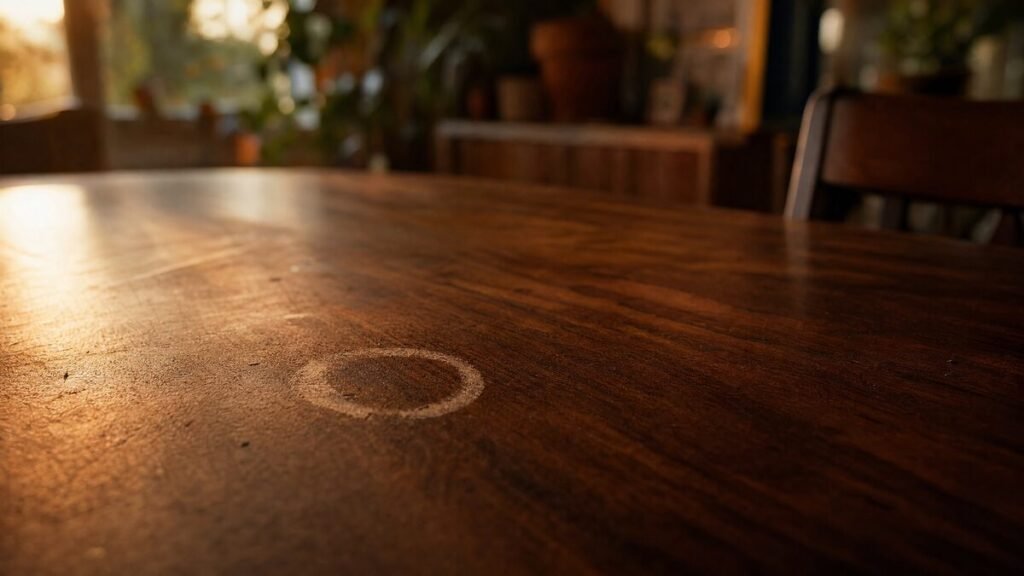
A white ring on a wooden table is one of the most frustrating household accidents. One forgotten coaster, one sweating glass, and the mark seems permanent. Learning how to remove water stains from wood without sanding is the good news: most water stains, especially the common white rings, can be removed with gentle methods that leave the finish intact. No sandpaper, no refinishing, and no expensive products are needed in most cases.
The key is knowing what kind of stain you are dealing with. White stains sit in the finish and are usually easy to fix. Dark stains have soaked into the wood itself and need more patience. This guide covers both, starting with the gentlest methods and working up to stronger ones, so you can stop as soon as the stain disappears. You will also learn how to protect the wood afterward so the same accident never leaves a mark again.
White Stains vs. Dark Stains: Know the Difference
White or light-colored rings appear when moisture gets trapped in the finish, the clear topcoat that protects the wood. The water clouds the finish rather than damaging the wood underneath, which is why these stains are usually fixable without sanding. You will most often see them after a cold drink sits on a table, or after a hot mug leaves a pale ring. If you run your finger over the stain and the surface feels smooth, it is almost certainly a finish-level stain.
Dark stains are different. They appear when water soaks through the finish and into the wood fibers themselves, often after a spill sat for hours or a plant pot leaked for days. Dark stains feel the same as the surrounding wood but look brown or black, and they do not respond to the gentlest methods. They can still often be lightened without sanding, but expect to repeat the treatment several times. If a dark stain covers a large area and the wood feels soft or rough, the damage may be deeper, and professional refinishing may be the honest answer.
Method One: The Hair Dryer
The hair dryer is the best first step for a fresh white ring, because it works by evaporating the trapped moisture right out of the finish. Set the dryer to medium heat and hold it about six inches from the stain. Move it slowly back and forth over the mark for a few minutes, and watch closely. In many cases the white ring fades as the moisture evaporates, sometimes within two or three minutes.
Keep the dryer moving and do not hold it in one spot, since concentrated heat can bubble or crack the finish. If the stain fades but does not disappear completely, let the area cool for a few minutes and repeat. For a very fresh ring, this method alone is often enough. Always test on an inconspicuous spot first if you are working on a valuable antique or a piece with an unknown finish, and stop immediately if the finish starts to look worse.
Method Two: The Iron and Cloth
For white rings that resist the hair dryer, the iron method uses the same idea with more focused heat. Place a clean cotton cloth, a thin towel, or a plain T-shirt over the stain. Set an iron to low or medium heat with the steam turned off, and press it onto the cloth for five to ten seconds. Lift the iron and the cloth, check the stain, and repeat if needed. The heat draws moisture out of the finish through the cloth.
Never let the iron touch the wood directly, and never use steam, since steam adds the very moisture you are trying to remove. Work in short bursts rather than long presses, and let the surface cool between attempts. This method is remarkably effective on white rings from mugs and glasses, and it works on most varnish, lacquer, and polyurethane finishes. If the stain is fading but slowly, be patient and repeat the process several times rather than turning the heat up.
Method Three: Oil and Salt or Baking Soda
When heat alone does not finish the job, a gentle oil treatment often does. Mix a small amount of plain cooking oil, such as olive oil or vegetable oil, with an equal amount of salt to form a paste. Rub the paste gently over the stain using a soft cloth, moving with the grain of the wood. Let it sit for a few minutes, then wipe it away with a clean cloth and check the result.
The mild abrasion of the salt polishes the cloudy finish while the oil fills in the tiny gaps that make the stain look white. For a gentler version, use baking soda instead of salt, mixed with a few drops of water into a paste. Rub very lightly, since even a mild abrasive can dull a finish if you press too hard. Always rub with the grain, never in circles, and test on a hidden spot first. This method is also useful for the faint marks that remain after the hair dryer or iron has done most of the work.
Method Four: Mayonnaise or Petroleum Jelly
Mayonnaise sounds strange, but it is a classic wood-stain remedy for a reason. It contains oil, and oil displaces the trapped moisture in the finish. Spread a thin layer of plain mayonnaise over the white stain, leave it for a few hours or overnight, and then wipe it away with a clean cloth. The oil slowly penetrates the finish and replaces the water that caused the cloudiness.
Petroleum jelly works the same way. Apply a thin layer, leave it overnight, and wipe it off in the morning. Both methods are very gentle, which makes them good choices for older furniture or pieces with a delicate finish. They take longer than the heat methods, but they require almost no effort and carry very little risk. If the stain lightens but does not vanish, repeat the treatment once or twice more.
Treating Dark Water Stains
Dark stains need a different approach because the water has reached the wood fibers. One effective home method is a paste of baking soda and water, applied to the stain and left for several hours before wiping away. For stubborn dark marks, some people use a paste of baking soda and a small amount of white vinegar, though this is stronger and should be tested on a hidden spot first. Repeat the application as needed, allowing the wood to dry fully between attempts.
Another option is a very light application of wood bleach, sold as oxalic acid, which is designed specifically for dark water stains on wood. Follow the product directions exactly, wear gloves, and work in a ventilated area. Wood bleach lightens the stain without removing the finish the way sanding would. If the stain is very old, very large, or the wood feels soft, these home methods may only lighten it rather than erase it. In that case, a furniture repair professional can often treat the spot without refinishing the whole piece.
Restoring the Finish After Treatment
Once the stain is gone, the wood may look slightly dull or dry in that spot. Restore it by applying a small amount of furniture oil or a good quality wood polish with a soft cloth, rubbing with the grain. For tables that see daily use, a thin coat of paste wax adds a protective layer that resists future moisture. Let the oil or wax sit for a few minutes, then buff it with a clean cloth until the shine matches the surrounding wood.
If the treated area still looks slightly different, repeat the oil application after a day or two. Wood finishes often need a little time to settle after a moisture treatment. Avoid using silicone-based spray polishes on valuable furniture, since they can build up and make future repairs harder. A simple oil or wax finish is easier to maintain and easier to repair if another accident happens.
Mistakes to Avoid
The biggest mistake is reaching for sandpaper too soon. Sanding removes the finish and creates a bare patch that is far more visible than the original stain, and it commits you to refinishing the whole surface. Always try the gentlest method first and work your way up. Another common mistake is using too much water during cleaning. Never soak a water stain or pour liquid onto it, since more water is the cause of the problem, not the cure.
Pressing too hard with an abrasive paste is another frequent error. Salt and baking soda pastes should be rubbed very lightly, with the grain, and checked often. Harsh chemical cleaners and acetone-based nail polish remover can strip the finish entirely and should never be used on wood furniture. Finally, do not expect a single treatment to fix a dark stain. Patience and repetition are part of the process, and stopping after one attempt is the most common reason people conclude a fixable stain is permanent.
Preventing Water Stains in the Future
Prevention is far easier than repair. Use coasters under every glass and mug, and keep a few extra coasters in every room so there is always one within reach. Choose coasters with a cork or felt backing, which absorb condensation instead of trapping it against the wood. Wipe up spills immediately, even small ones, since a spill that sits for minutes can leave a mark that takes hours to fix.
For tables in heavy use, a table runner, a glass top, or a regular coat of paste wax adds a protective barrier. Keep plant pots on saucers or trays, and never place a pot directly on bare wood. The same gentle, finish-safe approach works on wood surfaces throughout the home, from kitchen cabinets to shelves and side tables. A little regular care keeps wood looking good for decades, while one careless spill can undo years of it.
FAQs
Can white water stains on wood be removed without sanding?
Yes, in most cases. White stains sit in the finish, not the wood, and usually respond to heat from a hair dryer or an iron, or to an oil treatment such as mayonnaise or petroleum jelly. Start with the gentlest method and work up only if needed.
How long should I leave mayonnaise on a water stain?
Leave it for a few hours, or overnight for a stubborn stain. Wipe it away with a clean cloth and check the result. You can repeat the treatment once or twice if the stain has lightened but not fully disappeared.
Will the iron method damage my wood furniture?
Not if it is done correctly. Use low to medium heat, no steam, and always place a cloth between the iron and the wood. Work in short five to ten second presses and let the surface cool between attempts.
Can dark water stains be removed without sanding?
Often, yes, but it takes more patience. Baking soda pastes and wood bleach can lighten dark stains that have soaked into the wood fibers. Very old or very deep stains may only lighten rather than disappear completely.
Should I use vinegar on a water stain?
Vinegar can help as part of a baking soda paste for dark stains, but use it sparingly and test it on a hidden spot first. Vinegar is acidic and can dull some finishes if left on too long.
How do I protect wood from future water stains?
Use coasters, wipe up spills immediately, keep plants on trays, and apply paste wax or furniture oil regularly. A well-maintained finish resists moisture far better than a dry, worn one.













1 thought on “How to Remove Water Stains From Wood Without Sanding at Home”
Comments are closed.