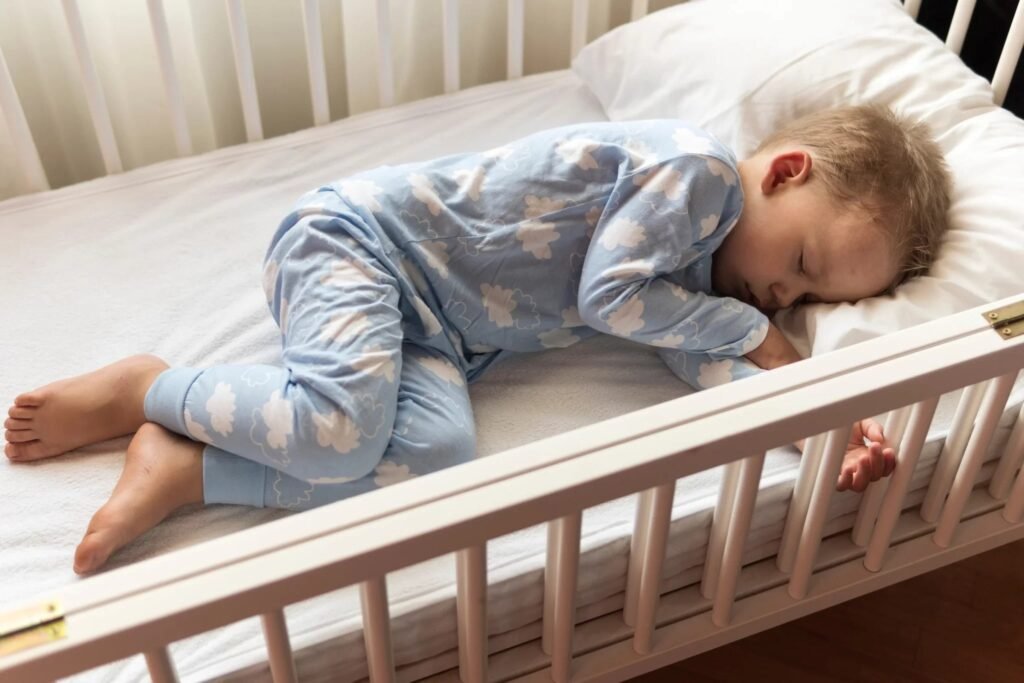
There is a special kind of panic that hits when you hear the thud from the nursery, walk in, and find your toddler standing beside the crib with a huge grin. The first escape is almost always a surprise, and the second one usually happens the very next night. If you are trying to figure out how to stop a toddler from climbing out of the crib, you are dealing with one of the most common, and most stressful, toddler sleep milestones.
The good news is that most families solve this without rushing into a toddler bed. With the right combination of crib adjustments, sleep tweaks, and safety measures, you can keep your little climber secure and sleeping soundly. Here is a complete, safety-first guide to handling crib escapes.
Why Toddlers Start Climbing Out of the Crib
Most children attempt their first crib escape between 18 months and 2 years of age, though some start earlier and some never try at all. It usually happens for a few predictable reasons:
- New physical skills. Pulling to stand, cruising, and early climbing are developmental leaps, and the crib rail becomes the ultimate practice wall.
- Boredom or undertiredness. A toddler who is not tired enough at bedtime will find their own entertainment, and escaping is very entertaining.
- Too much leverage. A mattress on a high setting, a pile of stuffed animals, or a crib placed next to furniture gives little legs the boost they need.
- Wanting connection. Separation anxiety peaks around this age. Some toddlers climb out simply to find you.
Understanding the “why” matters, because the fix for an undertired climber (adjust the nap) is different from the fix for a leverage climber (lower the mattress and clear the crib). For more on managing big toddler emotions around bedtime, see our guide on handling toddler tantrums calmly, which applies at home just as well as in public.
First Priority: Make Every Escape as Safe as Possible
Before you try any strategy to stop the climbing, accept that another escape might happen tonight. Make the room safe for it:
- Clear the landing zone. Move all furniture, especially anything with sharp corners, away from the crib. Place a soft rug or fold a comforter on the floor beside the crib.
- Baby-proof the entire room. Anchor dressers and bookshelves to the wall, cover outlets, lock windows, and remove small objects, cords, and anything breakable. Assume your toddler will roam unsupervised.
- Secure the door. Use a baby gate at the nursery door or a childproof door-handle cover so your escape artist cannot wander into the kitchen or down stairs.
- Remove climb aids from the crib. Take out bumpers, large stuffed animals, pillows, and thick blankets. These act as stepping stools and are not safe for sleep anyway.
Strategy 1: Lower the Mattress to Its Lowest Setting
This is the simplest fix and the one to try first. Many parents never move the mattress down after the newborn stage. Check your crib’s frame: most have two or three height settings, and the lowest puts the rail well above your toddler’s chest, making it far harder to get a leg over.
While you are at it, measure the rail height against your child’s height. Child-safety guidelines generally recommend transitioning out of the crib when a child reaches about 35 inches tall or when the top rail is below their chest level while standing. If your toddler has already hit that mark, no trick will keep the crib safe for long, and it may be time to move to the next section on transitioning.
Strategy 2: Use a Sleep Sack to Limit Leg Mobility
A wearable blanket, commonly called a sleep sack, is one of the most effective crib-escape tools because it physically prevents a toddler from swinging a leg high enough to clear the rail. Here is how to get the most out of it:
- Size up. Use a sack made for toddlers, with enough room for comfort but not so much that it becomes a trip hazard when they stand.
- The backwards trick. If your toddler has learned to unzip the sack, put it on backwards so the zipper runs down the back where little hands cannot reach it.
- Keep it consistent. Use the sleep sack for naps and nighttime so it becomes part of the routine, not a punishment that appears after an escape.
Most toddlers accept a sleep sack quickly if it is introduced warmly, as a cozy part of bedtime rather than a restraint. Pair it with a calming routine; our tips for calming an anxious child include breathing and connection rituals that work beautifully before bed too.
Strategy 3: Turn the Crib Around
Many cribs have a taller back panel and a lower front rail. If yours does, rotate the crib so the tall side faces the room. This adds several inches of effective rail height on the side your toddler is most likely to climb. Pull the crib away from walls and furniture at the same time, since anything nearby becomes a launch pad or a handhold.
This trick only works with convertible or asymmetric cribs, and it is a temporary measure, not a permanent solution. But it often buys families several more months of safe crib sleep.
Strategy 4: Fix the Sleep Schedule
A surprising number of crib escapes are really schedule problems in disguise. A toddler who climbs out night after night at bedtime is often undertired, and one who escapes at 5 a.m. may be getting too much daytime sleep.
- Check total sleep. Most 18-month to 2-year-olds need about 11 to 14 hours of sleep in 24 hours, including one nap.
- Cap long naps. If the nap regularly runs past two hours and bedtime is a battle, try waking your toddler after 90 minutes to two hours.
- Watch wake windows. Toddlers this age usually need four to six hours of awake time before bed. A bedtime that is too early creates a wide-awake climber.
- Move bedtime slightly later. Even 15 to 30 minutes can be enough to build the sleep pressure that keeps a toddler in the crib.
Keep a simple sleep log for a few days, noting nap times, bedtime, and when escapes happen. Patterns usually jump out fast.
Strategy 5: Respond Calmly and Consistently
What you do after an escape teaches your toddler whether climbing “works.” If climbing out reliably produces an exciting reunion, a long cuddle session, or a dramatic reaction, the behavior gets stronger.
- Stay boring. When you find your toddler out of the crib, keep lights low, keep your voice quiet, and keep interaction minimal.
- Return them silently. Pick them up calmly, place them back in the crib, say one short phrase like “It is sleep time,” and leave.
- Repeat without escalation. The first night may require many silent returns. Consistency matters more than any single night’s success.
- Do not turn it into play. Avoid laughing, chasing games, or long negotiations. The crib needs to stay a sleep place, not an adventure launch pad.
This is the same calm-boundary approach that works for other testing behaviors. Our guide on stopping toddler hitting at daycare covers the same principle: boring consistency beats big reactions every time.
What NOT to Do
- Do not use crib tents or netting. Mesh covers marketed to keep toddlers in the crib can pose strangulation and entrapment risks and are not recommended by safety experts.
- Do not punish climbing. Time-outs and scolding do not teach a toddler to stay in the crib; they teach that bedtime is stressful, which makes sleep worse.
- Do not pile on consequences. Taking away beloved stuffed animals or threatening will backfire. Keep the focus on safety and routine.
- Do not ignore repeated escapes. If your toddler is climbing out regularly despite every strategy, the crib is no longer the safe option, and it is time to transition.
When to Move to a Toddler Bed Instead
Sometimes the right answer to crib climbing is not to stop it but to graduate from it. Consider making the switch when:
- Your child is around 35 inches tall or the rail is below chest height.
- Escapes continue despite a lowered mattress, sleep sack, and schedule fixes.
- Your toddler is at least 2 years old and can understand simple rules like “stay in bed until the light turns green.”
- You are expecting a new baby and want the transition done well before the sibling arrives.
When you do transition, keep everything else the same: same bedtime, same routine, same boring response to getting out of bed. Many families use a toddler clock that changes color at wake-up time to give the child a concrete rule to follow.
Mistakes Parents Commonly Make
- Transitioning too early. Moving an 18-month-old to a bed because of one escape often trades one problem for a bigger one. Most children do better in a crib until at least age 2, ideally closer to 2.5 or 3.
- Changing everything at once. New bed plus no nap plus a new room equals a sleep disaster. Change one variable at a time.
- Inconsistency between caregivers. If one parent does silent returns and the other brings the toddler to the living room for a movie, the toddler will keep testing. Agree on the plan together.
- Forgetting the room. Parents childproof for a crib sleeper and forget that an escape artist needs a fully safe room. Re-audit the nursery with fresh eyes.
Frequently Asked Questions
Is it dangerous if my toddler climbs out of the crib?
It can be. Falls from crib height can cause bumps, bruises, and occasionally more serious injuries, and a toddler roaming an unsecured room faces many other hazards. That is why the first step is always making the room safe, even before you try to stop the climbing itself.
Will a sleep sack really stop a toddler from climbing out?
For many toddlers, yes. A properly fitted sleep sack restricts the leg movement needed to swing a leg over the rail. Putting it on backwards defeats toddlers who have learned to unzip it. It is one of the most consistently effective strategies parents report.
What age should a toddler move from a crib to a bed?
Most sleep experts suggest waiting until at least age 2, and ideally closer to 2.5 or 3, unless safety forces an earlier move. Younger toddlers generally lack the impulse control to stay in an open bed, which is why keeping them safely in the crib longer is usually the easier path.
Are crib tents safe to use?
No. Mesh crib tents and netting products have been associated with strangulation and entrapment hazards. Safety organizations advise against them. Use the strategies in this guide instead, and transition to a bed if the crib can no longer contain your child safely.
My toddler only climbs out at nap time, not at night. What should I do?
Nap-only escapes usually signal that the nap timing or length needs adjusting. Try capping the nap, shifting it slightly earlier or later, or adding more active play in the morning to build sleep pressure. Keep responding with the same calm, boring return you use at night.
Should I just give up and buy a toddler bed right away?
Not necessarily after the first escape. Try the mattress, sleep sack, and schedule fixes first, and give them a week or two of consistent use. If escapes continue and your child is tall enough that the rail is below chest height, then yes, transition promptly, because safety comes first.