
If you’ve ever stayed at a homestay in Arunachal Pradesh and wondered whether the people running it had any formal training — well, the government is finally doing something about that.
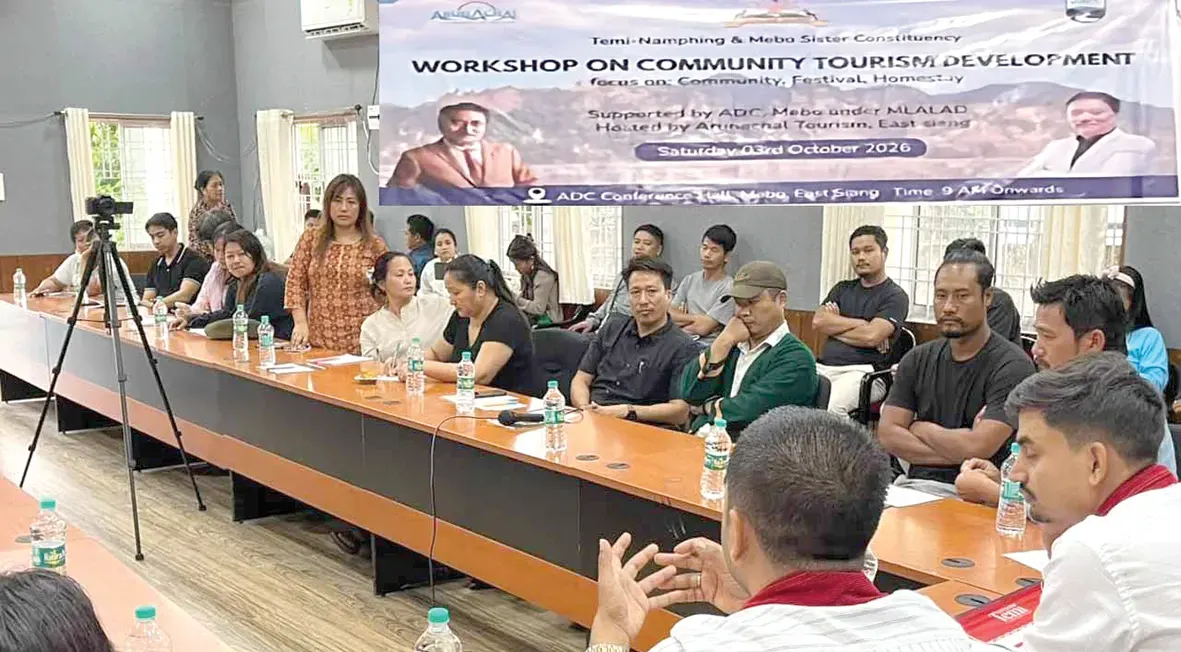
On Saturday, the tourism department of East Siang, in collaboration with the district administration, held a one-day training programme titled “Homestay Development, Management and Best Practices” at the ADC’s Conference Hall in Mebo. The event wasn’t just another bureaucratic box-ticking exercise. Thirty participants — homestay owners, aspiring entrepreneurs, self-help group members, and young people from the district — showed up ready to learn. And the resource persons they got? Two specialists who flew in from Sikkim’s Temi-Namphing region, Amrit Sarmah and Jeet Chetry, who have lived and breathed sustainable tourism in the Himalayan corridor.
That connection to Sikkim isn’t accidental. The tourism department of East Siang and the Namphing region of Sikkim have already signed a formal MoU to jointly run a series of programmes aimed at promoting sustainable and community-based tourism. Saturday’s training was part of that larger, ongoing commitment — not a one-off event.
Sarmah and Chetry didn’t just come with PowerPoint slides. They brought lived experience from a state that’s already figured out how to balance tourism growth with cultural integrity. One of their strongest messages to the young entrepreneurs of Siang Valley was simple but important: lean into what’s already here. They urged homestay owners to build traditional food menus around locally available ingredients — a shift that benefits both the guest experience and local farmers. Cultural tourism, they argued, doesn’t need to look imported. The best version of it is deeply rooted.
The training itself covered the practical nuts and bolts that make or break a guest’s experience — housekeeping, proper guest services, food safety, hygiene standards. These might sound unglamorous, but they’re exactly the things that separate a forgettable stay from one that gets five stars and a glowing review online. In an era where tourism increasingly lives and dies by word-of-mouth on apps, getting this right matters enormously.
District tourism officer Leena Perme and Mebo EAC Oyem Saring also addressed the gathering, underscoring the administration’s long-term vision for the region. The programme was specifically designed for homestay owners and stakeholders who had never received any formal training before — a detail worth noting, because it tells you how much of this sector has been running entirely on instinct and goodwill, without any structured support.
The Siang Valley has real, raw tourism potential. The landscapes are extraordinary, the culture is rich, and travellers looking for something off the beaten path are actively searching for places exactly like this. What’s been missing is the ecosystem of skills and standards that allows that potential to be monetised sustainably — and more importantly, in a way that keeps local communities at the centre rather than the margins.
Thirty people walked into a conference hall in Mebo on Saturday. If even half of them go back and genuinely transform how they run their homestays, that’s a ripple effect that could change how travellers experience East Siang for years to come. That’s not a small thing.