
There’s something quietly remarkable about the idea — using the heat buried deep inside the earth to power villages sitting at the very edge of India. That’s exactly what Arunachal Pradesh is now seriously exploring.
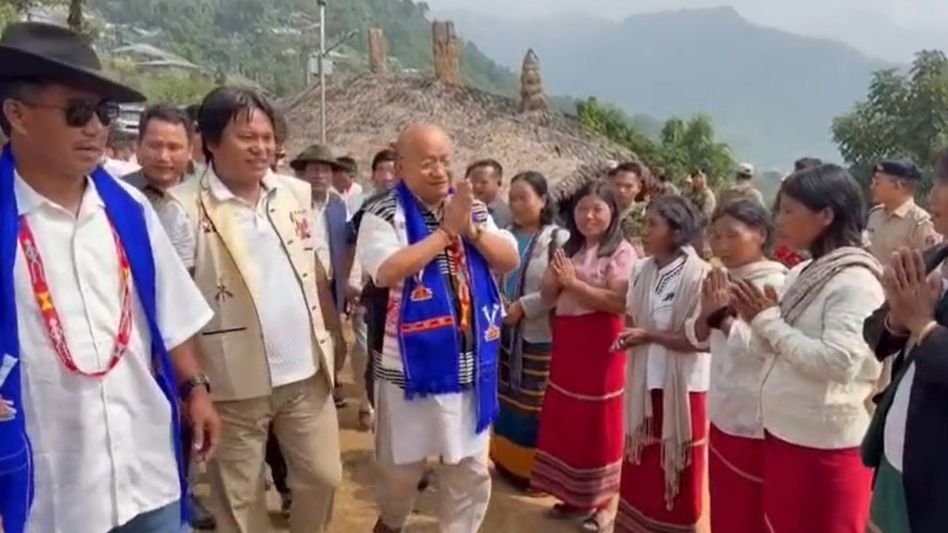
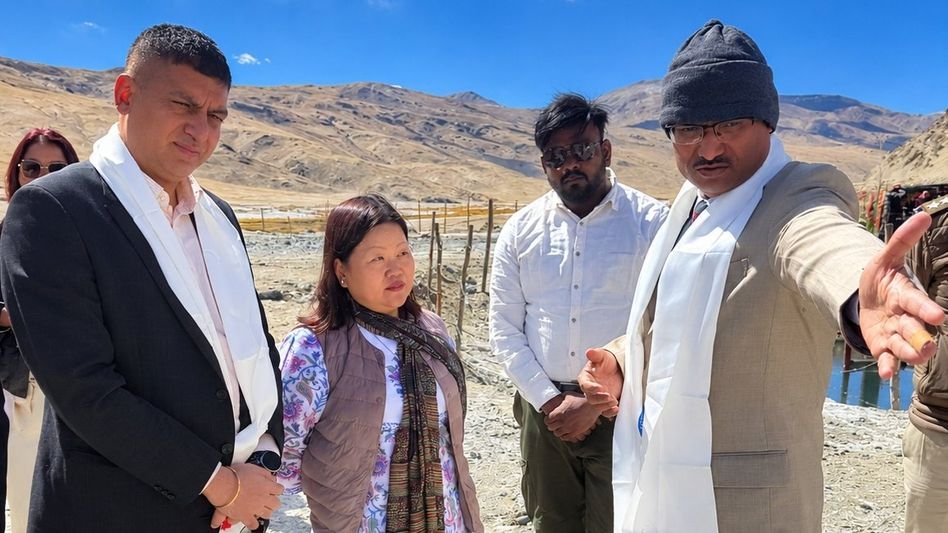
Science and Technology Minister Dasanglu Pul announced on October 3 that the state is actively assessing geothermal energy as a clean, locally generated power source for its remote and strategically sensitive border regions. The announcement didn’t come from a conference room — it came after Pul, along with Centre for Earth Sciences and Himalayan Studies (CESHS) Director Tana Tage and a team of departmental geologists, made a hands-on visit to ONGC’s Geothermal Project at Puga Valley in Ladakh.
The choice of Puga Valley as a study site makes a lot of sense. It already hosts one of India’s most advanced geothermal exploration setups, built for high-altitude Himalayan conditions — exactly the kind of terrain that Arunachal’s border zones share. The delegation went there not to admire it, but to understand it — the drilling, the exploration methods, how power actually gets generated in places where roads barely exist.
Back home, the focus is on Tawang. Specifically, the Mago-Thingbu belt in Tawang district, which has been identified as a genuinely promising geothermal zone. The state estimates it could generate somewhere around 10 to 15 MW from that area alone. That’s not a massive number by national grid standards, but for border villages that often go days without electricity, 10 MW can be transformational.
The groundwork for this has been quietly building for a while. Back in March 2024, CESHS tied up with two international partners — the Norwegian Geotechnical Institute and Iceland-based Geotropy — to carry out field investigations and geological mapping at hot-spring sites in Mago, Thingbu and surrounding areas. Iceland, of course, knows geothermal energy better than almost anyone on the planet. Having them involved says something about how seriously the state is taking this.
Since then, CESHS and Oil India Limited have jointly initiated pre-feasibility studies covering both surface and subsurface investigations at four key sites in Tawang district — Mago, Thingbu, Damteng and Tsechu. Geologists have already collected samples from five geothermal sites, including Grengkhar, for geochemical analysis. The work is slow, methodical, and still ongoing. But it’s real.
What makes this initiative stand out is the range of applications being considered. It’s not just electricity. The studies are also looking at how geothermal resources could be used for heating and cooling, and even for drying agricultural produce — something that could directly improve livelihoods for farming communities in high-altitude villages.
Minister Pul put it plainly: “Arunachal Pradesh is blessed with immense natural resources, and our endeavour is to harness this potential responsibly for a sustainable future.” She noted that lessons drawn from the Puga project would directly feed into the state’s own assessment work, especially in border regions where laying conventional power infrastructure is expensive, slow, and often logistically impossible.
The state also acknowledged the technical support of ONGC and its execution partner SEROS during the visit.
Geothermal energy doesn’t make headlines the way solar farms or mega dams do. It’s quieter, less glamorous, harder to explain. But for a state like Arunachal Pradesh — where terrain is brutal, winters are long, and remote communities have waited decades for reliable power — the heat beneath their own mountains might just be the most honest answer there is.