
Anini doesn’t make headlines every day. Nestled deep in one of India’s most isolated districts, this quiet headquarters of Dibang Valley rarely sees the kind of high-level attention that more accessible towns take for granted. But on Sunday, that changed — at least for a few hours.
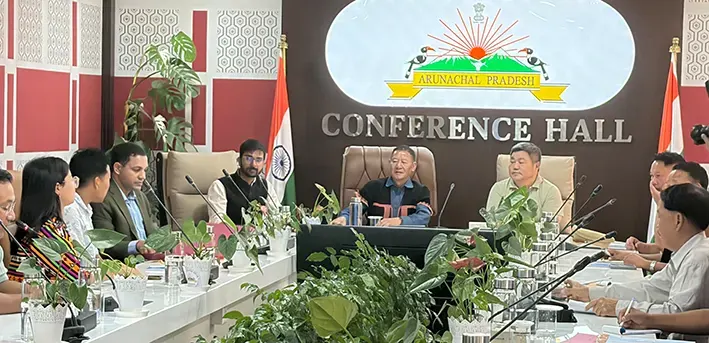
Land Management Minister Balo Raja made the trip to Anini on September 20, sitting down with local officials for a hands-on review of the Urban Development and Land Management Departments’ work in the district. With him were MLA Mopi Mihu and Dibang Valley Deputy Commissioner Yashwant Meena — a lineup that signals this wasn’t just a routine visit on paper.
The meeting kicked off with departmental presentations. Officers laid out where things stand — ongoing works, development plans still in motion, and the sticky issues that keep coming up when you’re trying to build infrastructure in terrain as challenging as Dibang Valley. Roads aren’t easy here. Neither is land management. And planned urban development in a district with such a small population but such a vast, rugged geography presents its own unique headaches.
Raja didn’t just sit and listen. He engaged directly with officers, pressing them on the specifics of planned urban development, the effectiveness of current land management practices, and what’s actually being done to improve civic infrastructure for residents who, frankly, deserve better public amenities. That kind of direct interaction between a cabinet minister and ground-level officials matters more than people might think — it cuts through the layers of bureaucracy and forces real conversations about what’s working and what isn’t.
His core message to the departments was one of urgency wrapped in practicality: coordinate better, and get things done on time. Inter-departmental coordination is the kind of phrase that sounds simple but is notoriously hard to execute, especially in remote districts where departments often work in silos simply because of logistical constraints. Raja’s push for tighter collaboration could prove to be one of the more consequential takeaways from Sunday’s meeting.
MLA Mopi Mihu also used the platform to lay out the district’s developmental demands, pointing to the need for sustained, long-term investment in infrastructure and public amenities. It’s a message Dibang Valley residents have heard before — but having it reinforced at a ministerial review adds political weight to what might otherwise remain wishful thinking in a budget document.
The meeting saw participation from UD Executive Engineer Alom Apang and DLRSO (in-charge) Anmol Singh, along with other departmental officers. The presence of both engineering and land management officials under the same roof was itself a small but meaningful step toward that cross-departmental thinking Raja was pushing for.
Dibang Valley sits at Arunachal Pradesh’s northeastern edge, bordering China, and its development has long lagged behind more connected districts. Urban growth here is slow, land records are complicated by history and geography, and every road or building project requires working against the odds. What happened in Anini on Sunday won’t fix all of that overnight.
But a minister who shows up, asks hard questions, and insists on accountability? That’s a start. Whether it translates into actual movement on the ground — completed projects, better infrastructure, resolved land issues — is the real test. Dibang Valley has waited long enough. The clock is ticking.