
Arunachal Pradesh is asking the Centre for a financial package tailored to the realities of one of India’s most geographically challenging states, with Deputy Chief Minister Chowna Mein making the demand at a major national finance conference in New Delhi.
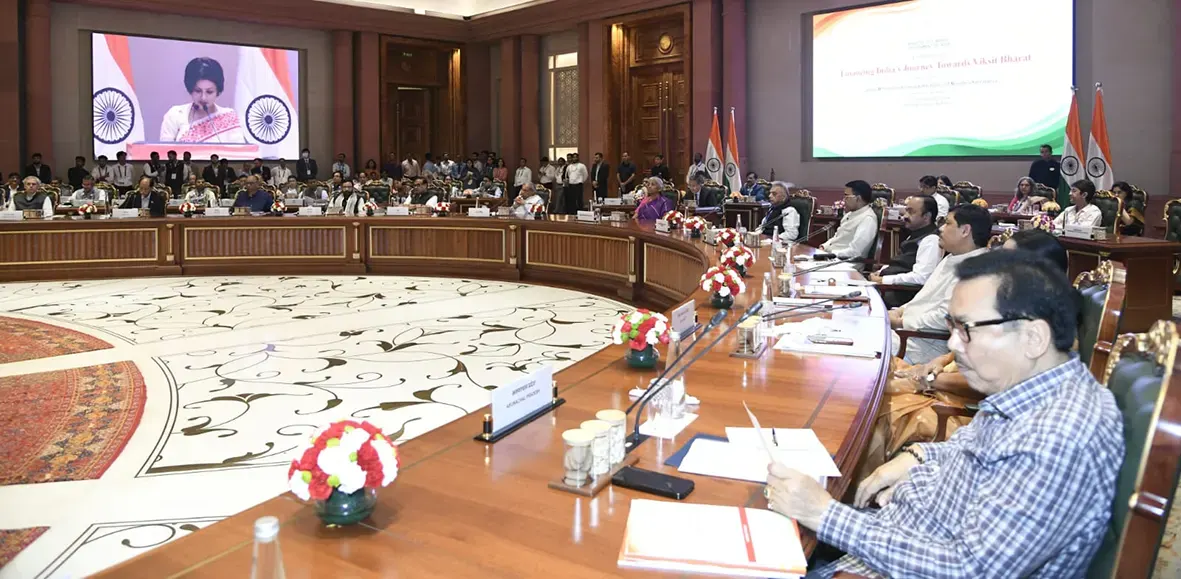
Mein raised the issue on the opening day of the two-day conference, Financing India’s Journey Towards a Viksit Bharat, organised by the Union Finance Ministry. The event brought together finance ministers from states and Union Territories, economists, academics and senior government officials to discuss the country’s economic priorities.
His argument was straightforward: Arunachal may have a relatively small economy, but its geography creates costs that many other states do not face. The state is the largest in the Northeast by area, while large parts of it remain remote and hilly. Difficult terrain, long rainy seasons and limited working periods push up construction and operational expenses. Transportation is another major burden, particularly in remote areas.
Mein also pointed to what he described as the absence of externally aided funds, saying Arunachal needs a separate financial provision that reflects these structural disadvantages. The request comes at a time when the state is trying to expand infrastructure while maintaining its fiscal position.
Despite the financial pressures, Mein said the state government has maintained fiscal discipline under the Fiscal Responsibility and Budget Management Act. According to his remarks, Arunachal has kept its fiscal deficit within prescribed limits while continuing to meet salaries, pensions, debt obligations and other committed liabilities.
The Deputy Chief Minister also highlighted the scale of public investment in infrastructure, connectivity, power, healthcare and education. He said higher capital expenditure and expanding social-sector programmes have generated wider economic activity across the state.
But perhaps the bigger story lies in Arunachal’s energy ambitions.
Mein said the state could become an important contributor to India’s clean-energy transition through its vast hydropower resources. Arunachal has an assessed hydropower potential of nearly 58,000 megawatts, which he said accounts for around 40 percent of India’s total hydropower potential. The state has set a target of harnessing 40,000 MW by 2047.
The numbers show how quickly the sector is changing. Installed hydropower capacity has risen from 405 MW in 2016 to about 1,200 MW, and then to 2,270 MW following the commissioning of the Subansiri Lower Project, according to Mein. Under the state’s “Decade of Hydropower 2025-35” vision, another 19,000 MW of capacity is planned, backed by an investment pipeline estimated at around Rs 1.9 lakh crore.
Mein said the hydropower expansion could create more than 30,000 direct and 16,000 indirect jobs. At the same time, he called for transmission networks and renewable-energy infrastructure to be planned alongside projects, given Arunachal’s difficult geography.
The demand for a special economic package now puts the Centre’s approach to frontier and infrastructure-intensive states under sharper focus. For Arunachal Pradesh, the question is not simply how much development can be achieved, but how that development can be financed in a place where every road, power line and project can cost more because of the terrain. The answer could shape the state’s economic trajectory for years to come.