
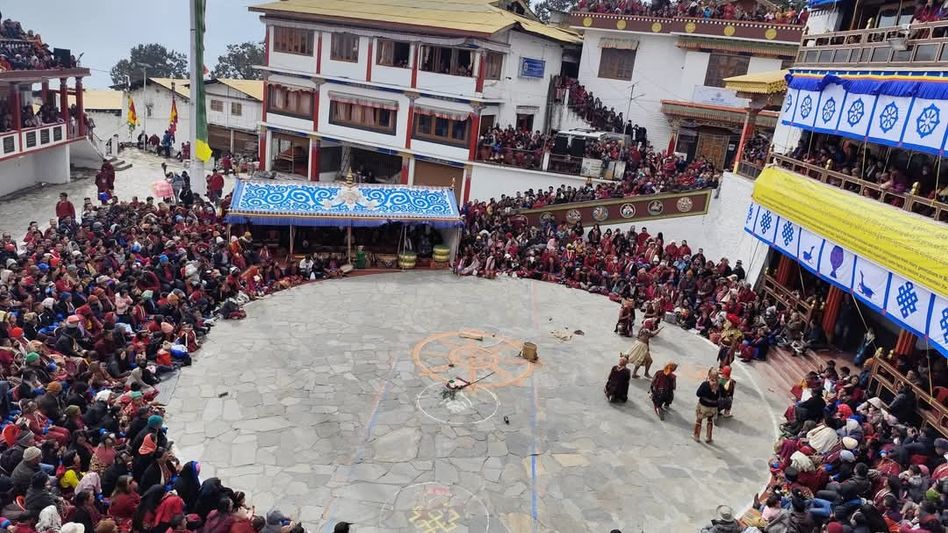
The Torgya Dungyur Chenmo festival, a significant spiritual event, was recently celebrated with great enthusiasm at the Tawang Monastery in Arunachal Pradesh. This festival, deeply rooted in the traditions of the Monpa tribe, aims to dispel malevolent forces and usher in prosperity and well-being for the community.
A Triennial Celebration
While the Torgya festival is an annual event, every third year it is observed on a grander scale and is referred to as Dungyur Festival. During this special occasion, the Dalai Lama extends his blessings to the monks by sending ‘Feb Jum’, a sacred item utilized in the rituals.
Rituals and Performances
The three-day festival is marked by vibrant masked dances performed in the courtyard of the Tawang Monastery. Monks, adorned in elaborate costumes and masks representing various animals and deities, enact these dances to eliminate evil spirits and promote happiness and prosperity for the upcoming year. Notable performances include the Pha Chan and the Losjker Chungiye, each depicting different myths and legends.
Sacred Ceremonies
Preparations for the festival commence 16 days in advance with the creation of a special image called ‘Torma’. Crafted by 14 lamas using ingredients like ghee, barley, milk, and molasses, the Torma stands approximately 3 feet tall and 2 feet wide. Throughout its creation, monks recite scriptures accompanied by the rhythmic beating of drums. On the first day of the festival, the Torma is carried in a procession by monks known as Arpo, who wear bells around their waists. They are accompanied by two other monks donning male and female yak masks, representing the servants of Lama Tsongkapa. The procession leads to a structure called ‘Mechang’, a mound of dry bamboo leaves shaped like a temple, which is set aflame. The Torma is then ritually touched by the Head Lama and consigned to the fire, symbolizing the eradication of evil influences.
Concluding Rituals
On the final day, a ritual known as ‘Wang’ is performed. Monks prepare a sweet called ‘Tseril’ from barley and sugar or molasses, forming it into small balls. After offering prayers, the Head Lama distributes the Tseril to the devotees. A local beer named ‘Tse-Chang’ is also served in a bowl made from a human skull, with a few drops given to each participant as an oblation. The Head Lama then bestows blessings, known as ‘Tse-Boom’, by touching the heads of the assembled devotees, while other lamas tie small strips of colored cloth around their wrists as a sign of blessings for happiness and long life.
Cultural Significance
The Torgya Dungyur Chenmo festival is not only a spiritual observance but also a vibrant display of the rich cultural heritage of the Monpa tribe. The elaborate rituals, masked dances, and communal participation reflect the community’s deep-rooted beliefs and their collective aspiration for a harmonious and prosperous life.