
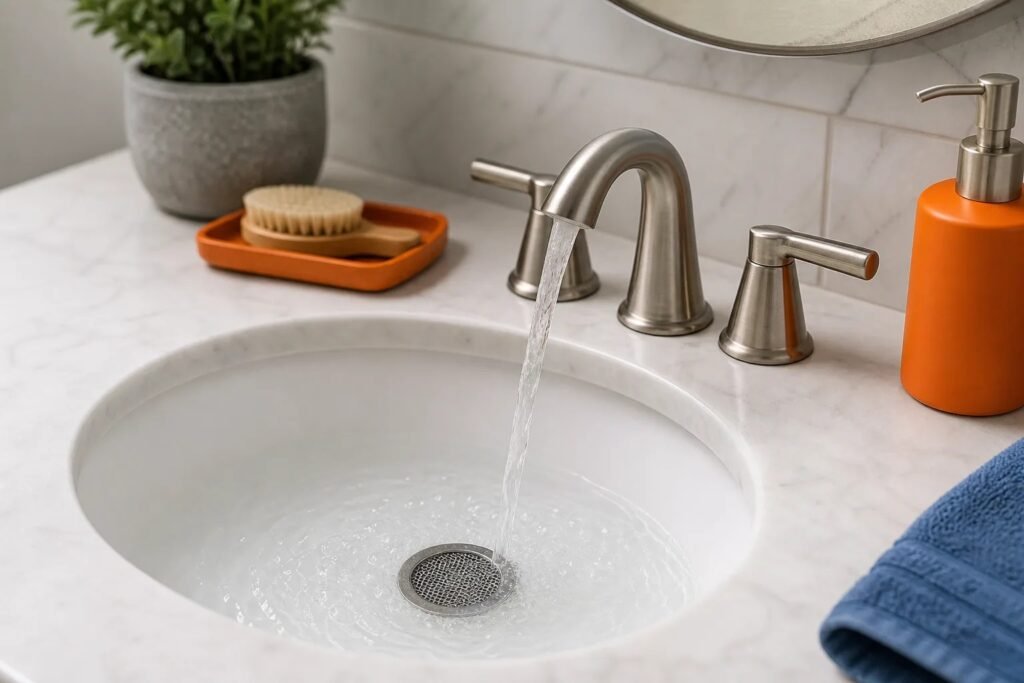
A bathroom should smell clean, so when a sour or sewer-like odor rises from the drain, it is hard to ignore. The good news is that you can learn how to get rid of drain smell in the bathroom without chemicals, using hot water, baking soda, and a little cleaning. Most drain smells come from a buildup of soap, hair, toothpaste, and skin oils clinging to the inside of the pipes, or from a dry drain trap that has let sewer gas slip back into the room. Both problems are fixable with household items you probably already have. This guide explains how to find the source of the smell, clear it step by step, and keep it from coming back.
What Causes a Bathroom Drain to Smell?
The most common cause is biofilm, a slimy layer of bacteria and residue that grows on the inside of the drain pipe. Every shower and hand wash sends soap, shampoo, conditioner, toothpaste, and dead skin down the drain. Some of it sticks to the pipe walls, and over time it rots and releases a musty, sour smell. Hair makes the problem worse, because it catches in the drain and traps more residue, creating a damp mat where bacteria thrive.
The second common cause is a dry P-trap. The P-trap is the U-shaped bend in the pipe under your sink or shower. It holds a small amount of water at all times, and that water acts as a seal that blocks sewer gas from rising into your home. If a drain is not used for a while, the water in the trap evaporates, the seal breaks, and sewer gas flows in freely. This often happens in guest bathrooms, basement sinks, and drains in vacation homes.
Less often, the smell comes from a vent problem or a damaged pipe, and those cases need a plumber. But in most homes, the smell is biofilm or a dry trap, and both are simple to fix. Before you try anything, do a quick check: run water in the sink and shower for a minute and see if the smell fades. If it does, the trap was probably dry. If the smell stays or gets stronger, biofilm is the likely culprit.
Step 1: Find Which Drain Is the Source
When a bathroom smells bad, the drain is not always the guilty one. Start by sniffing each drain separately: the sink, the shower or tub, and the toilet base. Put your nose close to each drain in turn, with the others covered by a damp towel. The one with the strongest smell is your target. If the smell is strongest near the toilet base, the wax ring under the toilet may have failed, and that is a job for a plumber rather than a cleaning fix.
Also check the overflow hole in the bathroom sink. That small hole near the top of the basin connects to the drain, and it collects soap and grime that can smell terrible. Many people clean the drain and forget the overflow entirely. Shine a flashlight into it, and if you see dark buildup, add it to your cleaning list.
Finally, check whether the smell appears only when you run water or all the time. A smell that appears only when water runs usually points to biofilm being disturbed inside the pipe. A constant smell that gets worse on windy days often points to a vent or trap problem. Knowing this helps you pick the right fix and tells you when to call a professional.
Step 2: Flush the Drain With Boiling Water
Start with the simplest fix: a kettle of boiling water. Boil a full kettle, then pour it slowly down the drain in two or three stages, waiting a few seconds between pours. The heat melts soap scum and grease, loosens the biofilm, and flushes loose debris further down the pipe. For a shower drain, remove the drain cover first so the water flows directly into the pipe.
Repeat this once a day for three days if the smell is stubborn. Hot water alone often solves mild odors, and it is the safest possible treatment. Be careful with porcelain sinks and older pipes: pour slowly and avoid splashing, since boiling water can crack cold porcelain if poured too fast. For plastic PVC pipes, very hot tap water works too, though boiling water is fine in short pours and is used this way in most homes without trouble.
If the drain is slow as well as smelly, hot water may not be enough on its own. In that case, the clog is probably hair and soap, and you will need to remove it physically before the smell will go away. Our guide to unclogging a slow drain without a plunger walks through the manual methods that pair well with this cleaning routine.
Step 3: Clean the Drain With Baking Soda and Vinegar
For smells that survive hot water, the classic baking soda and vinegar treatment is the next step. Pour half a cup of baking soda down the drain, followed by one cup of white vinegar. The mixture will fizz. Let it sit for 15 to 30 minutes, then flush with a kettle of boiling water. The fizzing action helps lift residue off the pipe walls, and the baking soda neutralizes odor-causing acids.
Be realistic about what this does. Baking soda and vinegar do not dissolve a solid clog, and the fizzing is not strong enough to scour a pipe clean on its own. What it does well is freshen the drain and loosen the surface layer of biofilm so the hot water flush can carry it away. For best results, use it after you have removed any hair and debris from the drain, and repeat it once a week for a month.
A paste of baking soda and water is also useful for the visible parts of the drain. Apply it around the drain opening and the overflow hole with an old toothbrush, scrub gently, and rinse with hot water. This removes the grime you can see and reach, which is often where the strongest smell lives. Do not use bleach for this job. It is a harsh chemical, it can damage pipes and fixtures, and mixing it with other cleaners is dangerous.
Step 4: Remove Hair and Grime by Hand
If the smell persists, there is probably a mat of hair and soap sitting just below the drain cover. Remove the drain cover or stopper, shine a flashlight into the pipe, and pull out what you can with a pair of long tweezers or a plastic drain snake. These inexpensive tools have small barbs that catch hair easily. Push the snake in gently, twist it, and pull it out slowly. You may be surprised and a little disgusted by what comes up, but removing it is the fastest way to end the smell.
For a pop-up sink stopper, pull it out and clean it thoroughly. Hair and toothpaste collect on the stopper itself and around the pivot rod underneath. Wash the stopper with hot soapy water and an old toothbrush, then clean the drain opening the same way. For a shower drain, a drain hair catcher is a cheap addition that prevents the problem from returning. Place it over the drain and empty it after every shower.
Wear rubber gloves for this job and have a plastic bag ready for the debris. It is unpleasant but quick, and it makes a bigger difference than any cleaning product. Once the physical blockage is gone, repeat the baking soda and hot water flush to clear the remaining residue.
Step 5: Refill a Dry P-Trap
If the smell comes from a dry trap, the fix takes about a minute. Simply run water down the drain for 30 seconds. That refills the trap and restores the water seal. For a guest bathroom that is rarely used, make it a habit to run the taps and flush the toilet once a week. The same goes for floor drains in basements and laundry rooms, which dry out even faster because they are used so rarely.
For drains that sit unused for months, such as in a vacation home, pour a cup of water mixed with a tablespoon of mineral oil down the drain before you leave. The oil floats on top of the water and slows evaporation, so the trap stays sealed much longer. Do not use cooking oil for this, because it can go rancid and add to the smell.
If you refill the trap and the smell returns within a day or two, the trap may be leaking or siphoning, which means water is being pulled out of it when another fixture drains. That is a plumbing issue worth calling a professional about, since it can indicate a vent problem. A plumber can check the vent stack and the trap in one visit.
Natural Deodorizers That Keep the Drain Fresh
Once the drain is clean, a few simple habits keep it smelling fresh. Pouring a kettle of hot water down the drain once a week prevents soap and residue from building up again. A monthly baking soda and vinegar flush does the same thing with a little more cleaning power. These two habits together take five minutes a month and prevent most drain smells entirely.
Lemon can help as a freshener too. Squeeze half a lemon down the drain and follow it with hot water, or drop a few lemon peels into the garbage disposal if your sink has one. The citrus scent is pleasant and the acid helps cut grease. Baking soda on its own is also a good deodorizer: sprinkle a quarter cup down the drain, leave it overnight, and flush with hot water in the morning.
Avoid pouring grease, coffee grounds, or harsh chemicals down the drain. Grease solidifies in the pipes and traps debris. Coffee grounds do not dissolve and can add to clogs. Chemical drain cleaners promise a quick fix but can damage pipes, kill the helpful bacteria in septic systems, and create dangerous fumes. The gentle methods in this guide are slower but safer and more effective over time.
Keeping the Whole Bathroom Smelling Fresh
A drain is only one part of a fresh bathroom. Soap scum on the shower walls, mildew on the shower curtain, and a damp bath mat can all add their own odors. Clean the shower weekly with a simple vinegar and water spray, and let the shower curtain dry fully between uses. Our guide to getting rid of soap scum in the shower without scrubbing covers a gentle cleaning method that works well alongside drain care.
Ventilation matters too. Run the bathroom fan during every shower and for 20 minutes afterward. Good airflow dries the room out and stops mildew from growing, which is a common source of musty smells that people mistake for a drain problem. If your bathroom has no fan, open a window or leave the door ajar after showering.
Wash bath mats and towels regularly, and replace a shower curtain liner when it starts to smell even after cleaning. A clean shower curtain makes a real difference: our guide to keeping a shower curtain from getting moldy without bleach explains how to keep the liner fresh with simple, chemical-free methods.
When to Call a Plumber
Most drain smells are DIY fixes, but some are not. Call a plumber if the smell persists after a thorough cleaning and trap refill, if several drains smell at once, if the smell is paired with gurgling sounds, or if water drains slowly in more than one fixture. These signs can point to a blocked vent stack, a broken sewer line, or a main drain problem that needs professional equipment.
Also call a professional if you notice water damage around the base of the toilet or under the sink, or if the smell is strongest near a wall rather than a drain. A hidden leak can rot wood and grow mold behind the wall, and the smell is an early warning sign. Catching it early can save a lot of repair work later. A plumber can run a camera down the drain to find the exact problem, which is faster and cheaper than guessing.
Frequently Asked Questions
Why does my bathroom drain smell like rotten eggs?
A rotten egg smell usually comes from hydrogen sulfide gas, which is produced by bacteria feeding on residue in the drain. It can also come from sewer gas entering through a dry trap. Cleaning the drain and refilling the trap usually fixes it. If the smell comes from the hot water tap itself, the water heater may need attention.
Is baking soda and vinegar safe for all pipes?
Yes. Baking soda and vinegar are safe for PVC, copper, and cast iron pipes in normal household amounts. They are far gentler than chemical drain cleaners and will not damage fixtures or septic systems.
How often should I clean my bathroom drains?
A hot water flush once a week and a baking soda and vinegar treatment once a month is a good routine. Remove hair from the drain cover after every few showers. Drains that are used rarely should be flushed with water at least once a week to keep the trap full.
Can a dry P-trap cause a smell even if the drain is clean?
Yes. A clean drain can still smell if the trap is dry, because sewer gas passes straight through an empty trap. Running water for 30 seconds refills the trap and restores the seal. This is common in guest bathrooms and floor drains.
Will a drain smell go away on its own?
Sometimes a dry trap smell disappears once the drain is used again, but a smell caused by biofilm or a hair clog will not go away on its own. The bacteria keep growing as long as residue is present. Cleaning is the only reliable fix.
Is it safe to use bleach to get rid of drain smell?
Bleach can kill odor-causing bacteria, but it is not recommended. It can damage pipes and fixtures, harm septic systems, and produce dangerous fumes if mixed with other cleaners. Baking soda, vinegar, and hot water are safer and work just as well for most drain smells.
A smelly bathroom drain is annoying, but it is almost always a simple problem with a simple fix. Find the right drain, flush it with hot water, clean it with baking soda and vinegar, pull out the hair, and make sure the trap stays full. Do those things and the smell goes away, usually within a day. Keep up the weekly hot water flush and the monthly baking soda treatment, and the smell will stay away. Your bathroom will smell like a clean bathroom again, and you will not have poured a single harsh chemical down the drain to get there.













2 thoughts on “How to Get Rid of Bathroom Drain Smell Without Chemicals”
Comments are closed.