
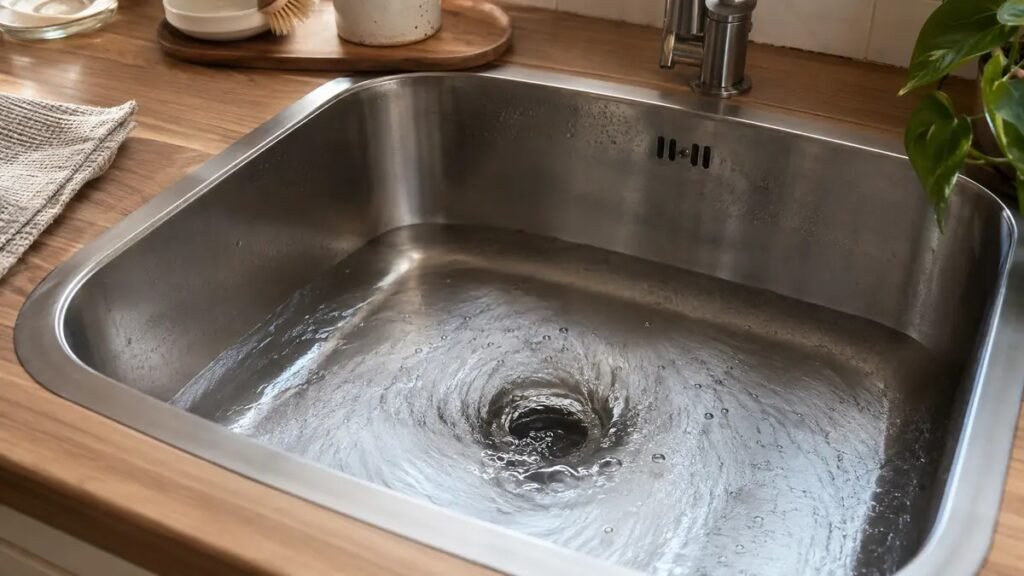
A slow drain is one of the most common household annoyances. Water pools in the sink or shower, takes forever to disappear, and leaves behind a faint smell that only gets worse over time. The usual fix is a plunger, but you may not own one, or you may be dealing with a clog that a plunger cannot reach. Learning how to unclog a slow drain without a plunger is a practical skill every homeowner and renter should have, because most slow drains can be fixed in under half an hour with items you already own.
This guide starts with the simplest methods and works up to stronger ones, so you can try the easy fixes first and only move on if the drain is still slow. It covers boiling water and dish soap for grease, the baking soda and vinegar method, a wire hanger hook for hair, a drain snake, and a wet and dry vacuum. It also covers what never to do, how to stay safe, and when to stop and call a plumber instead. Most slow drains are caused by a buildup of hair, soap scum, and grease near the top of the pipe, which means the clog is closer and easier to reach than most people expect.
First, Diagnose the Clog
Before trying any method, take a moment to figure out what kind of clog you are dealing with. Run the water and watch how it behaves. If the drain is slow but water still flows, the clog is partial, and a gentle method will probably work. If water does not drain at all, the blockage is more complete and you may need a mechanical method like a drain snake.
Check whether other drains in the house are slow too. If only one sink or shower is affected, the clog is in that fixture’s own pipe, and a home fix is very likely to work. If several drains are slow at the same time, or if water backs up in one fixture when you use another, the problem may be deeper in the main line, and that is a job for a plumber.
Remove the drain cover or stopper if you can. In bathroom sinks, the stopper often unscrews or lifts out after you disconnect the pivot rod underneath. In showers, the drain cover usually lifts off with a screwdriver. Look inside with a flashlight. Often you will see the problem immediately: a clump of hair sitting right at the top, a ring of soap scum, or a buildup of gunk around the stopper. Removing that visible debris by hand, while wearing rubber gloves, sometimes fixes the problem on its own.
Boiling Water and Dish Soap for Grease Clogs
The simplest method of all works best on kitchen sinks, where grease is the usual culprit. Grease from cooking solidifies as it cools and coats the inside of pipes, trapping food particles and narrowing the passage until water drains slowly. Hot water melts that grease and flushes it away.
Start by squeezing a generous amount of dish soap, about two or three tablespoons, directly into the drain. Dish soap is designed to cut grease, and letting it sit for a few minutes gives it time to work on the buildup. Meanwhile, bring a kettle or a large pot of water to a full boil. Pour the boiling water into the drain slowly, in two or three stages, waiting a few seconds between pours so the hot water has time to work on the grease rather than rushing straight past it.
Check the drain. If it runs noticeably faster, repeat the process once more for good measure. If it does not improve, the clog is probably not grease, or it is too far down the pipe for hot water to reach, and you should try the next method.
One important caution: do not pour boiling water into a toilet, since the sudden heat can crack porcelain, and be careful with plastic pipes. Most modern PVC pipes can handle boiling water in short pours, but if your home has older plastic pipes or you are unsure, use very hot tap water instead of a full boil. Never pour boiling water down a drain if you have already used a chemical drain cleaner, since the heat can cause dangerous fumes or splashing.
The Baking Soda and Vinegar Method
Baking soda and vinegar is the classic home remedy for slow drains, and it works well on mild clogs made of soap scum and organic buildup. The fizzing reaction helps loosen debris, and the combination is safe for pipes, septic systems, and the environment.
Start by pouring about half a cup of baking soda directly into the drain. Use a funnel if the drain opening is small, and push the baking soda down with a spoon or a chopstick so it goes into the pipe rather than sitting on top. Then pour about one cup of white vinegar into the drain. The mixture will fizz and bubble immediately. Cover the drain with a plug, a plate, or a damp cloth to keep the fizzing action inside the pipe where it can work on the clog, rather than letting it escape up into the sink.
Let the mixture sit for 30 minutes to an hour. For a stubborn clog, you can leave it overnight. After the waiting time, flush the drain with a kettle of boiling water, poured slowly in stages, or with very hot tap water if you have plastic pipes. The hot water washes away the loosened debris. Test the drain by running the tap. If it is faster but still not perfect, repeat the process once more.
This method works best as a maintenance routine too. Using it once a month on bathroom and kitchen drains prevents buildup from reaching the point where the drain slows down noticeably. It is cheap, safe, and takes only a few minutes, which makes it one of the best habits for keeping drains healthy.
A Wire Hanger Hook for Hair Clogs
Hair is the most common cause of slow bathroom drains, and a simple wire hook is often the most effective tool for removing it. Take a wire coat hanger and straighten it out, leaving a small hook at one end. Bend the hook to about the width of a fingertip, and crimp the tip slightly so it can catch hair without scratching the pipe. If you do not have a wire hanger, a long zip tie with small notches cut along its sides works the same way, and plastic drain sticks sold at hardware stores are designed for exactly this job.
Put on rubber gloves, remove the drain cover, and slowly feed the hook into the drain. Push it down gently until you feel resistance, which is usually the clog. Twist the hanger slightly and pull it back up slowly. You will often pull out a slimy clump of hair and soap scum, which is unpleasant but satisfying, because it means the method is working. Repeat several times, going a little deeper each time, until the hook comes back clean.
Dispose of the hair in the trash, never back down the drain, and flush the drain with hot water afterward. If the hook cannot reach the clog, the blockage is further down the pipe, and a drain snake is the next step. Be gentle with the hanger and never force it. Aggressive poking can push the clog deeper or damage the pipe, which turns a simple fix into an expensive repair.
Using a Drain Snake or Zip Tie Tool
A drain snake, also called a hand auger, is a flexible metal cable with a corkscrew tip that reaches clogs deeper in the pipe than a hanger can. Manual drain snakes are inexpensive, available at any hardware store, and easy to use. Feed the cable into the drain slowly, turning the handle as you go. The turning motion helps the tip navigate bends in the pipe and wind itself into the clog.
When you feel resistance, keep turning and push gently. The tip will either break the clog apart or hook into it so you can pull it out. Do not force the cable. If it stops moving entirely, pull it back a little, turn it, and try again. Once the cable moves freely, pull it out slowly and run hot water to flush the pipe. You may need to repeat the process two or three times for a stubborn clog.
A plastic zip tie drain stick is a simpler alternative for shallow clogs. These are thin, flexible strips with small barbs along the edges, and you push them into the drain and pull them back out to catch hair. They are cheap, disposable, and surprisingly effective for bathroom sinks and showers. For a kitchen sink, a snake is usually the better choice, since grease clogs need more than a barbed strip to clear.
The Wet and Dry Vacuum Method
If you own a wet and dry vacuum, also called a shop vac, it can clear a slow drain with suction. Set the vacuum to the wet setting and remove the filter if your model requires it for wet use. Create a tight seal around the drain opening using an old rag or a towel wrapped around the vacuum hose. A good seal is essential: without it, the vacuum will just pull air from the room instead of suction from the pipe.
Turn the vacuum on for a few seconds and listen. You may hear the clog shift or break loose. Turn the vacuum off, remove the hose, and check the drain. If it flows faster, flush it with hot water. If not, try again, and try reversing the vacuum to blow air down the drain instead of sucking. Some clogs respond better to pressure than to suction. Wear eye protection and gloves during this method, since dirty water can splash back when the seal breaks.
Clean the vacuum thoroughly afterward, since it will contain dirty water and debris from the drain.
What Never to Do
Never mix chemical drain cleaners. Products that contain bleach and products that contain ammonia or acids can produce dangerous gases when combined, and the reaction can happen in the pipe where you cannot see it. Even using two different chemical cleaners one after another is risky, since residue from the first can react with the second. If you have already poured a chemical cleaner down a drain, do not add anything else, and do not use boiling water, a plunger, or a snake, since the chemicals can splash back and cause burns.
Do not use chemical cleaners as your first option at all. They are harsh on pipes, especially older metal ones, and they are bad for septic systems. The methods in this guide are safer and usually just as effective for a slow drain. If you do choose to use a chemical cleaner, follow the label instructions exactly, wear gloves and eye protection, ventilate the room, and keep it away from children and pets.
Never pour grease down the drain, even with hot water running. Hot water carries grease a short distance down the pipe, where it cools, solidifies, and creates the next clog. Pour used cooking grease into a jar or can, let it cool, and throw it in the trash. The same goes for coffee grounds, which do not dissolve and accumulate in pipes, and for so-called flushable wipes, which do not break down the way toilet paper does and are a leading cause of drain blockages.
When to Call a Plumber
Home methods handle most slow drains, but some situations need a professional. Call a plumber if several drains are slow at the same time, if water backs up in one fixture when you use another, if you hear gurgling from multiple drains, or if you smell sewage. These are signs of a problem in the main line or the sewer connection, and no home method will fix them.
Also call a plumber if the clog returns within days of clearing it, which can indicate a damaged pipe, tree roots, or a deeper blockage that a hand snake cannot reach. If you have tried the methods in this guide and the drain is still slow after two or three attempts, stop and call a professional rather than escalating to stronger chemicals or more force. A plumber has professional-grade augers and cameras that can find and fix the real problem, and a service call is far cheaper than repairing a pipe damaged by aggressive home methods.
Renters should check with their landlord before attempting anything beyond the gentlest methods, since the landlord is usually responsible for plumbing repairs.
FAQs
What is the fastest way to unclog a slow drain without a plunger?
Pour dish soap into the drain, wait a few minutes, then flush with a kettle of boiling water poured in stages. For bathroom drains, a wire hanger hook that pulls out hair is often even faster. Both methods take under ten minutes and work on most partial clogs.
Does baking soda and vinegar really unclog drains?
Yes, for mild clogs caused by soap scum and organic buildup. Pour half a cup of baking soda into the drain, follow with a cup of vinegar, cover the drain, wait 30 minutes to an hour, then flush with hot water. It is safe for pipes and works well as a monthly maintenance routine.
How do I remove hair from a slow drain?
Straighten a wire coat hanger into a hook, feed it into the drain, twist gently, and pull the hair out slowly. Repeat until the hook comes back clean. Plastic drain sticks with barbs work the same way. Wear gloves and throw the hair in the trash.
Is it safe to pour boiling water down a drain?
Usually yes, but be careful with plastic pipes and never pour boiling water into a toilet, since the heat can crack porcelain. If you have older plastic pipes, use very hot tap water instead. Never use boiling water if a chemical drain cleaner has already been poured down the drain.
Why is my drain still slow after I cleaned it?
The clog may be deeper in the pipe than your tool reached, or there may be a second buildup further down. Try a drain snake to reach deeper, or repeat the baking soda and vinegar method. If the drain slows again within days, call a plumber, since the cause may be pipe damage or a main line problem.
When should I call a plumber instead of fixing it myself?
Call a plumber if multiple drains are slow at once, if water backs up in one fixture when you use another, if you smell sewage, or if the clog returns within days. These signs point to a main line problem that needs professional equipment.













1 thought on “How to Unclog a Slow Drain Without a Plunger”
Comments are closed.