

Someone, somewhere, hit a button — and suddenly, news about one of Arunachal Pradesh’s most contested projects simply vanished from social media screens across India.
Journalists covering the proposed Siang Upper Multipurpose Project (SUMP) started noticing something alarming over the past few days. Their videos were disappearing. Their accounts were getting flagged. People trying to watch their reports were met with a blunt message — the content had been temporarily restricted under India’s Information Technology rules. No detailed explanation. No prior warning. Just gone.
That was enough to push two of Arunachal Pradesh’s most prominent press organisations into action.
The Arunachal Press Club (APC) and the Arunachal Pradesh Union of Working Journalists (APUWJ) came together on Monday to issue a sharp, joint condemnation of what they described as an opaque and deeply troubling suppression of legitimate journalism. They are demanding not just answers, but immediate restoration of all restricted content — and they are not mincing words about it.
A Project Already Under the Spotlight
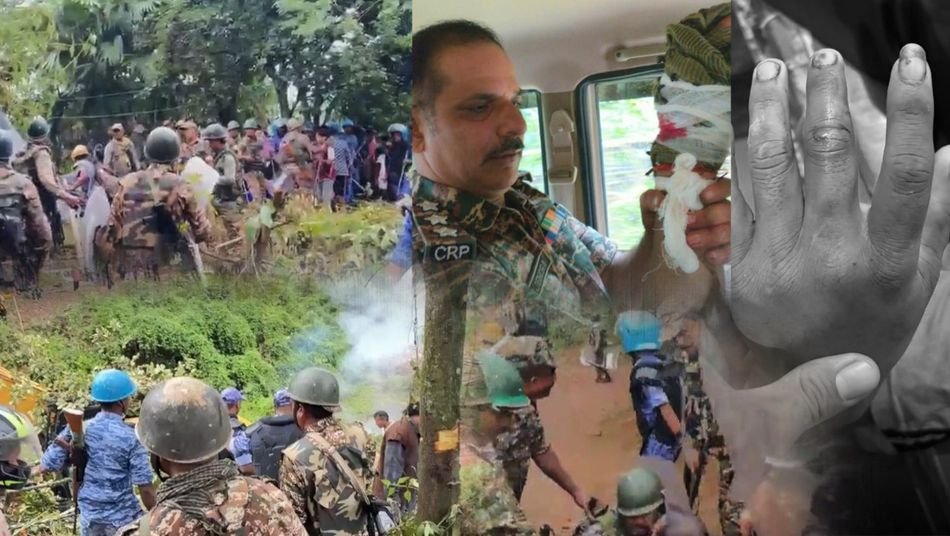
To understand why this matters so much, you have to understand what the Siang Upper Multipurpose Project actually is. SUMP is a massive proposed dam project on the Siang river in Arunachal Pradesh, one that has stirred up a storm of controversy across the state. The communities living along the Siang — many of them indigenous peoples with deep ancestral ties to the land and the river — have been vocal in their opposition. Activists, local organisations, and ordinary residents have taken to the streets in protest. Questions about displacement, environmental damage, and whether affected communities were ever genuinely consulted have been flying thick and fast.
This is, in other words, exactly the kind of issue that needs maximum public attention and honest, on-the-ground journalism. Not less of it.
Which is why what has been happening to coverage of SUMP on social media feels so calculated — and so troubling.
“We Cannot Accept This”
The APC and APUWJ, in their joint statement, did not hold back. They called the restrictions a matter of serious concern and pointed out something that should be obvious but apparently needs saying: SUMP involves questions of development, environment, displacement, indigenous rights, and the futures of entire communities along the Siang. Restricting journalistic coverage of it, especially during a period of intense public debate and active protest, directly denies citizens the information they need to participate meaningfully in decisions that affect their lives.
The two bodies have demanded that if any government authority actually issued directions to social media platforms to restrict SUMP-related content, that authority must come forward and disclose the legal basis for doing so. What specific grounds were cited? What legal provision was invoked? Who exactly gave the order? These are not unreasonable questions. They are the bare minimum that transparency demands.
“The press fraternity cannot accept blanket, opaque or arbitrary restrictions on legitimate journalism,” the statement said, warning that suppressing factual ground reports, interviews, footage of protests, and public opinion on an issue of this scale would cast a long and chilling shadow over press freedom in the state.
There is something almost perverse about the timing here. Journalists were out there doing their jobs — documenting protests, recording interviews, filing reports — and then the digital door was simply shut on them, without explanation, without recourse, and apparently without accountability.
A Line That Needed to Be Drawn
One of the most striking parts of the joint statement is something that reads almost like a reminder of Journalism 101, but one that needed to be said plainly and on the record: reporting on opposition to a project is not the same as opposing the government. Covering a protest does not mean endorsing it. Journalists have a duty — a professional and democratic duty — to document all sides of an issue fairly, and that includes the voices of people who are afraid, angry, and pushing back.
That principle shouldn’t need defending. But here we are.
The two bodies have also called on social media platforms to take a hard look at how legitimate journalism gets caught up in content moderation systems. Automated takedowns and blanket geo-restrictions are blunt instruments. When they are applied to news content, particularly around politically sensitive issues, without any meaningful process for journalists to appeal or seek review, it creates a dangerous precedent. And when those restrictions appear to be the result of external pressure rather than a genuine policy violation, the problem becomes something much more serious than a technical glitch.
The APC and APUWJ were clear that they will pursue every available democratic and legal avenue to challenge any attempt to intimidate journalists or suppress legitimate reporting through unexplained digital blockades.
What This Really Says
Here is the thing about silencing coverage of a controversial dam project that will affect indigenous communities, displace families, and alter the ecology of a river valley forever. It does not make the controversy go away. It does not quiet the protests. It does not make the questions about displacement and environmental impact disappear.
What it does do is ensure that those questions get asked in an atmosphere of greater suspicion and less trust — and that the people most affected by the project have even fewer ways to get their story heard.
As the press bodies themselves put it, a democracy is strengthened by more information, more scrutiny, and more dialogue. Not less. Not by restricting the news. And not, certainly, by hoping that if you make the videos disappear, the river’s people will too.
The Siang is still flowing. So is the resistance. And if the last few days have shown anything, it is that the journalists covering it are not going quietly either.