
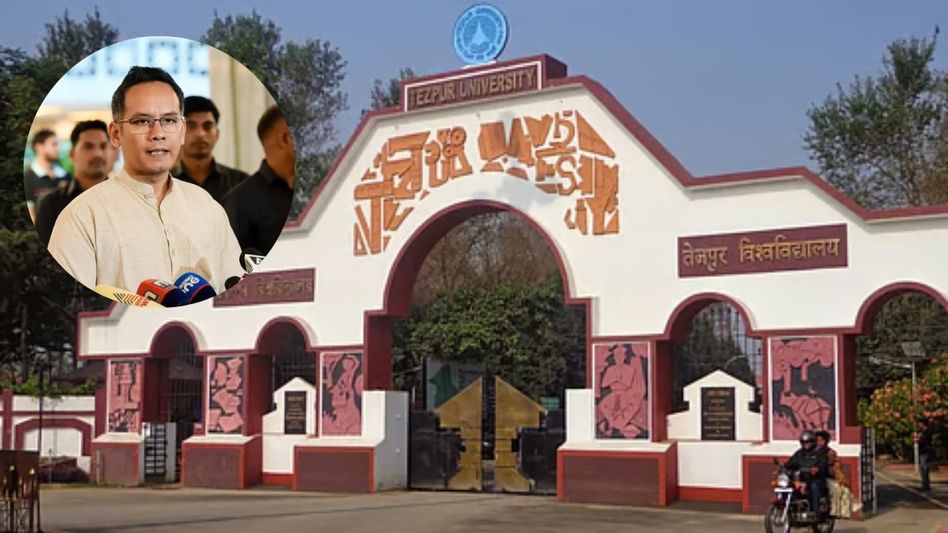
Congress deputy leader in the Lok Sabha and Assam unit president Gaurav Gogoi has praised the ongoing student-led protests at Tezpur University as a symbol of the “Kanchenjunga spirit” of a “new Assam” (#NatunAxom), while sharply criticizing the state government’s handling of the unrest. The agitation, now in its 79th day, has seen students and faculty enforce a complete shutdown since November 29, demanding the removal of Vice-Chancellor Shambhu Nath Singh over alleged administrative lapses and disrespect toward the late singer Zubeen Garg.
Gogoi’s remarks, shared via a post on X, underscore the protests’ roots in Assam’s storied tradition of student activism, linking them to the very origins of the university itself.
Roots of the Protests: Tribute to Zubeen Garg
The demonstrations erupted in mid-September following the sudden death of beloved Assamese singer Zubeen Garg, a cultural icon whose music and rebellious persona resonated deeply across the state. Students and faculty accused the university administration, particularly Vice-Chancellor Singh, of failing to observe proper mourning protocols and showing inadequate respect for Garg during a statewide period of grief. What began as demands for a dignified tribute has escalated into broader grievances against administrative opacity and governance failures.
By November 29, the protesters had declared an indefinite shutdown, halting all academic and non-academic activities. As of December 6, the standoff had persisted for 79 days without resolution, with demonstrators vowing to continue until receiving formal confirmation from the Centre on the Vice-Chancellor’s removal. The protests have drawn parallels to Assam’s historic student movements of the late 1980s, which played a pivotal role in the Assam Agitation and the eventual establishment of Tezpur University—receiving parliamentary sanction in 1994.
Gogoi’s Tribute: Pride in ‘Gen Z’ Resilience
In his X post, Gogoi expressed disappointment in the government’s approach:
“It is disappointing to see the manner in which Tezpur University is being tackled by the government.”
Yet, he lauded the protesters’ resolve:
“At the same time, I am proud of the manner in which the students and faculty of Tezpur University have conducted themselves. Firm, unbending and dignified.”
Gogoi invoked Garg’s iconic declaration of personal liberation—”I don’t have any caste, religion or God. I am free. I am the Kanchenjunga”—to frame the protests as an embodiment of unyielding independence and dignity. He celebrated the “power of Gen Z,” stating:
“The students and faculty of Tezpur University stand tall like #kanchanjunga. Late Zubeen Da would be proud of you… This is #NatunAxom.”
The reference to “Natun Axom” (New Assam) positions the agitation as a catalyst for a more assertive, youth-driven identity, free from institutional overreach and rooted in cultural pride.
Broader Context and Government Response
Tezpur University’s turmoil reflects simmering tensions in Assam’s higher education sector, where student activism has long intersected with regional identity politics. The university, a beacon of academic excellence in the Northeast, now faces operational paralysis, with classes suspended and examinations deferred. Protesters have also raised concerns over the Vice-Chancellor’s appointment process, citing an RTI response that reportedly deemed his papers and credentials unavailable.
The state government, led by the BJP, has faced mounting criticism for its perceived inaction. While the Centre has initiated a probe into the Vice-Chancellor’s conduct—relieving him of duties pending investigation—no concrete steps have quelled the unrest. Gogoi’s intervention amplifies calls for swift resolution, warning that mishandling could alienate Assam’s youth and erode trust in public institutions.
As the shutdown enters its second month, the protests continue to inspire solidarity across Assam, with cultural figures and alumni voicing support. For Gogoi and the Congress, this is not just a campus crisis but a defining chapter in the narrative of a “new Assam”—one forged in the fires of principled resistance.
(Source: India Today NE)