

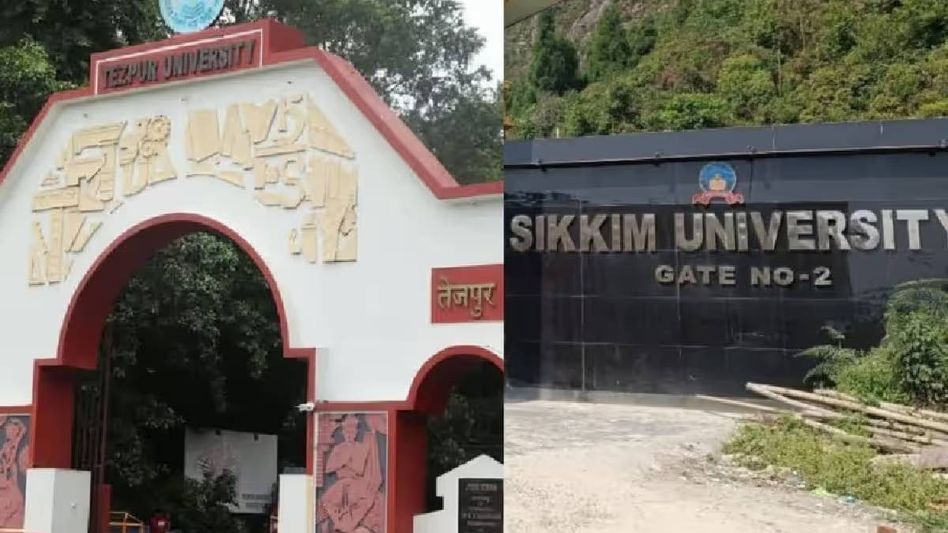
The Sikkim University Students’ Association (SUSA) has voiced strong apprehensions regarding the recent appointment of Dr. Braja Bandhu Mishra as Officer on Special Duty (OSD) to the Vice-Chancellor, citing procedural lapses and the candidate’s controversial past at Tezpur University. In a formal statement, SUSA described the decision as “deeply troubling” and a potential threat to the institution’s integrity, especially amid ongoing administrative vacancies.
The appointment, approved by the university’s Executive Council (EC) through an email circulation process, bypassed a formal meeting or detailed deliberation on the candidate’s credentials. This has sparked concerns over transparency and due diligence, particularly as several critical positions at Sikkim University— including Registrar, Finance Officer, Controller of Examinations, and Librarian—remain unfilled, straining operational efficiency.
Background on Dr. Mishra’s Tenure and Allegations
Dr. Mishra previously served as Finance Officer at Tezpur University in Assam, where his tenure was marred by serious allegations of financial irregularities. These claims triggered months-long student protests that garnered national attention, culminating in legal scrutiny against him. Reports indicate that Dr. Mishra ceased attending office amid the escalating agitation, leaving unresolved questions about accountability and governance at the institution.
SUSA highlighted the risks of inducting an individual under such active investigation into a sensitive advisory role at Sikkim University, one that involves oversight of administrative and financial matters. “Bringing someone under active scrutiny into such a critical position without demonstrating thorough verification is deeply unsettling,” the association stated. “This puts at risk not only the integrity of the office but also the credibility of Sikkim University as a whole.”
SUSA’s Key Demands for Transparency
In their missive to the university administration, SUSA has outlined specific queries demanding immediate clarification:
- The rationale behind selecting Dr. Mishra for the OSD role.
- Details of verification procedures conducted on his background and qualifications.
- Confirmation of adherence to standard recruitment norms and transparent processes.
- Justification for relying on an email-based approval mechanism instead of a formal EC meeting.
The students’ body emphasized that institutional decisions must prioritize “proper scrutiny, consultation, and open communication with stakeholders,” aligning with principles of fairness and accountability. They reaffirmed their commitment to monitoring developments and advocating for responsible governance, underscoring that student welfare and institutional standards cannot be compromised.
Broader Implications for Sikkim University
This controversy arrives at a challenging juncture for Sikkim University, a Central University established in 2007 to promote higher education in the Himalayan state. With key administrative posts vacant, the OSD appointment is seen by critics as a stopgap measure that could exacerbate existing inefficiencies rather than resolve them. SUSA’s intervention reflects growing student activism in the Northeast’s academic circles, where demands for ethical leadership and procedural integrity are increasingly prominent.
As of now, the university administration has not issued an official response to the concerns. However, the matter could escalate if unaddressed, potentially drawing involvement from higher education authorities or the University Grants Commission (UGC). SUSA has vowed to continue its advocacy, urging all stakeholders to uphold the highest standards of transparency to safeguard the university’s reputation and foster a conducive learning environment.
This episode serves as a reminder of the delicate balance required in academic appointments, particularly in institutions navigating leadership transitions and regional sensitivities.
(Source: India Today NE)