
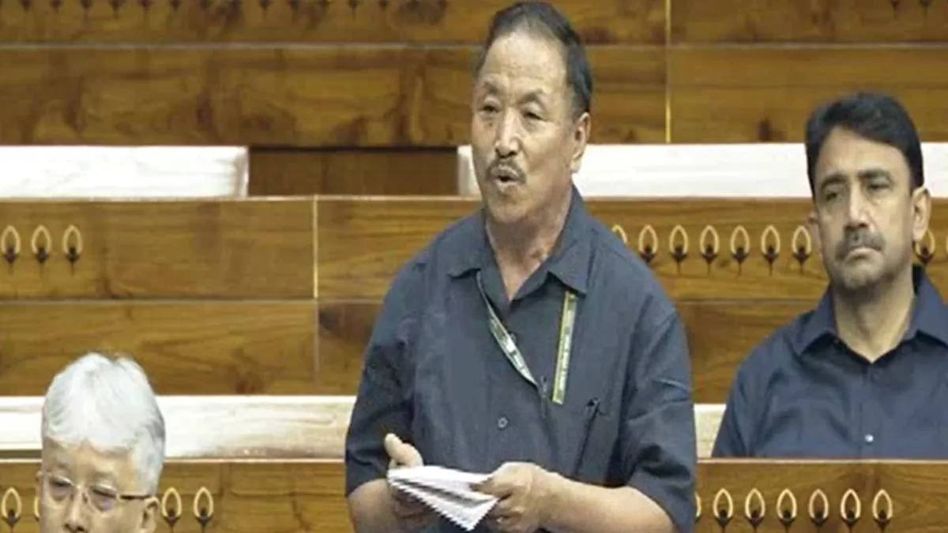
Nagaland’s lone Lok Sabha MP, Supongmeren Jamir, has raised an urgent alarm over the acute staffing shortages plaguing the Akashvani (All India Radio) and Doordarshan Kendras in Kohima, warning that the crisis threatens to cripple these vital public broadcasting institutions. Speaking under Rule 377 in the Lok Sabha on December 1, Jamir called for immediate intervention from the Ministry of Information & Broadcasting to avert a complete operational breakdown and safeguard Nagaland’s cultural and democratic voice on national platforms.
The MP underscored the dire situation, where over 60% of sanctioned posts remain vacant, leading to administrative paralysis, delayed programming, and compromised service delivery. These centres, established to foster national integration and promote the state’s rich linguistic and cultural diversity, are now struggling to fulfill Prasar Bharati’s mandate amid chronic understaffing.
Staffing Vacancies: A Snapshot of the Crisis
Jamir presented stark figures highlighting the extent of the shortfall:
| Institution | Sanctioned Posts | Filled Posts | Vacant Posts | Vacancy Rate |
|---|---|---|---|---|
| Akashvani Kendra, Kohima | 260 | 90 | 170 | 65% |
| Doordarshan Kendra, Kohima | 144 | 55 | 89 | 62% |
The absence of full-time leadership exacerbates the issues, with both centres currently overseen remotely by a Deputy Director General stationed in Dibrugarh, Assam. This distant management has resulted in prolonged approval delays, inadequate oversight of content and technical operations, and disruptions in maintenance across Nagaland’s broadcasting network, including the All India Radio (AIR) station in Kohima and the Lok Sabha Radio Service (LRS) in Mokokchung.
MP Jamir’s Key Concerns and Demands
In his address, Jamir described the scenario as “unacceptable,” emphasizing how the shortages undermine the centres’ role in amplifying Nagaland’s socio-economic narratives, cultural heritage, and regional identity. He pointed out critical gaps in technical roles, such as engineers, Technical Assistants, and Junior Technical Assistants, which have hampered everything from signal maintenance to content production.
“These institutions are the lifeline for democracy and connectivity in Nagaland. Their distress not only affects service quality but also silences our state’s voice in the national discourse,” Jamir stated.
The MP has outlined a series of immediate demands to the Centre:
- Appointment of Full-Time Leadership: Immediate posting of dedicated Station Directors for both Akashvani and Doordarshan Kendras in Kohima to ensure on-ground accountability and swift decision-making.
- Recruitment Drive: Expedited filling of all 259 vacant posts through transparent and merit-based processes, prioritizing local talent familiar with Nagaland’s diverse dialects and cultures.
- Technical Augmentation: Targeted hiring for engineering and support staff to restore operational efficiency at AIR Kohima and LRS Mokokchung.
- Sustained Oversight: Regular audits and monitoring to prevent recurrence, with a focus on integrating digital upgrades for better reach in remote areas.
Jamir assured the House that he would relentlessly pursue the matter with the Ministry until the broadcasting infrastructure is fully revitalized, viewing it as essential for empowering Nagaland’s youth, preserving indigenous languages, and bridging urban-rural divides.
Broader Implications for Nagaland’s Media Landscape
The crisis at Kohima’s broadcasting hubs reflects wider challenges faced by public media in the Northeast, where geographical isolation and resource constraints often lead to underinvestment. These centres have historically played a pivotal role in disaster communication, cultural dissemination, and community engagement—services now at risk due to the staffing void. Local journalists and cultural activists have echoed Jamir’s concerns, warning that prolonged neglect could erode public trust in state-run media and limit access to reliable information in a region prone to ethnic and natural challenges.
While the Ministry has yet to issue an official response, sources indicate that Jamir’s intervention has prompted internal reviews at Prasar Bharati. The MP’s proactive stance aligns with his ongoing advocacy for Northeast-specific development, including enhanced funding for regional media under the Digital India initiative.
As Nagaland navigates its path towards greater media autonomy and digital inclusion, resolving this staffing impasse could serve as a model for revitalizing public broadcasting across the frontier states, ensuring that voices from the hills resonate clearly on the national stage.
(Source: India Today NE)