
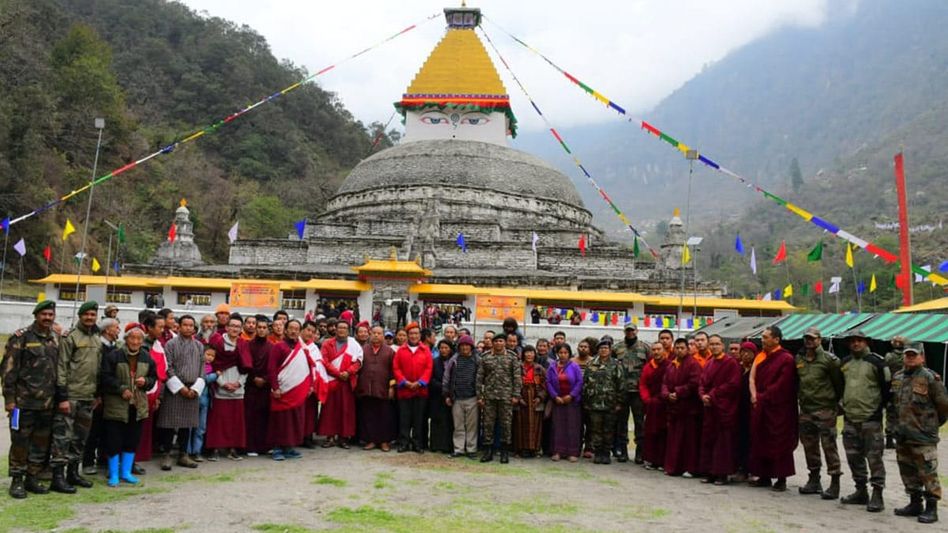
– A vibrant crowd of thousands, including a notable number of Bhutanese citizens, came together in Arunachal Pradesh to mark the annual Gorsam Kora festival, a celebration of the deep-rooted friendship between India and Bhutan. Held from March 26 to 29 in the picturesque Zemithang Valley of Tawang district, the event showcased the shared Himalayan Buddhist heritage and strengthened cross-border bonds.
Organized by the Zemithang community with support from civil authorities and local Indian Army units, the festival kicked off with a solemn invocation by Thengtse Rinpoche. This was followed by prayers at the Khinzemane Holy Tree, a site revered as it is believed to have been planted by the 14th Dalai Lama. The location holds historical significance as the entry point for the Dalai Lama when he fled Tibet in 1959.
The heart of the festival was the Gorsam Chorten, a 93-foot-tall stupa constructed in the 12th century by Lama Pradhar. Predating the famous Tawang Monastery, this iconic structure, modeled after Nepal’s Boudhanath Stupa, shares a spiritual connection with Bhutan’s Chorten Kora, built in 1740. Thousands of devotees gathered at the chorten to observe the auspicious closing of the Lunar calendar’s first month, with monks performing sacred chants and traditional Buddhist rituals.
The three-day event drew pilgrims and lamas from Bhutan, Tawang, and nearby regions, fostering a spirit of unity and cultural exchange. Adding to the festivities, around 73 Bhutanese civilians, 15 Nepalese, and one Japanese visitor participated, engaging in trade and enriching the cross-border interactions. The festival featured an array of performances, including local cultural shows, Indian Army band displays, and martial arts demonstrations like Mallakhamb and Zanjh Pathaka.
Highlighting its broader impact, the Gorsam Kora festival aligns with India’s Vibrant Village Programme, promoting community engagement through initiatives like medical camps. The event not only celebrated cultural ties but also underscored Arunachal Pradesh’s role as a bridge between nations, blending tradition with a vision for sustainable growth.