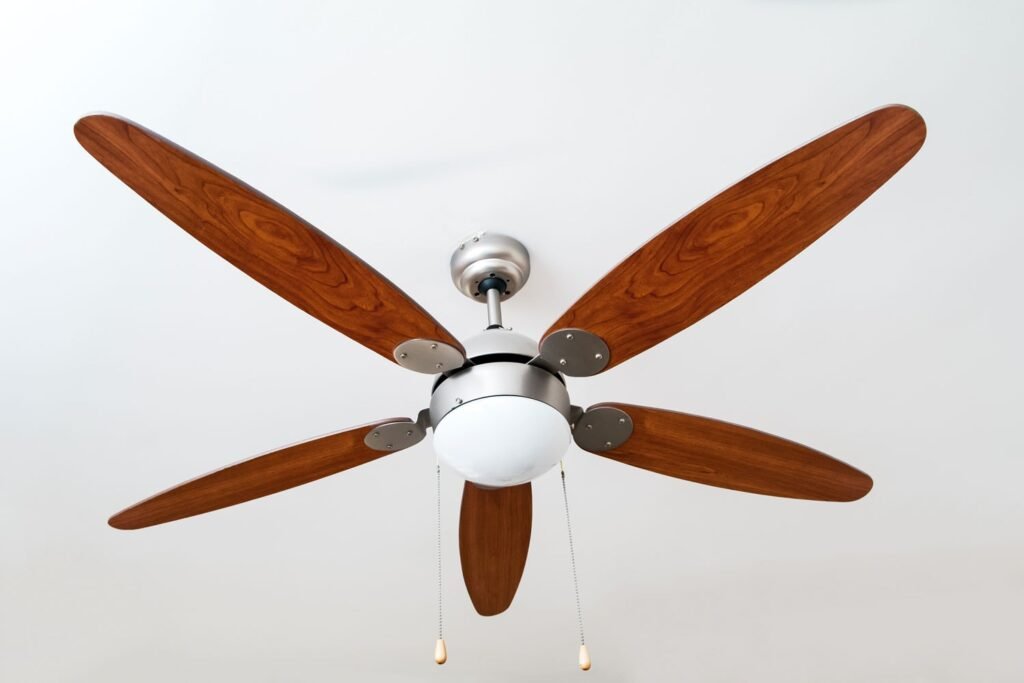
Learning how to clean a ceiling fan without a ladder is a practical skill for anyone who does not own a tall ladder, cannot climb one safely, or simply wants a faster routine. Ceiling fans collect dust quickly because their blades sit still for hours, gather a layer of household dust, and then fling that dust across the room the moment they spin up. A dusty fan spreads allergens through the air, looks shabby from below, and runs less efficiently as dust builds up on the blades and motor housing. The good news is that you can clean every part of a ceiling fan from the floor with the right tools, and this guide covers five methods that do it safely.
All five methods share the same starting point: turn the fan off and wait until the blades stop completely. Never clean a moving fan, and never lean a chair or stool against a wobbly surface as a ladder substitute. The tools below cost little, work for other high dusting jobs too, and keep your feet safely on the ground. Pick the method that matches how dirty your fan is, from a light weekly dusting to a deep clean of greasy kitchen fan blades.
Safety First: Before You Touch the Fan
Turn the fan off at the wall switch and wait a full minute for the blades to stop. Even a slowly spinning blade can catch a duster and throw it, or knock the duster into a light fixture. If your fan has a light kit, turn that off too and let the bulbs cool before you touch anything near them. Hot bulbs can burn your hands through a cloth, and a cold damp cloth on a hot bulb can crack the glass.
Move furniture and breakables out from under the fan, and lay a drop cloth or old sheet on the floor below it. Dust falls straight down, and a drop cloth saves you from vacuuming the whole room afterward. If you have allergies, wear a dust mask and open a window for ventilation. Remove the light bulbs only if you need to clean the light kit itself, and handle them with a dry cloth so skin oils do not shorten their life.
What You Need
An extendable duster with a flexible head is the single most useful tool for this job. Look for one that extends to at least eight feet and bends to match the angle of the blades. A vacuum cleaner with a brush attachment and an extension wand is the second key tool. Add a few clean microfiber cloths, an old pillowcase, a spray bottle with mild dish soap and water, and a broom if you do not have an extendable duster.
Microfiber cloths matter because they trap dust instead of pushing it around, and they can be washed and reused many times. Avoid feather dusters for ceiling fans: they scatter dust into the air and leave a film behind. A damp microfiber cloth, wrung out until almost dry, is the right tool for the final wipe on every method below.
Method 1: Extendable Duster
The extendable duster is the fastest method for regular cleaning. Extend the pole to reach the blades, bend the head so it lies flat along the top of a blade, and draw it slowly toward you from the base of the blade to the tip. Work one blade at a time, and shake the duster outside or over a trash bag between blades so you do not carry dust from one blade to the next.
Use slow, steady strokes. Fast movements flick dust into the air and onto the furniture below. For the underside of the blades, flip the duster head and repeat the same motion. Finish by dusting the motor housing and the downrod with the same tool. This method takes about five minutes for a standard five-blade fan and is ideal for a weekly routine that prevents heavy buildup from forming in the first place.
Method 2: Vacuum With a Brush Attachment
A vacuum cleaner captures dust instead of moving it around, which makes it the best choice for very dusty fans and for allergy sufferers. Attach the brush tool to the extension wand, hold it flat against the top of a blade, and move slowly from base to tip while the vacuum runs. The suction pulls dust off the blade and into the vacuum instead of letting it fall.
Work carefully and support the blade gently with your free hand on the wand so the suction does not pull the blade out of alignment. Vacuum the underside of each blade the same way, then run the brush over the motor housing, the pull chains, and the light kit. Empty the vacuum canister or change the bag afterward, since ceiling fan dust fills a vacuum quickly. This method takes a little longer than a duster, but it leaves the least dust in the air.
Method 3: The Pillowcase Trick
The pillowcase trick is the classic way to clean a fan without scattering dust everywhere. Slide an old pillowcase over one blade so the blade sits inside the case, press the fabric gently against the top and bottom of the blade with both hands, and slowly pull the case toward you and off the tip. The dust stays trapped inside the pillowcase instead of falling on the floor.
Repeat for each blade, shaking the pillowcase out over a trash bag or outside between blades. This method works best with a lightweight pillowcase and a fan you can reach by standing on the floor with your arms extended, or with a step stool if the ceiling is low. It is slower than a duster, but it is remarkably clean, and it is the best choice when the fan hangs over a bed, a dining table, or electronics that you do not want dusted. After the pillowcase pass, wipe each blade with a damp microfiber cloth for a polished finish.
Method 4: Broom and Microfiber Cloth
If you do not own an extendable duster, a broom and a microfiber cloth can do the job. Dampen the cloth lightly, wring it until almost dry, and drape it over the head of the broom. Secure it with a rubber band if it slips. Hold the broom handle and guide the cloth along the top of each blade from base to tip, using the same slow motion as the duster method.
Rinse and re-wring the cloth between blades so you do not spread dirty water across clean blades. This improvised tool reaches most standard ceiling heights and costs nothing if you already own a broom. It is less precise than a purpose-built duster, so take your time and check each blade from below with a flashlight afterward to catch any missed spots near the motor housing.
Method 5: Damp Wipe for Greasy Blades
Kitchen fans and fans in humid rooms develop a sticky film that dry dusting cannot remove. For these, use a damp wipe method. Lightly dampen a microfiber cloth with a solution of warm water and a few drops of dish soap, wring it until almost dry, and wrap it around the head of your extendable duster or broom. Wipe the top and bottom of each blade, then follow with a clean, dry microfiber cloth to remove any moisture.
Never spray liquid directly onto the fan. Water that runs into the motor housing can damage the motor and create a safety hazard. Always apply cleaner to the cloth, never to the fan itself, and keep the cloth only slightly damp. For stubborn grease, let the damp cloth rest on the blade for a minute to soften the film before wiping. Finish by dusting the motor housing and the downrod with a dry cloth.
Cleaning the Motor Housing and Light Kit
The blades get the most attention, but the motor housing and light kit collect dust too. Dust the housing with a dry microfiber cloth on your extendable duster, working around the curves gently. If the housing has vents, run the vacuum brush lightly over them to clear trapped dust, since blocked vents make the motor run hotter.
For the light kit, remove the glass shades or globes if they are designed to come off, wash them in warm soapy water, dry them completely, and replace them. Wipe the bulbs with a dry cloth while they are cool. If the shades do not come off, dust them carefully with the duster and wipe the outside with a damp cloth. Clean glass lets more light through and makes the whole room look brighter.
How Often Should You Clean a Ceiling Fan?
Dust the blades once a week if the fan runs daily, and at least once a month if it runs only in warm weather. A weekly dusting takes five minutes and prevents the thick, sticky buildup that demands a deep clean. Deep clean the blades, housing, and light kit with a damp wipe once every three months, and always clean the fan before the start of the warm season and before switching it to reverse for cold weather.
A clean fan moves air better and uses less energy, which matters in summer when the fan runs for hours each day. Pair fan cleaning with your seasonal routine: when you think about keeping a house cool in summer without air conditioning, a clean, efficient fan is one of the simplest tools you have. The same weekly dusting habit works for other hard-to-reach spots, and the same gentle, bleach-free approach you use in the kitchen, such as cleaning a microwave without vinegar, keeps every appliance in good shape without harsh chemicals.
Mistakes to Avoid
The most dangerous mistake is cleaning while the fan is still moving. Even a slow blade can catch a duster and wrench it from your hands. Wait until the blades are completely still, and keep the wall switch off while you work so nobody turns the fan on by accident.
Never push hard on the blades. Ceiling fan blades are balanced carefully, and pressing down or pulling on them can bend the blade brackets and make the fan wobble. Use light pressure and let the tool do the work. Never spray water or cleaner directly onto the fan, and never soak a cloth so wet that it drips. Water near the motor is a safety risk and a quick way to ruin a fan. Finally, do not stand on an unstable chair or stack of books to reach the fan. If you cannot reach it from the floor with an extendable tool, buy a longer duster instead of improvising a platform.
FAQ
Can I really clean a ceiling fan without a ladder?
Yes. An extendable duster, a vacuum with a brush attachment, or the pillowcase trick all clean ceiling fan blades from the floor. Choose the tool that matches your ceiling height and how dusty the fan is.
What is the best tool for cleaning ceiling fan blades?
An extendable duster with a bendable head is the best all-round tool. It is fast, reaches standard ceilings, and works for weekly dusting. A vacuum with a brush attachment is better for very dusty fans and for allergy sufferers.
How does the pillowcase trick work?
Slide a pillowcase over each blade, press the fabric against the blade, and pull the case off slowly toward the tip. The dust stays inside the pillowcase instead of falling on the floor or furniture below.
How do I clean greasy ceiling fan blades?
Wipe them with a microfiber cloth lightly dampened in warm water with a few drops of dish soap, then dry them with a clean cloth. Never spray liquid directly onto the fan, and keep the cloth only slightly damp.
How often should I dust my ceiling fan?
Once a week if the fan runs daily, and at least once a month if it runs rarely. Deep clean the blades, housing, and light kit with a damp wipe once every three months.
Why does my ceiling fan wobble after cleaning?
Cleaning usually does not cause wobbling, but pressing hard on the blades can bend the brackets. Check that all blade screws are tight, clean the blades evenly, and use a balancing kit if the wobble persists.