Learning how to remember to take medication on time without an app is simpler than most people expect. You do not need another notification, another account, or another screen competing for your attention. What you need is a system that fits into routines you already follow every single day, so taking your medication becomes as automatic as brushing your teeth or locking the front door. When the reminder lives inside your daily life instead of inside your phone, it keeps working even when your battery dies, your phone is in another room, or you simply feel tired of alerts.
This guide walks through practical, low-tech methods that actually work in busy households, on workdays and weekends, at home and while traveling. None of these ideas require special equipment or complicated tracking. They rely on habit design: pairing a new action with an old one, making the cue impossible to miss, and building a backup plan for the days when life gets messy.
This article is for informational purposes only and is not medical advice. Consult a qualified professional.
Why Remembering Medication Is So Hard
Forgetting medication is rarely about carelessness. Most people forget because the task has no natural trigger. Unlike eating lunch or going to work, taking medication often happens at a vague time, such as morning or bedtime, with nothing specific to prompt it. If your morning changes, because you wake up late, skip breakfast, or leave the house early, the loose cue disappears and the dose slips away with it.
Another common problem is that the task is invisible. Pills kept inside a cabinet, a drawer, or a bag give you no reminder at all. Out of sight really does mean out of mind, especially when you are rushing. Add in a second dose later in the day, a changing work schedule, or a weekend with no fixed routine, and it is easy to see why even careful people miss doses.
Anchor Medication to a Habit You Never Skip
The single most effective low-tech method is habit stacking: attaching medication to something you already do without thinking. Pick an anchor habit that happens at roughly the same time and in the same place every day. Good anchors include brushing your teeth, making coffee, feeding a pet, putting on shoes, or turning off a bedside lamp at night.
The key is specificity. Saying that you will take medication in the morning is too vague. Saying that you will take it right after you brush your teeth in the morning is a plan your brain can follow. The toothbrush becomes the cue. After a few weeks of pairing the two actions, reaching for the toothbrush will automatically bring the medication to mind.
Choose an anchor that matches the timing your clinician or pharmacist advised. If the dose belongs with a meal, anchor it to sitting down for that meal rather than to waking up. If it belongs at bedtime, anchor it to a final nightly action, such as setting out clothes for the next day. Keep the anchor close to the medication itself: store the medication near the anchor location when it is safe and appropriate to do so, and keep it away from heat, moisture, and children.
Examples of Strong Anchors
- Morning dose: right after brushing teeth, before pouring coffee.
- Midday dose: right after sitting down for lunch, before picking up a fork.
- Evening dose: right after changing into home clothes, before starting dinner.
- Bedtime dose: right after turning down the bed, before reading or switching off the light.
Write your anchor down on a small card for the first two weeks. The written reminder supports the new habit until the pairing becomes automatic. Once the habit feels natural, you can throw the card away.
Make the Cue Impossible to Miss
A strong cue beats willpower every time. If your medication lives behind a closed cabinet door, you have to remember to open the door first, which defeats the purpose. Instead, place a visible cue in the path of your anchor habit, while keeping safety in mind at all times. Medication must stay out of reach of children and visitors, and some products need specific storage conditions, so always follow the storage guidance on the label and ask a pharmacist if you are unsure.
For adults in a household without small children, a safe visible spot might be next to the toothbrush holder, beside the coffee maker, or on the kitchen counter where lunch is prepared. The point is that you see it exactly when you perform the anchor habit. If the medication cannot sit out in the open, use a visible placeholder instead: a brightly colored card, a small empty dish, or a note on the bathroom mirror that says to take the dose. The placeholder prompts you to open the cabinet, and the cabinet holds the real medication safely.
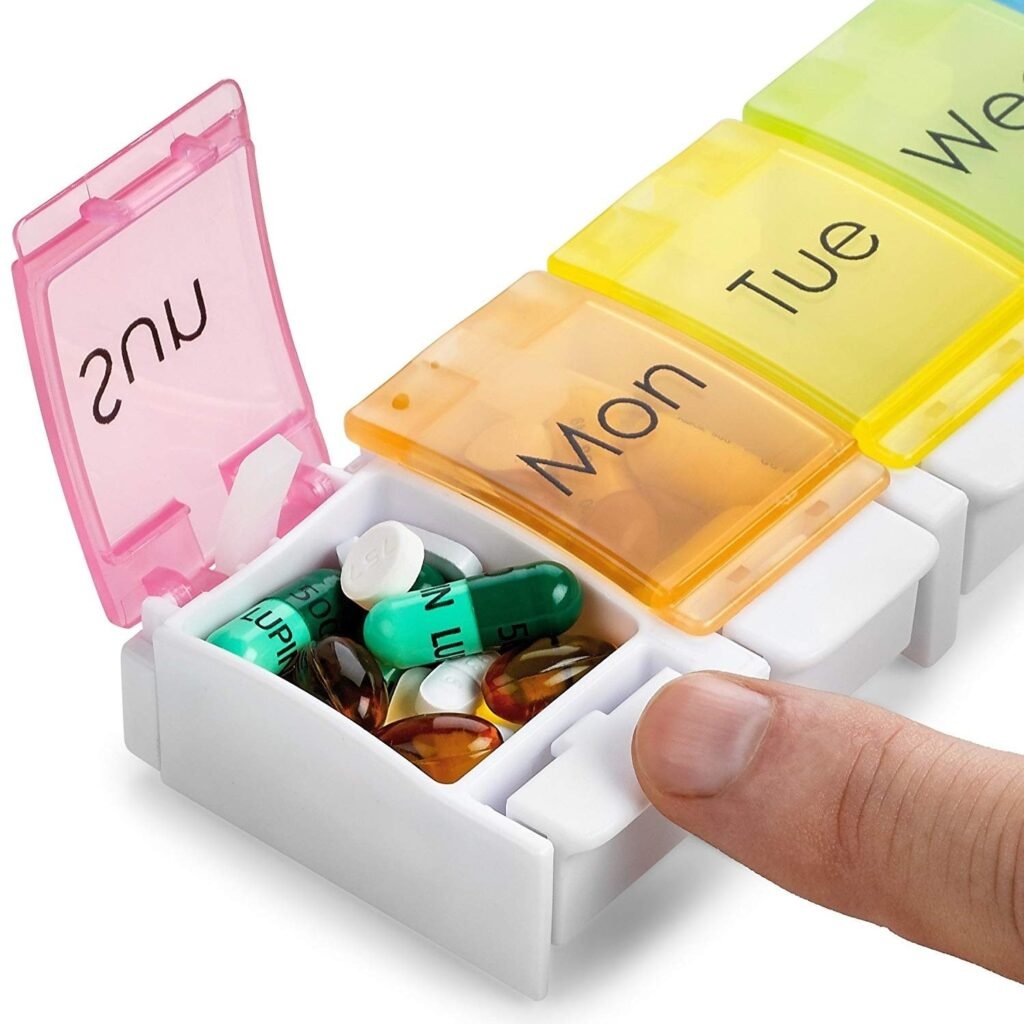
Another powerful visual tool is a weekly pill organizer. Loading it once a week turns a daily guessing game into a quick visual check. In the morning you can see whether that day’s compartment is still full or already empty, which answers the most common worry: did I already take it today. If you use an organizer, follow the label instructions for your product, keep it clean and dry, and ask a pharmacist whether your particular product is suitable for organizer storage.
Build a Simple Daily Checklist
A paper checklist on the fridge or bathroom mirror sounds old-fashioned, and that is exactly why it works. It needs no charging, no updates, and no password. Each morning, glance at the list. Each time you take a dose, tick it off. At the end of the day, the list shows the full picture at a glance.
Keep the checklist short. List only the medication times, not every task in your day. A long list gets ignored; a three-line list gets used. For example, a simple list might read: morning dose, midday dose, bedtime dose. Tick each one as you go. If you live with a partner or family member, a shared checklist can also help, because a second person may notice an unticked box before the day ends.
Keep Weekends and Schedule Changes From Breaking the Routine
Weekends break more medication routines than any other single factor. The anchor habits change: you wake up later, skip the usual breakfast, or leave the house for errands. A routine built only around workdays will collapse on Saturday unless you deliberately build a weekend version.
The fix is to pick a second anchor for non-work days. If your weekday anchor is making coffee before leaving for work, your weekend anchor might be feeding a pet or brushing your teeth after a lie-in. The action can differ as long as the pairing stays consistent: anchor first, medication second, every day, without exception.
Schedule changes deserve the same planning. Shift work, travel, daylight changes, and holidays all move the anchors. When you know a change is coming, decide your new anchor in advance rather than hoping you will remember in the moment. Write it down the night before. A one-minute plan the evening before a busy day prevents a full day of wondering whether a dose was taken.
Sleep disruptions can also knock a routine off track. If restless nights leave you groggy and out of sequence in the morning, it helps to rebuild a calm bedtime routine first, since a steadier night makes the morning anchor easier to follow. Readers who wake during the night may find the ideas in How to Fall Back Asleep After Waking at 3am Without Phone useful for getting back to sleep without reaching for a screen.
Use a Buddy System and a Backup Cue
A buddy system is one of the most underrated memory tools. Ask a partner, roommate, or close friend to check in once a day, especially during the first month of a new routine. The check-in can be as simple as asking at dinner whether the evening dose was taken. This is not about supervision or nagging; it is about adding a second, human cue to your system.
A backup cue protects you when the first cue fails. If your main anchor is brushing your teeth but you rush out without brushing one morning, a backup cue catches the miss. Good backup cues include a note on the front door, a pill organizer kept where you eat breakfast, or a reminder card inside your lunch bag. The backup does not need to be fancy. It just needs to appear later in the day, before the window for that dose has fully passed.
Travel Without Losing the Routine
Travel scrambles every anchor at once: different bed, different bathroom, different meal times. Prepare a small travel kit before you leave. Pack medication in its original labeled container, carry enough for the trip plus a few extra days in case of delays, and keep it in your hand luggage rather than checked baggage. Ask a pharmacist about storage during travel if heat, cold, or time-zone changes are involved.
On the trip, recreate the anchor in the new setting. If your home anchor is brushing your teeth, keep that pairing in the hotel bathroom too. Place the medication next to the hotel toothbrush holder, or set the reminder card on top of your toiletry bag. For multi-day trips, a travel pill organizer with one compartment per day can make the visual check just as easy as it is at home.
Time-zone changes need special care. Do not guess about timing changes for scheduled doses. Ask your clinician or pharmacist before the trip how to handle the shift, and write their guidance down so you can follow it exactly while traveling.
What to Do When You Miss a Dose
Missing a dose happens to almost everyone at some point, and the worst response is panic or guessing. Do not guess what to do on your own. The safe move is simple: check the guidance that came with your medication, and if you are unsure at all, ask a pharmacist or clinician promptly. They can tell you what applies to your specific product and situation.
After a missed dose, treat it as useful information rather than a failure. Ask what broke down. Was the anchor missing that day. Was the medication out of sight. Did travel or a schedule change interfere. Fix that one weak link instead of overhauling the whole system. Small adjustments, like moving the organizer to a better spot or choosing a stronger weekend anchor, prevent the same miss from repeating.
If missed doses happen often, that pattern itself is worth discussing with a clinician or pharmacist. They may suggest a different routine, a different storage setup, or a review of the schedule. Frequent misses are a system problem, not a character flaw, and professionals deal with them every day.
Mistakes to Avoid
- Relying on memory alone with no cue, anchor, or visual check.
- Keeping medication hidden in a drawer where nothing prompts you to open it.
- Building the routine around workdays only and having no weekend plan.
- Changing the anchor every few days instead of letting one pairing become automatic.
- Guessing what to do after a missed dose instead of asking a pharmacist or clinician.
- Storing medication in a bathroom cabinet exposed to steam, or in a hot car, against label guidance.
- Pouring medication into an unlabeled container where it cannot be identified.
- Adding a second reminder system on top of a broken one instead of fixing the cue.
A Simple Routine You Can Copy
Here is a complete low-tech routine that many people find easy to sustain. On Sunday evening, load the weekly organizer and place it beside the coffee maker. Each morning, take the morning dose right after brushing your teeth, then tick it off on the fridge checklist. At lunch, take the midday dose right after sitting down, with the organizer already on the table. At night, take the bedtime dose right after turning down the bed, then tick the final box. If a box is still unticked at dinner, the backup cue has done its job and you still have time to check with a pharmacist if you are unsure what to do.
Nighttime discomfort can also disturb this kind of steady routine, since broken sleep makes mornings harder to run on autopilot. If night sweats or similar sleep disruptions keep throwing off your mornings, the practical tips in How to Stop Night Sweats While Sleeping Without Medication may help you protect the sleep that supports the routine.
Start small. Pick one anchor, one visible cue, and one checklist, and run that simple version for two weeks before adding anything else.
FAQ
What is the easiest way to remember medication without a phone?
Anchor the dose to a habit you never skip, such as brushing your teeth, and keep a visible cue at that exact spot. The habit becomes the reminder, so no phone or alarm is needed.
Does a weekly pill organizer really help?
Yes, for many people it helps a great deal, because an empty compartment shows at a glance that the dose was taken, while a full one shows it was not. Check with a pharmacist first that your product suits organizer storage and follow the label guidance.
What should I do if I miss a dose?
Do not guess what to do on your own. Check the guidance that came with your medication and ask a pharmacist or clinician if you are unsure. Then fix the weak link in your routine so the same miss is less likely next time.
How do I keep the routine going on weekends?
Choose a separate weekend anchor that happens even on lazy days, such as feeding a pet or brushing your teeth after waking. Keep the pairing of anchor first, medication second, and the routine survives the change in schedule.
What if I take medication more than once a day?
Give each dose its own anchor and its own line on your checklist. A morning dose might pair with brushing teeth, while an evening dose pairs with turning down the bed. Separate cues prevent the doses from blurring together.
Can a family member help me remember?
Yes. A short daily check-in from a partner or friend adds a reliable human cue, especially in the first month. Keep medication stored safely and privately, and never share medication with another person.