
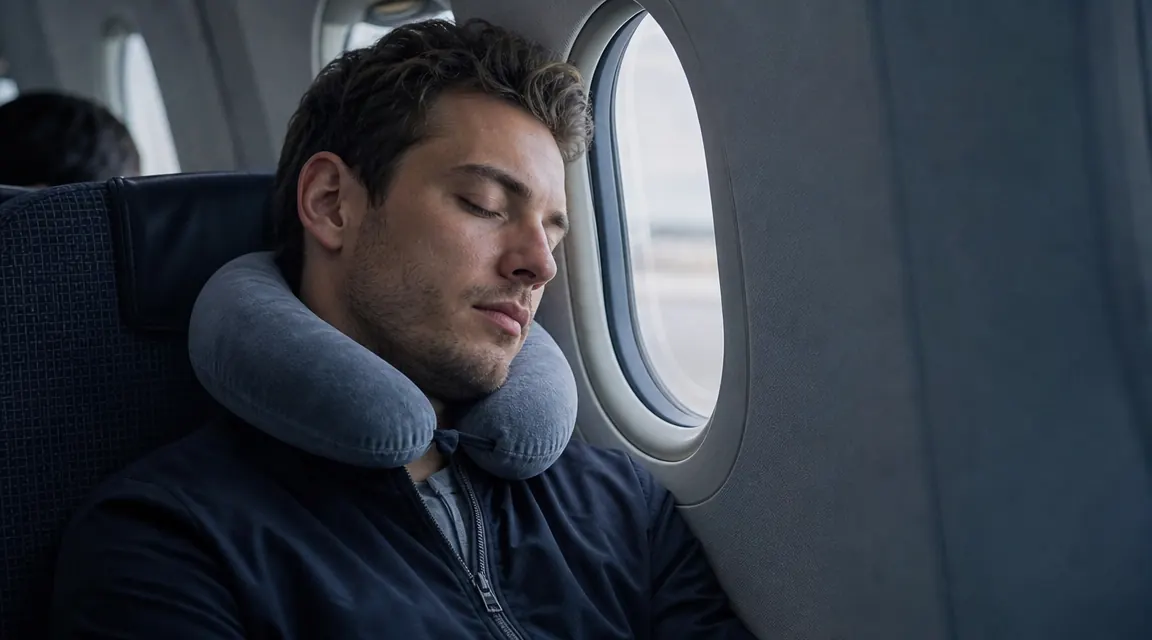
Learning how to sleep comfortably on a long flight in economy class is less about luck and more about preparation. A ten or twelve-hour journey can leave you groggy and stiff for days if you arrive having slept badly. But with the right seat, the right gear, and a few smart habits, even the tightest coach cabin becomes a place where you genuinely rest. Here is how to prepare your body before boarding, choose the right seat, pack the right gear, position yourself well, and land feeling close to human.
Get Your Body Ready Before You Board
Good sleep on a plane starts hours before takeoff. Your body does not know it is about to be asked to nap at 30,000 feet, so you have to nudge it in the right direction. If your flight leaves late in the evening, try to stay reasonably active during the day instead of napping for hours in the afternoon. A tired body falls asleep faster than a rested one that just had a long siesta.
Start shifting your schedule before departure if you can. Moving your bedtime an hour or two closer to your destination’s time zone for a couple of nights eases the adjustment. Also plan your caffeine carefully. Coffee has a half-life of roughly five to six hours, which means an afternoon espresso is still whispering in your bloodstream at midnight. On travel day, have your last coffee at least six hours before the time you hope to sleep on the plane.
Exercise lightly on the day of the flight: a morning walk or quick workout burns off restless energy and makes your body crave recovery. Just avoid heavy workouts right before boarding, since elevated core temperature and adrenaline can keep you wired. Wear something genuinely comfortable to the airport. Tight waistbands, stiff shoes, and heavy jackets fight you the whole flight. Soft layers you can add or remove are the way to go.
Choose the Best Seat for Sleeping
The seat you sit in matters almost as much as anything else when figuring out how to sleep comfortably on a long flight in economy class. Window seats are the classic pick: you get a wall to lean against, control of the shade, and no neighbors climbing over you. Aisle seats offer leg freedom but bring interruptions from passing passengers and carts.
Avoid high-traffic zones. Rows near galleys and lavatories are noisy, bright, and busy all flight, and seat maps let you spot them. The quietest stretches tend to be between the wings and the forward cabin, where engine drone is steadier and foot traffic is lighter.
Extra-legroom and exit-row seats are worth considering if the price is reasonable, since stretched-out legs change everything about resting. But read the fine print: some exit-row seats have armrests that do not lift, which kills the trick of raising the armrest and sprawling across an empty middle seat. If the flight looks empty, ask at the gate or check the seat map at check-in for a row where you can spread out. A row of three to yourself beats any neck pillow.
If you are flying a red-eye, timing matters as much as the seat. Flights that depart after dinner and land in the morning line up with your natural sleep drive. When you are planning a trip on a budget, it is tempting to grab the cheapest fare and forget the seat selection fee, but spending a little extra to choose your seat can be the single highest-value upgrade of the whole journey.
Pack a Sleep Kit That Actually Works
Airlines provide less comfort than ever, so your personal sleep kit does the heavy lifting. Everything you need fits in a small pouch inside your personal item. Here is what belongs in it.
A Neck Pillow That Fits Your Sleeping Style
Not all neck pillows are created equal. The classic U-shaped pillow works fine if you sleep upright with your head tilted back, but many people doze with their head tipping forward, where a U-shape offers no support. Wraparound or scarf-style pillows support the chin and prevent the dreaded forward head-bob. Memory foam versions mold to your shape and outlast inflatables, though inflatables pack down tiny. Try yours at home before the trip.
An Eye Mask That Blocks Everything
Cabin lights, glowing screens, and sunrise through the window all sabotage sleep. A contoured eye mask with molded cups blocks light without pressing on your eyelids, which matters for comfort over several hours. Cheap flat masks let light leak in around the nose. A well-fitting contoured mask is one of the best investments in your kit.
Earplugs or Noise-Canceling Headphones
Engine drone sits at a constant volume that your brain eventually tunes out, but the intermittent sounds are what wake you: the drink cart, announcements, crying babies, chatty neighbors. Foam earplugs are cheap, tiny, and surprisingly effective. Noise-canceling earbuds paired with white noise or calm music create an even deeper quiet bubble.
Layers, Socks, and a Blanket
Cabins run cool, often around 68 to 72 degrees, and thin airline blankets barely count as warmth. Pack a light travel blanket or a large scarf that doubles as a wrap, plus warm socks. Feet that are cold will keep you tossing no matter how good your pillow is. Compression socks add a bonus: they support circulation on long flights and reduce the heavy-leg feeling that makes rest difficult. A small lumbar cushion or a rolled-up sweater behind your lower back keeps your spine in a natural curve so you do not wake up with an aching back.
All of this fits easily in your personal item if you pack with intention. Learning how to pack a carry-on smartly means your sleep kit, your layers, and your entertainment are all within arm’s reach under the seat in front of you, so you are not digging through the overhead bin at 2 a.m.
Posture and Positioning Tricks That Save Your Neck
Once you are settled, small adjustments make a big difference. Recline your seat as soon as it is polite, usually after the meal service. Even a few degrees reduces pressure on your lower spine and makes side-leaning far more stable. If the person behind you is eating, wait until trays are cleared.
For the upright sleeper, cross your arms and tuck your hands under the pillow to keep your shoulders from hunching. Tilt your seat back and let your head rest slightly to one side against the window or your pillow. Window leaners should pad the wall: fold the blanket or a jacket between your head and the cold plastic.
If you are in a middle seat and the flight is full, the tray-table trick helps. Stack your pillow and a folded jacket on the lowered tray table, rest your forehead on the pile, and lean forward. It looks odd but supports the neck beautifully and many seasoned travelers swear by it. Just keep your seatbelt visibly fastened over the blanket so the crew does not wake you during turbulence checks.
Foot support is the most underrated comfort upgrade in economy. With the seat in front so close, dangling feet pull your pelvis forward and round your lower back. Stuff your bag under the seat and rest your feet on it, or use an inflatable footrest hammock that hangs from the tray table arms. Elevated feet let your whole body settle into the seat instead of sliding forward.
Taming Cabin Noise, Light, and Temperature
Keep your window shade down once the meal service ends and put your eye mask on early to signal bedtime to your brain. Dim your screen or switch to dark mode, since a bright screen in a dark cabin resets your alertness.
Layer your defenses against noise. Foam earplugs plus noise-canceling headphones playing brown noise or soft rain sounds can drown out almost everything except the loudest announcements. Download your sounds before the flight since in-flight Wi-Fi is unreliable for streaming.
Dress in breathable layers you can add and remove without a full outfit change. A zip-up hoodie, a light base layer, and warm socks cover most cabin conditions. Keep a water bottle handy because cabin air is extremely dry, and dehydration causes headaches and restless sleep. Ask the crew for water whenever carts pass, and avoid letting yourself get parched.
Dry air also dries your eyes, nose, and skin. Saline nasal spray, a small tube of moisturizer, and lip balm are tiny items that pay off hugely on overnight flights. Contact lens wearers should switch to glasses before sleeping; falling asleep in lenses at altitude is a recipe for irritated eyes at landing.
Eat and Drink Smart on Board
What you consume on a long flight directly shapes how you sleep. Eat the main meal when it is served, but keep it moderate. A very heavy meal diverts blood to digestion and can make you feel sluggish and uncomfortable in a cramped seat. Choose lighter options when available.
Alcohol deserves honest talk. A glass of wine feels relaxing and many travelers use it as a sleep aid, but alcohol fragments sleep, dehydrates you, and its effects are stronger at altitude. If you drink, keep it to one and pair it with water. The travelers who sleep best treat alcohol as optional entertainment, not a sedative.
Caffeine hides in coffee, tea, chocolate, and many sodas. If your goal is to sleep during the flight’s night hours, cut it at least six hours before your planned sleep window. Water and herbal tea are your best friends. Some people find that a small carbohydrate-rich snack before sleeping, like crackers or bread from the meal service, gently nudges drowsiness.
Melatonin is popular among frequent flyers for resetting sleep timing. A low dose about thirty minutes before you want to sleep can help on overnight flights, especially combined with darkness and quiet. Check with your doctor if you take other medications or have health conditions, and test it at home first rather than experimenting at 38,000 feet.
Land Ready: Beating Jet Lag the Next Morning
How you handle the hours after landing decides whether your in-flight sleep pays off. The golden rule is to get onto local time immediately. If you land in the morning, get outside into daylight fast: bright light is the strongest signal your body clock reads.
Resist the urge to nap for hours in the middle of the day. A short nap of twenty to thirty minutes is fine if you are truly falling over, but set an alarm. Long daytime naps steal the sleep pressure you need for a proper night’s rest and can stretch jet lag across several days instead of one or two. Stay lightly active, eat meals at local times even if you are not hungry, and hydrate steadily.
This is where a solid routine earns its keep. Having a morning routine that actually sticks gives your first day in a new time zone structure: wake up at a set time, get light, move your body, and eat a real breakfast. That rhythm pulls your body clock into alignment far faster than drifting through the day on autopilot.
Keep pushing your schedule toward local norms on day two. Most people adjust at roughly one time zone per day when they manage light and activity, so stay consistent.
Mistakes That Ruin In-Flight Sleep
Avoiding a few common errors makes everything above work better. First, do not board wired. Scrolling through exciting content or watching an action movie right up to takeoff keeps your brain in high gear. Wind down during boarding: dim the screen, put on calm audio, and let your body get the message.
Second, do not wait too long to set up your sleep station. The travelers who sleep best arrange their pillow, mask, earplugs, blanket, and water before the meal service ends, so they can transition straight into rest.
Third, do not ignore the seatbelt rule. Keep your belt fastened and visible over your blanket for the entire flight. Crews are required to wake passengers whose belts are hidden during turbulence, and nothing ruins a sleep cycle like being shaken awake at 3 a.m. for a seatbelt check.
Fourth, do not overdo sleep aids. Mixing alcohol with sleep medication at altitude can leave you groggy and disoriented at landing. If you use any sleep aid, keep the dose low and familiar, and never try something new for the first time on a plane.
Fifth, do not stay glued to your screen. Binge-watching through the night feels productive until you land exhausted; the movies will still be there on the way home. Decide before boarding how much of the flight is for sleep and treat that time as protected.
Frequently Asked Questions
Still have questions about how to sleep comfortably on a long flight in economy class? Here are quick answers to the ones travelers ask most.
What is the best seat for sleeping on a long flight in economy class?
A window seat in a quiet section of the cabin, away from galleys and lavatories, is usually best. You get a wall to lean on, control of the window shade, and no neighbors climbing over you. Exit-row and bulkhead seats with extra legroom are strong upgrades when available.
Should I take melatonin to sleep on a plane?
Many travelers use a low dose of melatonin about thirty minutes before their planned sleep time to help their body wind down, especially on overnight flights. It works best combined with darkness and quiet. Test it at home first and check with your doctor if you take other medications.
How do I sleep on a plane if I cannot recline my seat?
Use the tray-table trick: stack your pillow on the lowered tray table and rest your forehead on it while leaning forward. A wraparound neck pillow that supports your chin also prevents the forward head-bob. Elevating your feet on your bag under the seat reduces lower-back strain.
Is it better to stay awake or sleep on a long flight?
Match your sleep to your destination’s nighttime. On overnight flights, sleeping through most of the journey helps you arrive aligned with local time. On daytime flights, a short nap is fine but staying mostly awake keeps your body clock steadier for an evening arrival.
What should I wear to sleep comfortably on a long flight?
Soft, loose layers: a breathable base layer, a zip-up hoodie or cardigan, stretchy pants, and warm socks. Avoid tight waistbands and stiff fabrics. Compression socks add circulation support on flights over six hours.
How can I fall asleep faster on a plane?
Combine several cues at once: eye mask on, earplugs or noise-canceling audio in, seat reclined, blanket up, and screens off. Avoid caffeine for at least six hours beforehand, and start winding down during boarding rather than trying to flip a switch at midnight.