
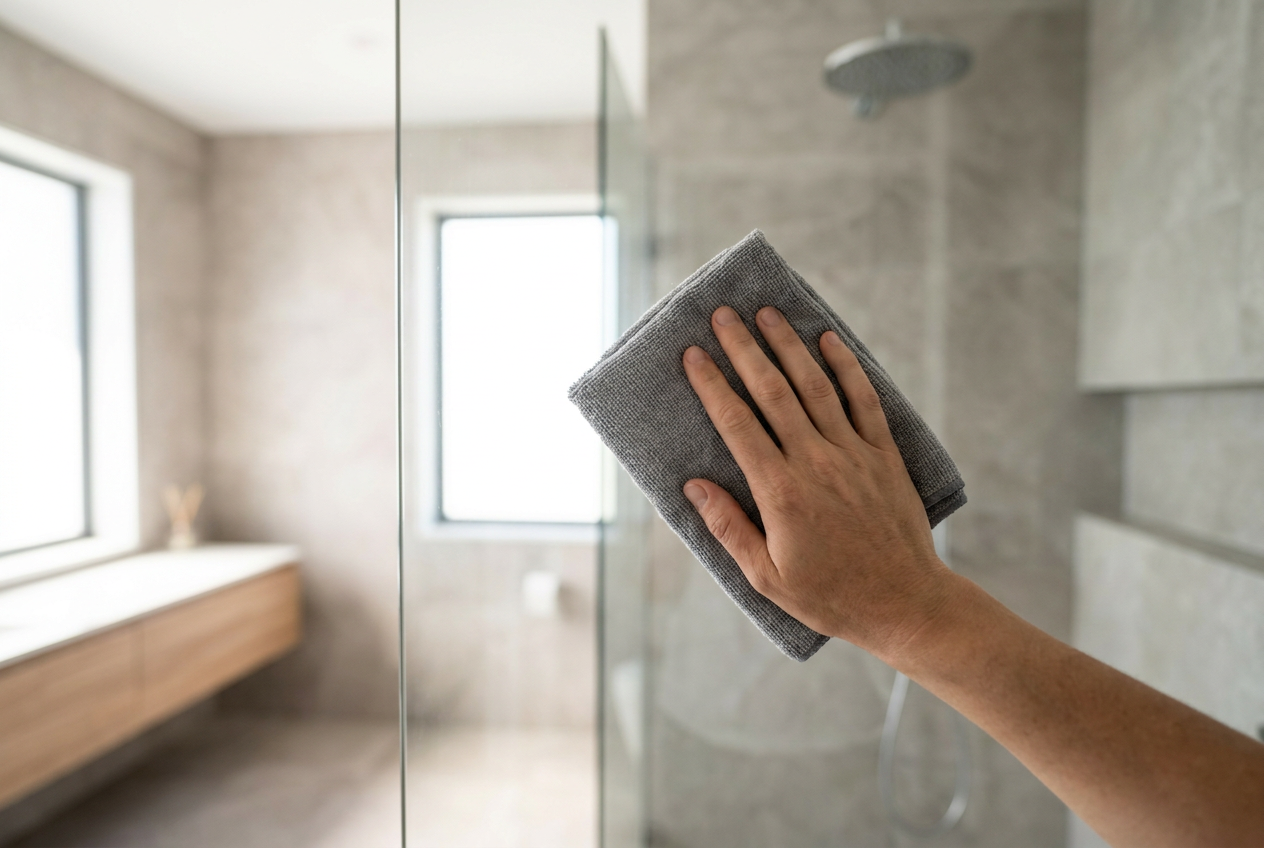
Figuring out how to remove hard water stains from glass shower doors is one of the most common bathroom frustrations. Those cloudy white spots and streaks are mineral deposits left behind when water evaporates, and ordinary glass cleaner barely touches them because the problem is not dirt, it is chemistry. The good news: you do not need expensive specialty products to win this fight. With plain white vinegar, baking soda, a little patience, and the right technique, you can restore even badly spotted glass to a clear shine. This guide covers exactly what causes the stains, four proven removal methods from gentlest to strongest, and how to keep the spots from coming back.
What Hard Water Stains Actually Are
Hard water contains dissolved minerals, mostly calcium and magnesium. Every time you shower, droplets land on the glass. When the water evaporates, the minerals stay behind as a thin white film. One shower’s worth is invisible, but layer after layer builds up into the chalky spots and hazy streaks you see. Soap adds to the problem: it reacts with those same minerals to form soap scum, a sticky grayish film that traps even more mineral residue. That is why shower doors look worse than, say, a bathroom mirror, which gets splashed far less often.
Understanding this matters because it tells you what will and will not work. These are mineral deposits, so you need something that dissolves minerals: a mild acid. Alkaline cleaners like bleach and most all-purpose sprays do almost nothing to them, which is why your regular cleaning routine keeps failing on the doors even while the rest of the bathroom sparkles.
What You Will Need
Gather these before you start so you are not dripping across the bathroom mid-clean:
- Distilled white vinegar (undiluted)
- Baking soda
- A spray bottle
- Several microfiber cloths (at least three)
- A non-scratch sponge or soft scrub pad
- An old toothbrush for edges, hinges, and tracks
- A squeegee
- Rubber gloves
- Plastic wrap or paper towels (for the soak method)
- Lemon juice (fresh or bottled) for light stains
- Optional: a commercial limescale remover for extreme cases
One safety note: never mix vinegar with bleach, and never mix vinegar with hydrogen peroxide in a closed container. You will only need vinegar-based methods here, but keep that rule in mind whenever you clean.
Method 1: The White Vinegar Soak (Best for Moderate Stains)
Vinegar is a mild acid that dissolves calcium and magnesium deposits on contact. This is the method to try first, and it handles the majority of cases on its own.
- Fill a spray bottle with undiluted white vinegar. Warm it slightly in the microwave for 20 to 30 seconds if you like; warm vinegar works a little faster, but never boil it.
- Spray the glass generously, inside and out, until it is thoroughly wet. Do not skimp: the surface should be dripping.
- For extra contact time, press sheets of plastic wrap or damp paper towels onto the wet glass so the vinegar stays in place instead of running off. This is the trick that separates okay results from great ones.
- Let it sit for 30 to 60 minutes. For light haze, 30 minutes is enough; for visible spots, give it the full hour.
- Remove the plastic wrap and scrub the glass with a non-scratch sponge, using small circular motions. Focus on the worst spots.
- Rinse thoroughly with warm water, then squeegee the glass dry.
- Buff with a dry microfiber cloth for a streak-free finish. If any spots remain, repeat the soak once more rather than scrubbing harder.
Pros: Cheap, non-toxic, safe for glass and most hardware. Cons: Takes time; the smell is strong while you work (it fades completely once rinsed).
Method 2: Vinegar and Baking Soda Paste (For Stubborn Spots)
When a straight vinegar soak leaves spots behind, a paste adds gentle abrasion to the chemical action. The fizzing reaction also helps lift loosened deposits.
- Mix baking soda with just enough vinegar to form a thick paste, roughly the consistency of toothpaste. It will fizz; that is normal.
- Working in sections, spread the paste onto the stained areas with a soft cloth or your gloved fingers.
- Let the paste sit for 15 to 20 minutes. Do not let it dry completely; if it starts drying, mist it lightly with vinegar from your spray bottle.
- Scrub gently with a non-scratch sponge, using light pressure and circular motions. Let the paste do the work; pressing hard risks scratching the glass.
- Use the old toothbrush to work the paste into the metal tracks, corners, and around hinges where spots hide.
- Rinse very thoroughly. Baking soda residue left behind will itself leave a white film, so rinse until the water runs completely clear.
- Squeegee dry and buff with a clean microfiber cloth.
Pros: Tackles spots that vinegar alone cannot; ingredients cost almost nothing. Cons: Messier than the spray method; requires thorough rinsing.
Method 3: Lemon Juice (For Light Stains and Maintenance)
Lemon juice contains citric acid, another effective mineral dissolver, and it smells far better than vinegar. It is best for light staining and for regular upkeep once the heavy deposits are gone.
- Cut a lemon in half and rub it directly over the stained glass, squeezing gently as you go so the juice coats the surface. Alternatively, spray bottled lemon juice from your spray bottle.
- Let it sit for 15 to 30 minutes.
- Wipe with a damp microfiber cloth, rinse, and squeegee dry.
Pros: Pleasant smell, good for maintenance, food-safe. Cons: Weaker than vinegar for heavy buildup; using enough fresh lemons for a whole shower gets expensive, so bottled juice is the practical choice.
Method 4: Commercial Limescale Removers (For Extreme Buildup)
Sometimes the stains have been building for a long time and home acids are not enough. Commercial limescale removers use stronger acids and surfactants designed specifically for mineral deposits.
- Choose a product labeled for limescale or hard water stains on glass. Avoid anything containing hydrofluoric acid or undiluted muriatic acid; those can etch glass permanently.
- Ventilate the bathroom well: open a window or run the exhaust fan.
- Put on rubber gloves and apply the product exactly as the label directs, usually sprayed on and left for a set number of minutes.
- Scrub with a non-scratch sponge, rinse thoroughly, and dry with a squeegee and microfiber cloth.
Pros: Strongest option short of professional help; fast. Cons: More expensive, harsher fumes, and some products can damage metal trim or natural stone tile if they drip, so protect surrounding surfaces and rinse generously. Always try vinegar first; reserve this for deposits that survive two vinegar soaks.
When Stains Will Not Budge: Etching
Here is an uncomfortable truth: if you have tried vinegar twice and a commercial remover once and the haze is still there, the glass may be etched, not stained. Etching means the minerals have chemically eaten microscopic pits into the glass surface itself. No cleaner can remove etching because there is nothing sitting on the surface anymore; the damage is in the glass.
Test for it: run a fingernail across a hazy patch. If the surface feels perfectly smooth but still looks cloudy, that is likely etching. Your options then are glass-polishing compounds containing cerium oxide, applied with a buffer, which can reduce mild etching, or professional glass restoration, or ultimately replacing the door panel. This is also why prevention, covered next, matters so much: etching is permanent, but it is entirely avoidable.
Mistakes to Avoid
- Using abrasive scrubbers or steel wool. Scouring pads and steel wool scratch glass, and scratched glass grabs minerals even faster. Stick to non-scratch sponges and microfiber.
- Reaching for bleach. Bleach disinfects but does nothing to mineral deposits, and mixing it with acids creates dangerous fumes. Keep bleach out of this job entirely.
- Scrubbing harder instead of soaking longer. Elbow grease cannot substitute for chemistry. If spots resist, give the acid more contact time or do a second soak rather than bearing down.
- Letting cleaners dry on the glass. Vinegar, paste, or commercial products left to dry can leave their own residue or, in the case of strong products, damage trim. Keep surfaces wet during the working time and rinse promptly.
- Using vinegar on natural stone. If your shower has marble, travertine, or other natural stone tile, keep vinegar and lemon juice off it; acids etch stone. Mask stone surfaces or use a stone-safe limescale product instead.
- Cleaning in direct hot sun through a skylight. Heat evaporates your cleaner before it can work. Clean when the bathroom is cool so the product stays wet.
- Skipping the rinse. Leftover baking soda or cleaner residue dries into a new white film that looks exactly like the stains you just removed. Rinse until the water sheets off cleanly.
How to Prevent Hard Water Stains From Coming Back
Removing the stains is only half the battle. These habits keep the glass clear with minimal effort:
- Squeegee after every shower. This single habit prevents most buildup. Keep a squeegee hanging in the shower and spend 30 seconds wiping the glass before you step out. No minerals left on the glass means no stains.
- Do a weekly vinegar wipe-down. Once a week, spray the doors with diluted vinegar (half vinegar, half water), wait five minutes, and wipe clean. This dissolves the week’s deposits before they harden.
- Apply a protective coating. Glass sealants and rain-repellent products made for shower doors create an invisible barrier that makes water bead and run off instead of evaporating in place. Reapply every few months according to the product directions.
- Consider a water softener. If your whole house has very hard water, a softener reduces mineral content at the source, which helps not just shower doors but faucets, appliances, and laundry too. It is the only true long-term fix for severe hard water.
- Keep the bathroom ventilated. Running the exhaust fan during and after showers helps water evaporate faster and more evenly, which reduces spotting.
Fold a monthly shower deep-clean into a broader home routine, the same way you might schedule deep cleaning a mattress without special equipment. Small, regular efforts beat occasional marathon cleaning sessions every time, and folding chores into a predictable rhythm is exactly the kind of system that makes decluttering a small bedroom step by step stick as well. And if you like turning household tasks into calm, well-planned routines, the same habit-stacking thinking behind planning your day the night before works beautifully for cleaning schedules too.
Frequently Asked Questions
Will vinegar damage my glass shower doors?
No. Undiluted white vinegar is safe for glass and will not scratch or etch it. Just keep it away from natural stone tile and some metal finishes, rinsing promptly if it drips onto them.
How often should I clean hard water stains from shower doors?
A quick squeegee after every shower plus a five-minute vinegar wipe-down once a week keeps most doors spot-free indefinitely. Heavily stained doors may need the full soak treatment once, then the maintenance routine takes over.
Can I use a razor blade to scrape off hard water stains?
A razor scraper can work on flat glass if held at a low angle with plenty of soapy water as lubricant, but it is risky: one slip scratches the glass permanently. Try the chemical methods first; reserve the razor for thick, crusty deposits and only if you are comfortable using it.
Why does my glass still look cloudy after cleaning?
Either cleaner residue was left behind (rinse again thoroughly) or the glass is etched. Etching is microscopic pitting of the glass itself caused by long-term mineral exposure, and it cannot be cleaned off, only polished or professionally restored.
Do water softeners really prevent shower door stains?
Yes. By removing calcium and magnesium from the water supply, a softener eliminates the minerals that cause the stains in the first place. It is the most effective permanent solution for homes with very hard water.
Is baking soda safe to use on glass shower doors?
Yes, as a paste applied with a soft cloth or non-scratch sponge. Baking soda is a very mild abrasive, far softer than glass, so it will not scratch. The key is rinsing completely so no powdery residue remains.
The Bottom Line
Knowing how to remove hard water stains from glass shower doors comes down to one principle: dissolve the minerals with a mild acid instead of fighting them with brute force. Start with a vinegar soak, step up to a baking soda paste for stubborn spots, and keep a commercial limescale remover in reserve for the worst cases. Then protect your work with the 30-second squeegee habit. Do that, and your shower doors will stay as clear as the day they were installed.