
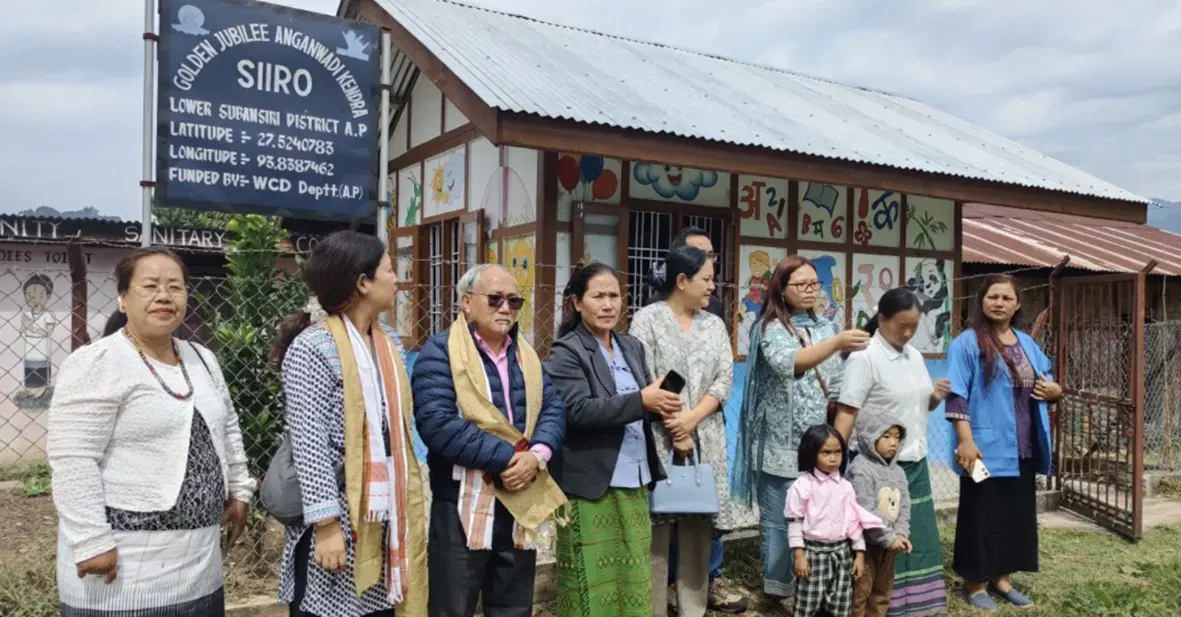
When members of a state child rights body walk into five Anganwadi centres on a single Saturday morning, it is not just a routine visit — it is a signal that the state is watching, and that these small centres buried in Lower Subansiri’s villages matter more than most people realise.
On October 3, members of the Arunachal Pradesh State Commission for Protection of Child Rights (APSCPCR), Niri Chongrowju and Taba Champa, descended on five Anganwadi Centres in Lower Subansiri district for a comprehensive inspection. The visit covered Lankhing Anganwadi Centre in Lempia village, and four others — Reru-II, Hari-I, Siiro, and Siibey. Five centres. One day. A lot of ground to cover in the rolling terrain around Ziro.
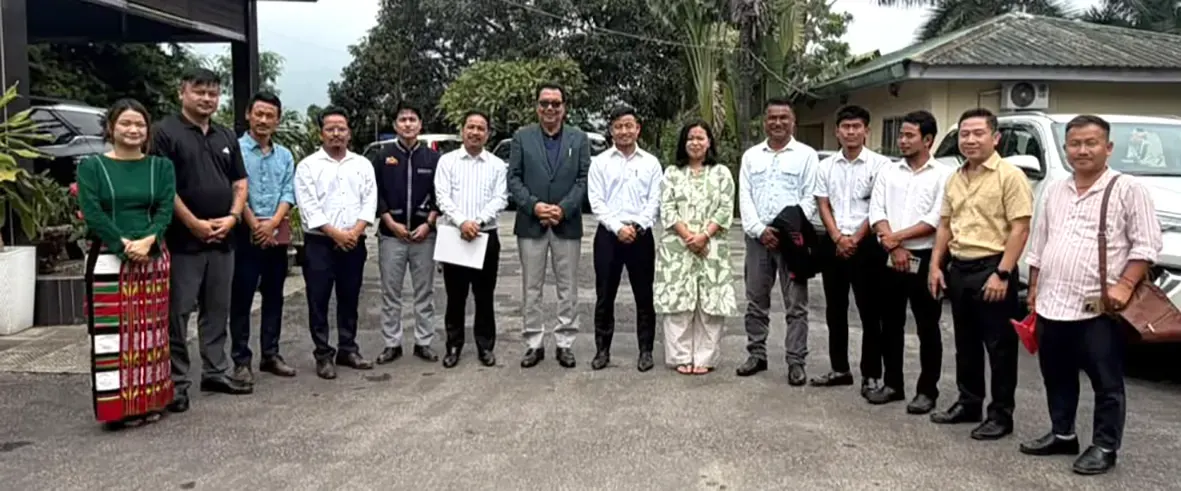
They were not alone. Accompanying the APSCPCR members were Kago Maya Gyati, deputy director of the Women and Child Development department, and Takhe Rinyo Bullo, child development project officer of the Ziro-I ICDS Project. Together, the delegation moved through each centre systematically — assessing how things were actually running, not just how they looked on paper.
That distinction matters. Anganwadi Centres in remote pockets of Arunachal Pradesh are often the first and only structured support many young children receive. They are the place where a toddler gets a hot meal, where a mother learns about nutrition, and where early learning begins long before a child ever sees a classroom. When these centres function well, lives change quietly. When they don’t, nobody always notices right away.
The team spoke directly with Anganwadi workers and helpers — the women who run these centres day in and day out, usually for wages that do not reflect the enormous weight of their responsibilities. The conversations focused on the on-ground reality of daily nutrition programmes, early childhood learning activities, and other services being delivered at the local level. No glossy reports. Just direct dialogue.
Commission members did not mince words on what they expect. They stressed the importance of keeping these spaces safe, nurturing, and genuinely child-friendly. Not just clean walls and attendance registers, but environments where children actually feel secure and cared for. The workers were encouraged to stay committed to holistic development — covering nutrition, emotional support, and early education together, not treating them as separate boxes to tick.
It is worth noting that this visit comes amid a broader push by APSCPCR across the state. The Commission has been ramping up ground-level checks in multiple districts, part of a wider campaign launched under the theme “Know Your Rights — Protect Every Child.” The message is consistent: child welfare is not an administrative exercise, it is a responsibility.
Whether these inspections translate into lasting improvements on the ground remains the real question. Checking in is one thing. Fixing broken supply chains, ensuring workers get paid on time, and making sure mothers actually enrol their children — those are harder problems. But you cannot fix what you do not first look at.
At the very least, five Anganwadi centres in Lower Subansiri now know someone is paying attention. And for the children who walk through those doors every morning, that is a start worth caring about.