
The roads are blocked. The anger is real. And Geku’s message to the government couldn’t be any clearer.
As Chief Minister Pema Khandu prepares to visit Boleng in Siang district on September 29 and Yingkiong in Upper Siang district on September 30, the mood in the Siang Valley is anything but welcoming. Villagers in Geku have made it plain — they don’t want him there. Not because of the man, but because of what they believe his visit represents.
The proposed Siang Upper Multipurpose Project, commonly known as SUMP, has become the single biggest flashpoint in Arunachal Pradesh’s Siang Valley in recent memory. Spanning Upper Siang and Siang districts, this massive hydropower initiative — pegged at 11,000 MW — has been drawing fierce resistance from villages across the region. Communities here fear the pre-feasibility studies are the first domino in a long line that ends with their lands, their livelihoods, and their way of life being submerged.
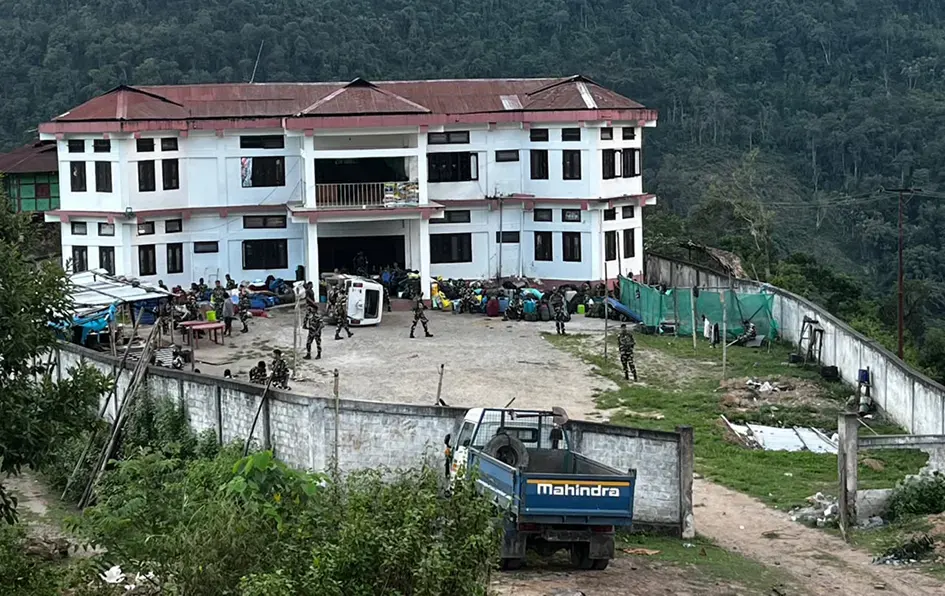
So when additional security personnel quietly began arriving in Geku on Monday, the locals noticed immediately. And they weren’t quiet about it.
According to reports, one of the hostels at Geku Government College — yet to be allotted to students — was converted into accommodation for the deployed forces. Think about that for a moment. A building meant for students is housing security personnel, and those students are presumably still waiting. Attempts to get an official explanation from the concerned authorities were met with silence.
That silence, it seems, has only added fuel to the fire.
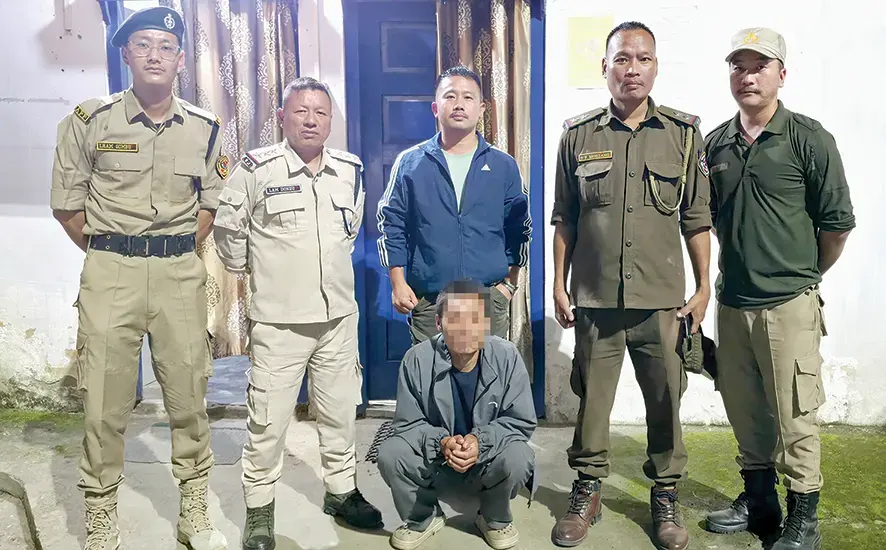
The villagers took to the roads — or rather, blocked them. Protests continued through Monday, with residents forming a human wall against a government push they say they never consented to. And when that wasn’t enough, some went a step further. Villagers reportedly confronted security personnel stationed at various points in Geku, asking them — firmly — to pack up and leave. There were no reported injuries, but the intent was unmistakable. This is our land. You are not welcome here without our permission.
Their demands were clear: withdraw the security personnel already deployed, and do not send more.
The Adi indigenous community, which forms the backbone of these protests, has been at the heart of this resistance for months. The tension between the state government’s development agenda and the community’s right to protect their ancestral homeland has been simmering quietly for years. Now it is boiling over, openly, in the streets of Geku.
The government, for its part, has shown no signs of stepping back. Despite the mounting opposition, it is pressing ahead — with the surveys, with the deployments, and now with a Chief Minister’s visit that locals suspect is directly tied to the project’s momentum.
Whether CM Khandu’s trip to the region is meant as outreach or as reassurance, it has landed as a provocation. The people of Geku are not protesting in isolation. They are part of a valley-wide movement that has been growing louder, and more coordinated, with each passing week.
At some point, the government will have to choose between pushing a project forward and listening to the people it’s supposed to represent. The question isn’t whether the Siang Valley will be heard. The question is whether anyone in power is actually listening.