
Wednesday morning in Itanagar looked nothing like a normal working day. Shops shuttered. Roads eerily quiet. And a city of thousands effectively paused — because a student union had had enough of waiting.
The All Nyishi Students’ Union (ANSU) called a 12-hour bandh across the Itanagar Capital Region on September 24, kicking off at 5 AM sharp and holding steady through 5 PM. The demands at the heart of it weren’t dramatic or politically charged — they were about schools. About students. About a government that, in ANSU’s view, simply wasn’t listening.
The union had been pushing for the renovation and upgradation of 56 identified schools across the region, the establishment of a dedicated school for children with special needs in Pakke Kessang, and the resolution of long-pending issues tied to Toru Engineering College and Late Neelam Taram Government College. These aren’t luxury demands. They’re the kind of basics that students in other parts of the country take for granted.
What pushed ANSU to call the shutdown wasn’t frustration built up overnight. Talks between the union’s representatives and state Education Minister Pasang Dorjee Sona had collapsed — both sides reportedly walking away from the table without resolution. After that, the bandh became all but inevitable.
The district administration wasn’t quiet about its opposition. Itanagar Capital Region District Magistrate Toko Babu declared the bandh unlawful under Section 163 of the Bharatiya Nagarik Suraksha Sanhita (BNSS), warning that participants could face legal consequences. The directive asked organisers and supporters to back off entirely. ANSU didn’t blink.
Still, what played out on the ground was more measured than confrontational. SP Capital Itanagar Jummar Bassar confirmed that while the bandh’s impact was clearly visible across the city, police had prioritised keeping essential movement intact. Vehicles carrying people for medical emergencies or examinations were being waved through. “The impact of ANSU’s call for a shutdown is visible, but we are ensuring that vehicles requiring urgent movement — whether for exams or medical emergencies — are being allowed to pass,” Bassar said.
That’s a small but significant detail. Students preparing for exams on the same day as a student-led bandh is an odd kind of irony — but the police ensured those two realities didn’t collide. ANSU representatives, to their credit, cooperated.
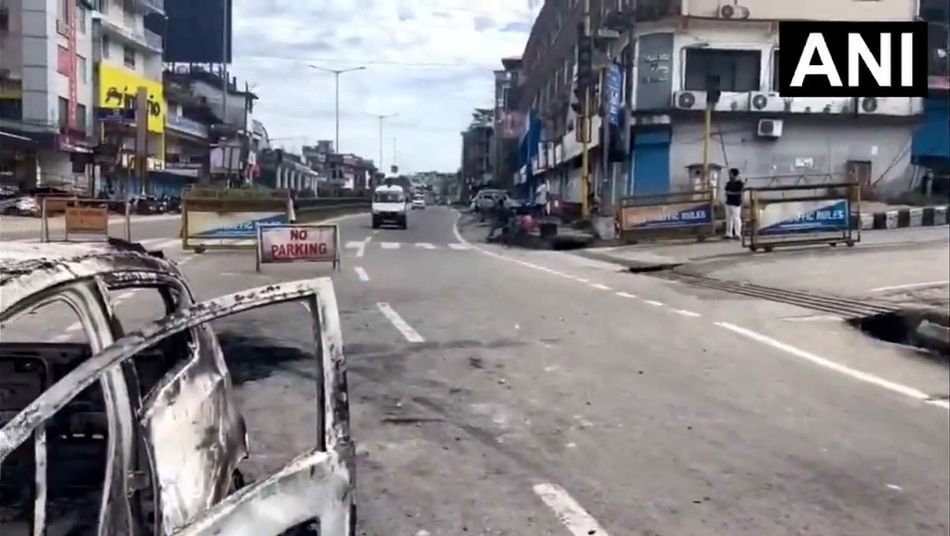
Security was deployed at several sensitive spots, including Chimpu and areas near the Secretariat, where face-offs and roadblocks had been reported. There were also early reports of a vehicle catching fire during the shutdown hours, though full details on that incident were still being pieced together as the day progressed.
Bassar made a public appeal to ANSU not to let the protest tip into property damage or harm. “By and large, people have respected that call and stayed indoors,” he noted, asking that the union maintain the same discipline through the end of the shutdown.
And therein lies the real story. A student body that resorted to a bandh — declared unlawful by the very administration they’re petitioning — managed to hold a city still for 12 hours, largely without incident. That’s not a small thing.
The question now isn’t whether ANSU disrupted Itanagar’s Tuesday. They clearly did. The real question is whether anyone in power is listening closely enough to make sure they don’t have to do it again.