

Video journalist Joram Domin showed up to cover a bandh. He left, hours later, without his phone, without his motorcycle, and under pressure to apologise on camera for doing nothing wrong.
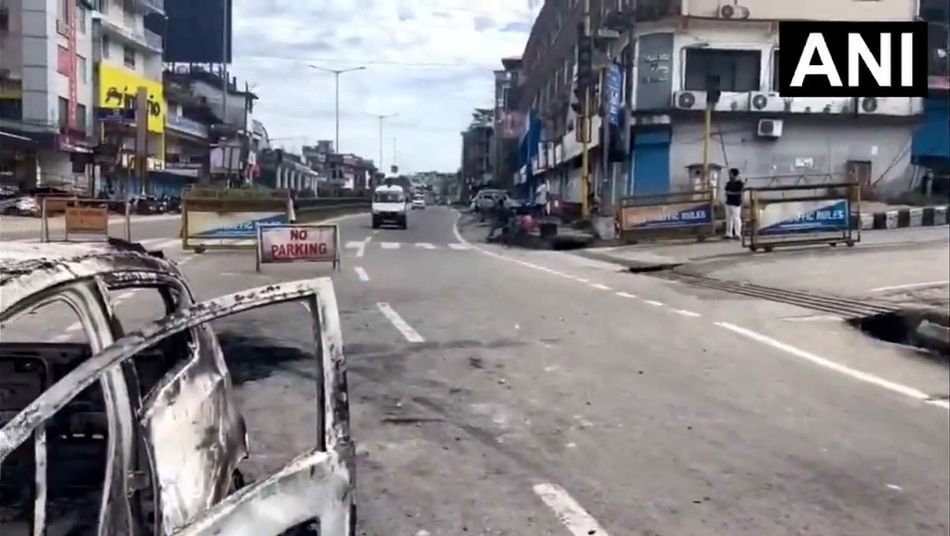
The incident unfolded on September 24 in Nirjuli, during a 12-hour Capital bandh called by the All Nyishi Students Union (ANSU). Domin had been deployed to cover the protest at Bage Tinali — a routine assignment for any working journalist. But what he encountered was anything but routine.
According to a statement from his employer, ANSU volunteers stopped Domin from reporting and proceeded to seize his mobile phone and motorcycle. For nearly three hours, he was allegedly subjected to harassment and intimidation, questioned about his identity as a journalist. And if that weren’t alarming enough, sources say he was pressured to record an apology video and publish it — as if covering a public demonstration was somehow a punishable offence.
With his phone taken away, Domin had no way to call his colleagues or reach out for help. He was, effectively, cut off.
Thiem Lhouvum, the managing head of the organisation where Domin works, eventually reached the spot herself. She reportedly confronted anywhere between 20 to 30 volunteers on the ground to resolve the standoff. That a senior editorial figure had to physically travel to the location just to get a journalist released tells you something about how serious this situation had become.
The incident has since drawn sharp reactions from Arunachal Pradesh’s media community. Two of the state’s most prominent press organisations — the Arunachal Pradesh Union of Working Journalists (APUWJ) and the Arunachal Press Club (APC) — have jointly condemned what happened and are now demanding a formal explanation from the ANSU leadership.
APUWJ president Dodum Yangfo and APC president Amar Sangno both voiced strong concern, calling for accountability over the alleged misconduct. Their joint statement made one thing very clear: journalists must be allowed to work without facing intimidation, threats, or physical obstruction — regardless of whether a bandh is in progress. That’s not a privilege. It’s a basic condition for a free press.
The seizure of a journalist’s phone and vehicle isn’t just an assault on one person. It’s an attempt to control the narrative. Whoever stops a reporter from working is, in effect, deciding what the public gets to know. That’s a dangerous road.
What makes this case particularly striking is the demand for an apology video. The idea that a journalist covering a public event should be coerced into asking for forgiveness — on camera, no less — suggests a troubling belief that protests exist in a media-free zone, shielded from scrutiny. They don’t. And they shouldn’t.
ANSU, for its part, has been given a clear signal from both press bodies: explain what happened, and explain it now. Whether or not the union acts on that demand will say a great deal about its own understanding of democratic norms.
Joram Domin was just doing his job. Nobody in this country should have to fight for the right to do that.