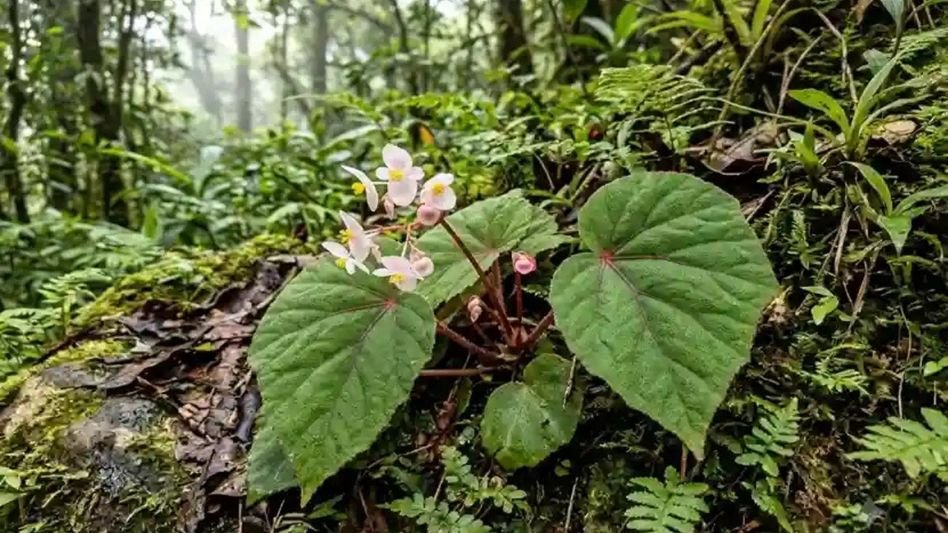

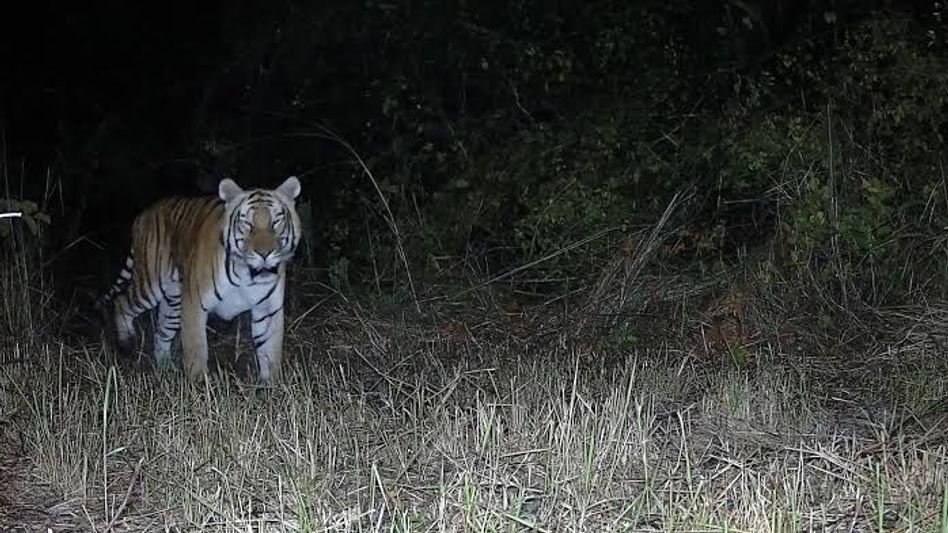
The forest doesn’t give up its secrets easily. But in the dense woodlands of New Tupi village in Arunachal Pradesh’s Tirap district, a quiet revolution in wildlife conservation just got underway — and this time, the villagers themselves are leading it.
A camera-trapping initiative has been launched inside the New Tupi community forest, setting up motion-triggered cameras at carefully selected spots to record wildlife movement without disturbing the animals in their natural habitat. The effort is being driven by the Hinthong Foundation, a Tirap-based non-profit that has been working on biodiversity conservation for the past five years with a firm belief that local communities must be at the heart of any meaningful conservation work.
What made this deployment special wasn’t just the technology — it was the people who showed up for it. Around 15 to 20 participants joined the exercise, including the village chief, community leaders, the youth organisation president, volunteers and interns of the foundation. Even former Tirap Deputy Commissioner and Hinthong Foundation adviser Techu Aran walked alongside the group. That kind of turnout tells you something. People here care about what lives in their forests.
And there’s plenty living there. During the deployment, the team came across fresh signs of wildlife activity that would excite any conservationist — wild boar and barking deer footprints pressed into the earth, and deep claw marks believed to belong to a Himalayan Black Bear. They also spotted areas where wild boars had clearly been feeding, and a pangolin burrow had reportedly been found at another location in the forest just days earlier. Tirap, it turns out, is far more alive than many people outside the region realise.
Then there were the calls. Villagers have long reported hearing the haunting whoops of the Hoolock Gibbon echoing through the trees in the early morning hours. Kime Obin, a field biologist with the Morey Conservation Foundation who served as the resource person for the exercise, heard those very calls on the morning before the cameras were deployed. It’s the kind of moment that reinforces why all of this work matters.
Obin guided the team through the technical side of things — how to pick the right camera locations, how to install the equipment correctly so it captures the most useful data. The camera traps themselves were supported by the Nature Conservation Foundation (NCF), lending the exercise both technical credibility and institutional backing.
The initiative is co-led by Hinthong Foundation co-founders Chajo Lowang and Sara Khongsai, two conservationists who have spent half a decade building relationships between people and the wilderness around them. Their approach isn’t top-down — it never has been. Local knowledge is treated as a resource here, not an afterthought. Villagers contribute their own observations about the forest, about where animals move and feed and rest, and that knowledge shapes where the cameras go.
The images and data collected over the coming weeks are expected to build the first scientific record of New Tupi’s biodiversity — a baseline that will help researchers and conservationists understand what’s there and how to protect it.
In a country where forest conservation often means keeping communities out, Tirap is quietly proving there’s another way. When the people who live beside the forest become its guardians, the forest has a fighting chance.