
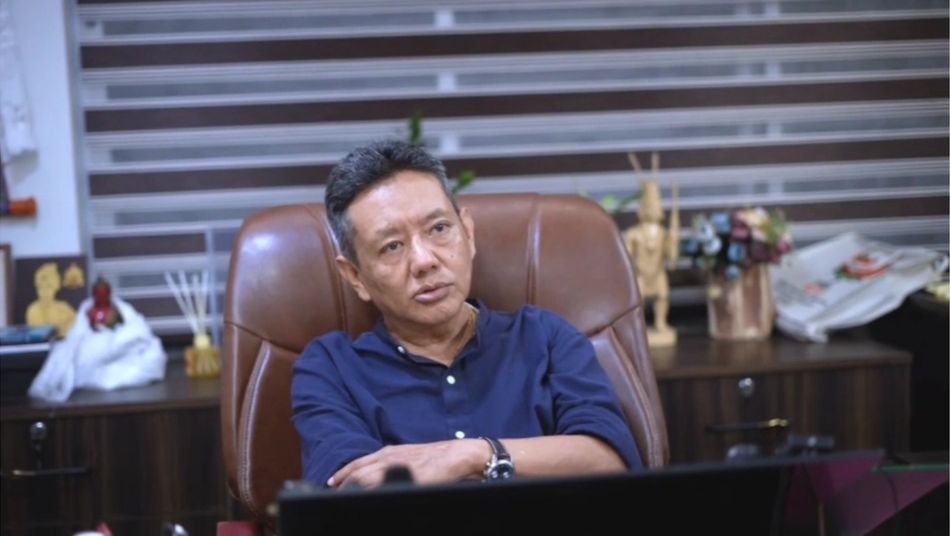
A shuttered classroom is never a victory — and that seems to be exactly the message Arunachal Pradesh’s Education Minister wanted to drive home before September 24 arrives.
Education Minister Pasang Dorjee Sona on Monday sat down with representatives of the All Nyishi Students’ Union (ANSU) in a bid to defuse the tension ahead of the student body’s proposed 12-hour bandh, scheduled for September 24. The bandh had been called as part of ANSU’s ongoing movement demanding better education infrastructure in Nyishi-inhabited areas of the state. The minister’s appeal was direct — call it off, give dialogue a real chance.
The meeting wasn’t a press conference or a photo opportunity. It was a working discussion, one where the government put its cards on the table. The Education Department brought along its action-taken report, and several proposals tied to education infrastructure had already made their way to the Planning Department before this meeting even took place. That detail matters. It suggests the government wasn’t scrambling to appease a student union at the last minute — or at least, that’s what it wants ANSU to believe.
Of the 26 identified requirements raised by ANSU, Minister Sona said more than half were either ready or at an advanced stage of implementation. That’s actually a significant number, and it’s the kind of specific claim that’s hard to dismiss outright. The remaining demands, he added, would be looked into closely through coordination with the Planning Department and other relevant bodies, especially when it comes to securing funds and aligning schemes.
What ANSU is asking for isn’t luxury. Hostels, undergraduate blocks, staff quarters, boundary walls — the kind of basic physical infrastructure that students in better-connected parts of the country take for granted. Sona acknowledged these needs and said they would be addressed in a phased, need-based manner depending on fund availability. The phrase “fund availability” is one that students have heard too many times before, which is perhaps why ANSU called for a bandh in the first place.
To be fair, the minister was also careful about managing expectations. He made it clear that no resolution was formally adopted during Monday’s meeting. The discussions, he explained, were primarily about walking ANSU through the government’s position and the work already done. That kind of honesty is refreshing, though it’s a fine line between transparency and leaving a room with nothing concrete in hand.
Sona also took a broader view, reminding everyone in the room that the state has multiple sectors, communities, and districts all with their own pressing needs. It’s a fair point politically, but students sitting in areas without proper hostel facilities or crumbling infrastructure probably aren’t too interested in how their needs stack up against everyone else’s on a spreadsheet.
The minister’s core appeal remained unchanged — reconsider the bandh, trust the process, keep the conversation going.
Whether ANSU listens is the real question. Student unions don’t call bandhs for sport. They do it when they feel that quieter methods have run out of road. The government has now offered a lane back onto the dialogue highway — and the next 24 hours will tell us whether ANSU is willing to take it.
A bandh disrupts lives. But so does a generation growing up without decent schools. If Monday’s meeting translates into real action on the ground, it might just be worth calling this a turning point. If not, September 24 could be just the beginning.