
When a party calls an extended state executive meeting — not just the usual one — you know something serious is on the table.
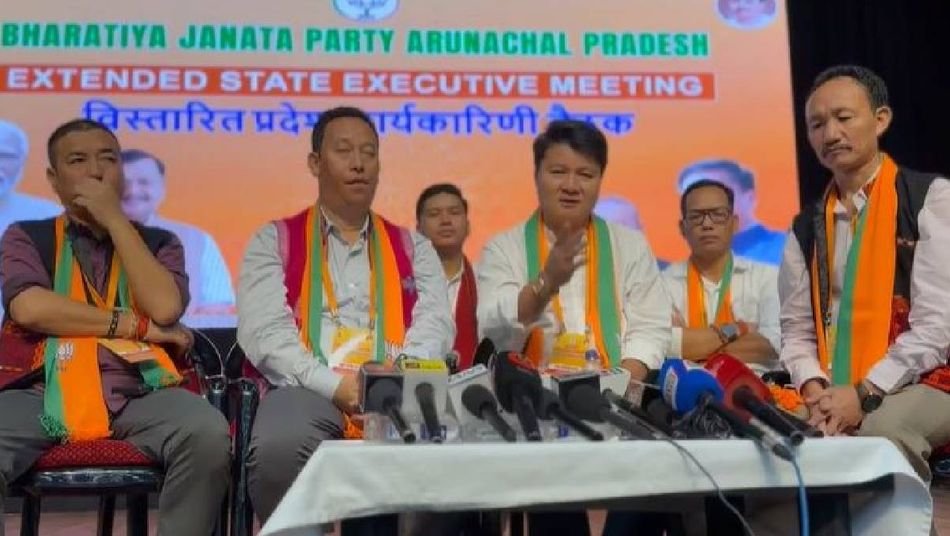
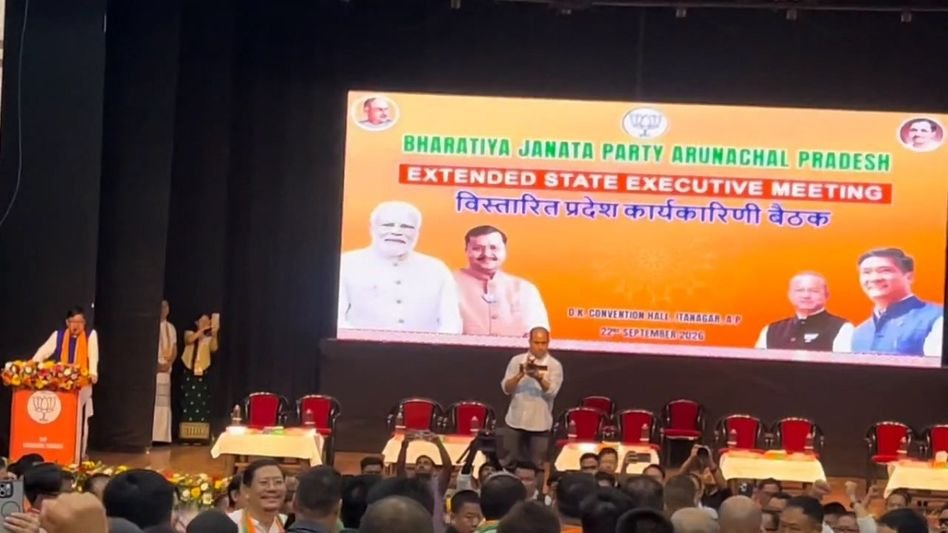
The BJP’s Arunachal Pradesh unit did exactly that on September 22, packing the D.K. Convention Hall in Itanagar with a who’s who of state politics. Chief Minister Pema Khandu was there. So were Deputy CM Chowna Mein, state BJP president Kaling Moyong, Union Ministers Kiren Rijiju and Kirti Vardhan Singh, and Rajya Sabha MP Tai Tagak. Add to that a full bench of cabinet ministers, MLAs, district presidents, Morcha leaders and party functionaries from across the state, and you get a sense of just how seriously the party is taking this exercise.
The man at the podium driving much of the discussion was Dr. Sambit Patra, BJP’s Northeast Coordinator. Known for his sharp political communication, Patra focused on something that political parties rarely admit they need to fix — coordination. His address touched on strengthening the party’s organisational structure, improving coordination between its various units, and pushing the implementation of party programmes more effectively across the Northeast. It wasn’t just a pep talk. It was a course correction wrapped in a motivational speech.
What stood out about this meeting was the sheer breadth of attendance. Cabinet ministers Biyuram Wahge, Nyato Dukam, Gabriel Denwang Wangsu, Pasang Dorjee Sona, Dasanglu Pul, Balo Raja, Kento Jini, Ojing Tasing and Mama Natung — nearly the entire state cabinet — were present. That kind of turnout doesn’t happen unless the central leadership is watching closely.
And there’s reason to believe that’s exactly the case. The BJP, despite holding an iron grip on Arunachal Pradesh, is clearly not taking things for granted. The party’s recent pattern of holding regular, structured organisational meetings — pulling in Mandal presidents, district in-charges, observers and Morcha heads all at once — signals a deliberate push to tighten the grassroots machinery. This wasn’t a one-off. It’s part of a broader strategy.
For a state like Arunachal Pradesh, where terrain and geography can make political outreach genuinely difficult, keeping party workers aligned, motivated and coordinated at the district level is not as simple as it sounds. The borders between administrative and organisational work blur quickly here. Getting everyone into the same room and on the same page is itself an achievement.
The meeting also gave senior leaders a rare chance to sit across from grassroots functionaries — not just to deliver messages from above, but to understand what’s actually happening on the ground. That kind of two-way interaction, though rarely mentioned in press releases, is often where the real work of party building gets done.
Arunachal has been BJP territory for a while now, and the party clearly wants to keep it that way. But comfortable majorities have a way of breeding complacency. Meetings like this — broad, structured, with central leadership present — are how parties remind themselves that nothing is guaranteed forever.
In politics, an empty hall means a party is coasting. A packed one means it’s preparing.