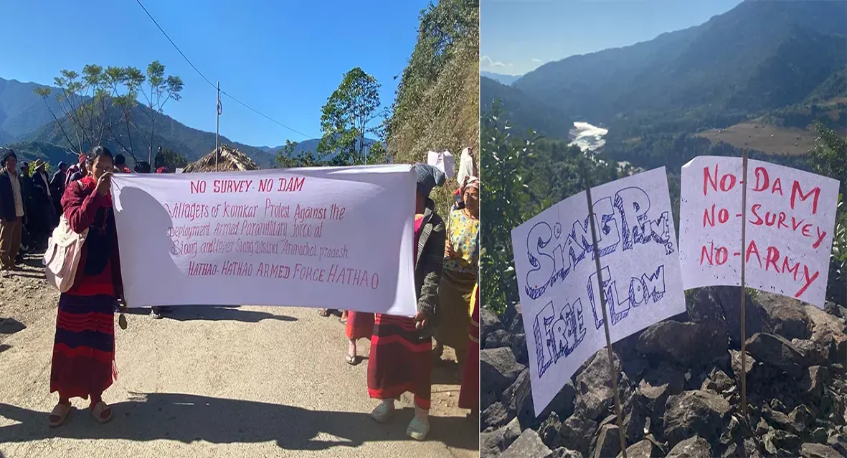

The Brahmaputra doesn’t lie. When it swells and swallows villages whole, when mountain springs in Arunachal go dry in the middle of summer, when farmers watch their fields drown one season and crack from drought the next — that is not a weather story. That is a climate crisis, and it is arriving faster than most people in power are willing to admit.
Global warming, at its core, is straightforward — almost brutally so. Human activity, largely since the Industrial Revolution, has pumped massive amounts of greenhouse gases into the atmosphere. Carbon dioxide leads the charge at around 74 percent of total emissions, followed by methane and nitrous oxide. These gases trap heat. The planet warms. And the consequences we once spoke of as future threats are now present reality.
The Earth has already warmed by more than 1°C above pre-industrial temperatures. That might sound small — like adjusting a thermostat by a degree. But when you are talking about the entire planet’s climate system, that single degree carries catastrophic weight. Scientists warn that crossing the 1.5 to 2°C threshold could trigger irreversible tipping points — the collapse of ice sheets, the dieback of the Amazon, the thawing of permafrost releasing even more methane. Once those dominoes start falling, no policy, no summit, no promise will stop them.
Here in the Northeast, we don’t need scientists to explain what climate stress feels like. Nearly 40 percent of Assam’s land is extremely flood-prone. Glaciers in the Eastern Himalayas are retreating. The risk of glacial lake outburst floods — sudden, devastating walls of water — is growing every year. Agriculture, which feeds most of the region’s families, is already fracturing under erratic rainfall and rising temperatures. These aren’t projections. They are happening right now.
The source of the problem is not mysterious either. Fossil fuels — coal, oil, gas — account for the overwhelming share of global greenhouse gas emissions. In India, coal-fired plants still generate close to three-quarters of actual electricity despite the country’s impressive renewable expansion. India’s transport sector alone pumps out an estimated 353 million tonnes of greenhouse gases annually, with every litre of petrol burning roughly 2.31 kg of CO2. Add deforestation across the Northeast’s fragile hill forests, and the picture becomes even grimmer.
That said, India is not standing still. The country crossed a landmark in mid-2025, with non-fossil sources exceeding 50 percent of total installed power capacity — years ahead of schedule. The commitment to net-zero by 2070 is on the books. The progress is real, even if the pace still needs to accelerate.
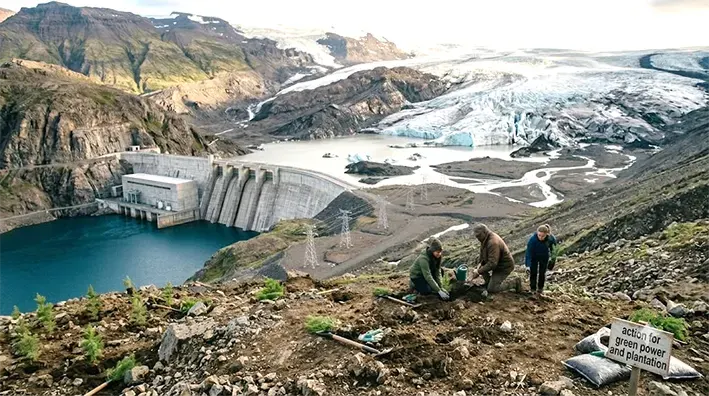
One piece of the puzzle that cannot be ignored is hydropower. Solar and wind are crucial, but they are intermittent — they don’t generate power when clouds roll in or the wind dies down. Hydropower can. Arunachal Pradesh alone sits on an estimated 50 GW of hydropower potential, capable of displacing over 120 million tonnes of coal annually and avoiding close to 200 million tonnes of CO2 each year. Projects like the Subansiri Lower Hydroelectric Project and the under-construction Dibang Multipurpose Project offer not just clean energy but flood moderation on the Brahmaputra — a double benefit this region desperately needs.
But technology and infrastructure alone won’t save us. The real question is one of will. Will we make the transition fast enough? Will forest-dependent communities and coal workers be protected in the process? Will local voices — from villages along the Siang, from farmers watching their land erode — be heard in the policy rooms that shape India’s energy future?
The answer to all of that is our responsibility. Not someone else’s, not just the government’s, not just the corporations’. Ours. Because the generations coming after us won’t inherit megawatts or GDP numbers. They’ll inherit whatever we leave of this land, these rivers, and these mountains — and right now, we are not leaving enough.