
KHINJILI, LOWER DIBANG VALLEY, Sept 19: Technology is rapidly changing the way knowledge is recorded, and in Arunachal Pradesh, researchers are now looking at how artificial intelligence can help protect something far older — the state’s diverse languages and cultural traditions.
A two-day workshop-cum-training programme on “Digital Archiving, Linguistic Tools and AI Applications in Linguistic and Cultural Research” concluded on Saturday at the Research Institute of World’s Ancient Traditions, Cultures and Heritage (RIWATCH) in Khinjili, Lower Dibang Valley. The programme was jointly organised by RIWATCH, the Council for Diversity and Innovation (CoDIN), Delhi, and the Indian Knowledge Systems (IKS) Division of the Union Education Ministry.
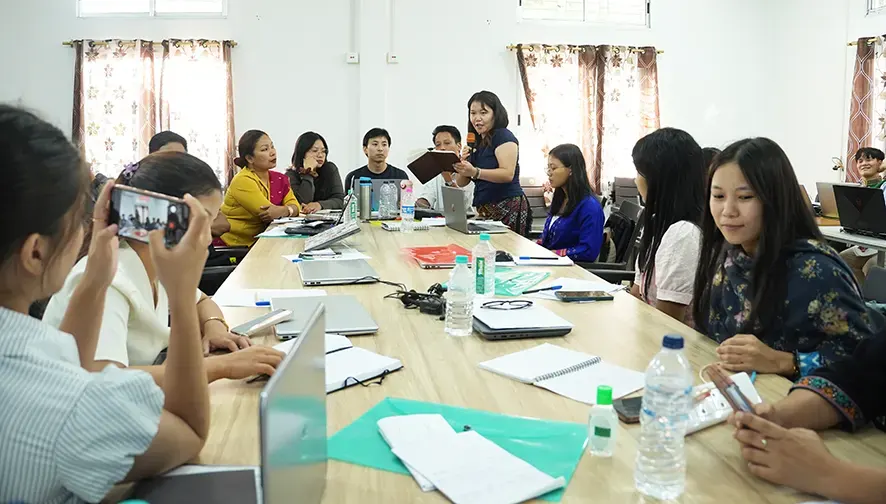
The workshop brought together research scholars representing 16 different tribes from three universities in Arunachal Pradesh — Rajiv Gandhi University, Doimukh; Arunachal Pradesh University, Pasighat; and Arunachal University of Studies, Namsai. With so many communities represented in one programme, the discussions naturally centred on the practical challenges of documenting languages and cultural knowledge in a fast-changing digital world.
The workshop was chaired by Dr MS Awan, Head of the RIWATCH Centre for Mother Languages (RCML). He stressed the importance of bringing innovation and technology into contemporary research, particularly when it comes to documenting and preserving linguistic and cultural knowledge. He also underlined the need for researchers to use suitable technological tools to make their work more efficient. RIWATCH Director Vijay Swami highlighted the importance of institutional and infrastructural preparedness for specialised academic programmes.
The first day focused on the “Foundations of Digital Documentation and Data Management”, combining classroom discussions with practical exercises.
One of the key sessions, “Documenting Language and Culture Visually: Audiovisual Tools in Documentation,” was conducted by Dr Kombong Darang, Assistant Professor at Arunachal Pradesh University. Participants were introduced to methods for visually documenting linguistic and cultural material.
Another session, “Collecting Language Data in the Field,” was led by Dr R Karthick Narayanan, Executive Director of CoDIN. The session examined linguistic fieldwork methods, including the shift from basic structural observation to systematic data elicitation. Participants then took part in group activities based on fieldwork situations.
The second day moved into one of the most contemporary parts of the programme: AI-assisted language documentation. Researchers participated in hands-on sessions exploring digital and artificial intelligence tools that can be applied to linguistic and cultural research. The practical training was jointly led by Dr Ritesh Kumar, CEO of UnReal TecE, and Dr Karthick Narayanan.
The workshop went beyond theory by giving researchers an opportunity to work directly with emerging tools for digital archiving, data management and language documentation. That combination of field experience and technology could prove increasingly important for preserving linguistic knowledge that might otherwise remain scattered across recordings, handwritten material and individual community memories.
The programme also strengthened RIWATCH’s environment for technology-assisted research and could support its wider academic plans, including the broader vision of establishing the University of World’s Ancient Traditions, Culture and Heritage (UWATCH).
For Arunachal Pradesh, where hundreds of distinct cultural and linguistic traditions form part of its identity, workshops like this point to a simple but important reality: preserving the past may increasingly depend on how intelligently researchers use the tools of the future.