
There are some objects in this world that refuse to just be objects. In Arunachal Pradesh, two of them have quietly held entire civilizations together — one forged in fire, the other woven from cane and crowned with a bird’s beak.
Walk into any village tucked between the green hills of Arunachal and you’ll sense it immediately. The dao — a single-edged blade, heavy with history — hangs at a man’s hip like it belongs there. Because for generations, it has. It is not a weapon on display. It is identity, inheritance, and in many ways, the physical soul of the community wearing it.
Every dao in Arunachal is different. That is perhaps the most striking thing about it. Local blacksmiths forge each blade by hand from iron, steel, or sometimes recycled metal, fitting it into a handle carved from wood, bamboo, or bone. No two come out the same. The blade changes its shape, size, length and value not only from tribe to tribe, but from household to household, serving as the unique identity of the holder. Churina Sikom, a member of the Tagin community, puts it simply — because the dao is their identity, that is exactly why so many variations exist.
The everyday dao is a working tool — built for farming, clearing land, butchering. But the ceremonial dao is something else entirely. Reserved for rituals and weddings, often gifted to a groom, these blades are kept in scabbards wrapped with animal fur and cowrie shells, each one carrying intricate forged patterns that quietly announce its maker’s skill. The true value of a dao lies in the art of its craftsmanship — specifically its lamination patterns, where more forged layers command greater value. Prices can range anywhere from Rs 5,000 to over Rs 20 lakhs — depending on the blade’s quality, age, and rarity.
And when a family patriarch dies? His dao goes with him into the grave. When his eldest son comes of age, a new one is gifted — the chain never breaks. It is one of those traditions that makes you stop and feel the weight of time.
Then there is the byopa.
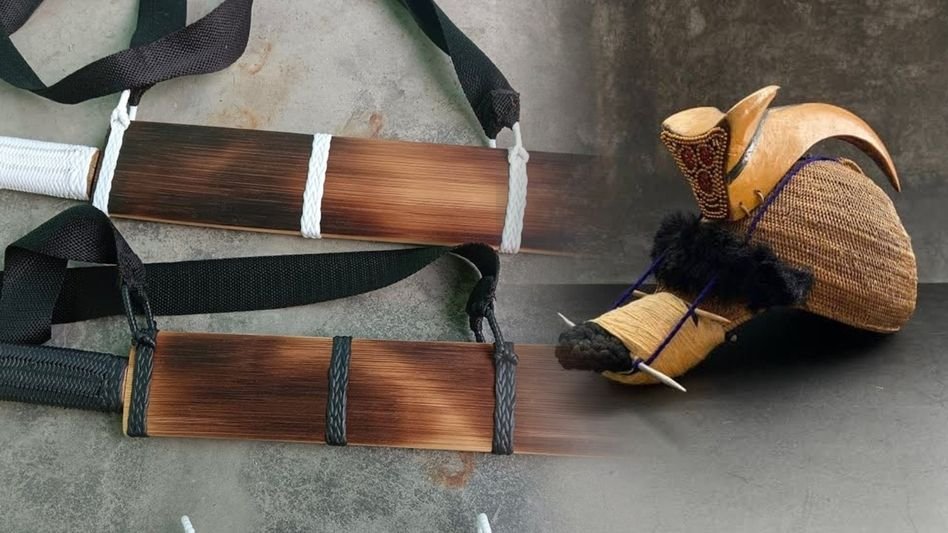
Byopa is far more than a decorative cap — this traditional headgear is an irreplaceable symbol of Nyishi manhood, vigour and identity. Woven tightly from split cane, the dome-shaped base called the Podum sits snugly on the head. Historically, the defining centerpiece was the upper beak and casque of the Great Indian Hornbill, mounted at the front, flanked by striking black and white tail feathers. It was worn by priests during sacred rituals. Today, it graces weddings and festivals like the Nyokum Yullo.
Crafting a single byopa takes an artisan four to five days. But by the late 1990s, something had to change. The centuries-old demand for hornbill beaks threatened the survival of the canopy icon, and the Nyishi community, realizing the bird’s extinction would mean the death of the ecosystem that inspired their culture, made a bold and quietly historic choice — they replaced the authentic hornbill beak with replicas carved from wood or fiberglass. Duck feathers now substitute for hornbill plumes. Synthetic hair stands in for the long topknots of Nyishi warriors. A finished byopa sells for Rs 2,000 to Rs 5,000 in local markets.
There is something deeply moving about a community choosing to protect the very bird woven into its identity rather than consuming it into extinction. That is not just conservation — that is wisdom passed down through generations who understood long before anyone else that you cannot wear a culture to death.
In Arunachal’s rapidly modernizing valleys, the dao and the byopa remain. Not as museum pieces. As living symbols — proof that some things forge themselves so deeply into a people’s soul that no amount of time, or change, can ever quite cut them loose.