
For the people living deep inside Dibang Valley, crossing the Dri River has never been a casual thing. It has been a gamble — a daily uncertainty shaped by weather, swollen waters, and a question that should never have to be asked: will I make it across today?
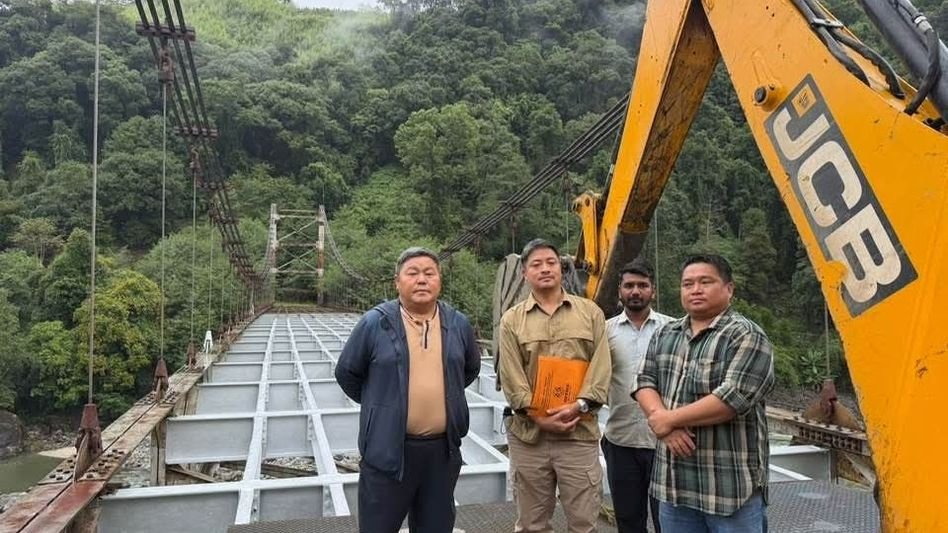
That question may finally have an answer. A long-delayed motorable bridge over the Dri River at Etabe, near the town of Anini, is now inching toward completion — nearly eight years after it was first supposed to be done.
Eight years. Let that sink in for a moment.
For residents of one of India’s most remote and strategically sensitive border districts, that is eight years of interrupted supply chains, difficult medical emergencies, and basic movement held hostage to the whims of a river. The Dibang Valley district shares its frontier with China, which makes this not just a story about concrete and steel — it is a story about how a nation connects with its own borderlands.
The bridge, built using RCC and steel, is being constructed at Etabe in Anini and is designed to offer dependable all-weather access. When completed, it is expected to transform movement for local residents, government vehicles, and the constant flow of essential supplies that these communities depend on. Right now, that movement is anything but guaranteed.
Upper Dibang Valley has always been a hard place to build in. The terrain does not forgive mistakes or slow work. Mountains, rivers, and monsoons have historically made infrastructure development here a painfully slow process. Contractors, logistics, funding gaps — challenges pile up fast in a region where even getting construction materials to a site is an achievement of its own. It is not difficult to imagine how a project stretches from one year into two, then four, then somehow eight.
But the reasons for the delay barely matter to the families who have been waiting. What matters is what comes next.
Once the bridge is open, officials say it will strengthen road connectivity in the border area, improve access to essential services, and make it significantly easier to move supplies and necessities into communities that have long operated in isolation. That is not a small thing. In a district bordering China, reliable road infrastructure has implications that go well beyond convenience — it shapes the ability of the government to maintain a presence, deploy resources, and signal to the world that this land is integrated and looked after.
India has been steadily ramping up infrastructure work across its northeastern frontier in recent years, with border roads and bridges receiving increased attention under broader connectivity pushes. This project, despite its delays, fits within that larger picture. A completed bridge at a river crossing near the China border is, in its own quiet way, a statement.
For the communities of Anini and the surrounding settlements of Upper Dibang Valley, though, the politics are secondary. What they want is simple: to cross the river safely, any day of the year, without wondering whether the water will stop them.
That day, after eight long years of waiting, is finally getting close.