
When a language starts fading, an entire world fades with it. That’s exactly the fear driving the Adi Agom Kebang (AAK) to the doors of Arunachal Pradesh’s government — and this time, it looks like someone finally opened up.
A Meeting Long Overdue
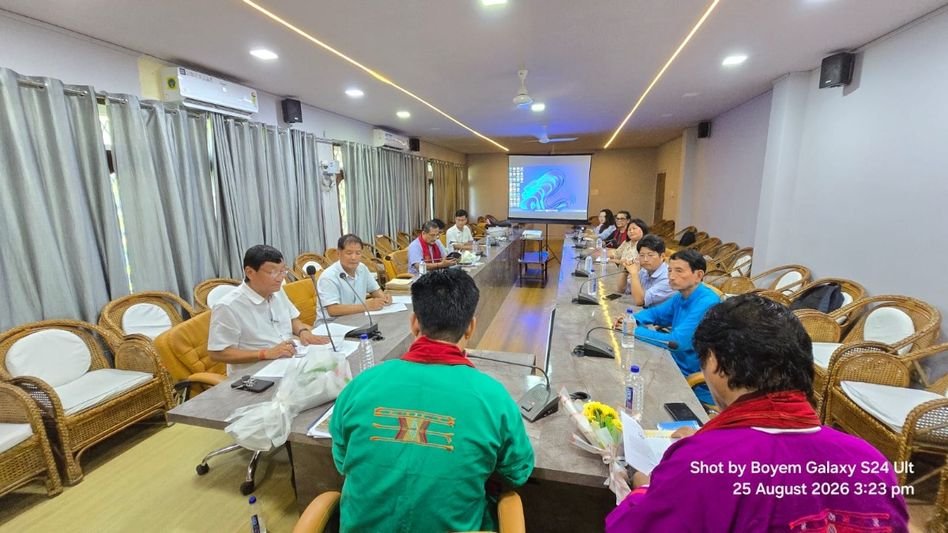
On August 26, the Directorate of Indigenous Affairs, Government of Arunachal Pradesh, sat down with the core executive members of the Adi Agom Kebang at Siang Guest House. The agenda was straightforward but urgent — the preservation, protection and promotion of the Adi language and cultural heritage. The Directorate delegation was led by Director Likha Suraj and Assistant Director Tapun Taki. Notably, representatives from Billion Readers (BIRD) and the Planet Readers–Ani Books team from Roing were also part of the gathering. It wasn’t just a bureaucratic sit-down. It felt like a cultural intervention.
AAK Puts Its Cards on the Table
The AAK delegation was led by its president Bodong Yirang and general secretary Tajing Taki. Yirang didn’t mince words. He walked the officials through the history, objectives and ground-level activities of the AAK, laying bare the uphill battle the organisation has been fighting to keep the Adi language alive and thriving. He spoke about ongoing initiatives but was equally candid about the roadblocks — funding gaps, institutional neglect, and the silent erosion of a language that carries centuries of identity within it. His appeal to the Directorate was clear: step in, and step up.
Voices From the Ground
It wasn’t just Yirang who spoke. General secretary Tajing Taki and other executive members brought their own concerns to the table, adding texture and urgency to the conversation. Taki also took a moment to express gratitude to the Directorate for initiating the interaction — which, honestly, says a lot. When a cultural organisation thanks the government simply for showing up, it underscores just how long these communities have felt ignored. Small acknowledgements matter when you’ve been waiting too long.
A Promise That Must Become Action
Director Likha Suraj didn’t leave the room without giving assurances. He assured the AAK of all possible support from the Directorate and had earlier expressed his interest in directly engaging with the organisation to understand the challenges faced by indigenous languages. That kind of direct engagement — going beyond press statements — is what gives this meeting a slightly different weight compared to the usual bureaucratic exchanges.
The Bigger Picture
The meeting was seen as a step towards strengthening coordination between the Directorate of Indigenous Affairs and the AAK, and developing greater institutional support for the long-term preservation and promotion of the Adi language and cultural heritage. But steps alone don’t build bridges. The Adi community — and indigenous communities across Arunachal Pradesh — have seen promises come and go. What they need now isn’t another meeting. They need a roadmap, resources, and the political will to follow through. The Adi language has survived for generations. Whether it survives the next few decades depends on what happens after the guests leave Siang Guest House.
HASHTAGS
#AdiAgomKebang #AdiLanguage #ArunachalPradesh #IndigenousAffairs #CulturalHeritage #LanguagePreservation #AdiTribe #NortheastIndia #TribalCulture #AbotaniTV #ArunachalNews #IndigenousLanguage #BodongYirang #LikhaSuraj #CulturalRevival #TribalHeritage #LanguageRevival #NortheastCulture #ArunachalCulture #ProtectOurLanguage