

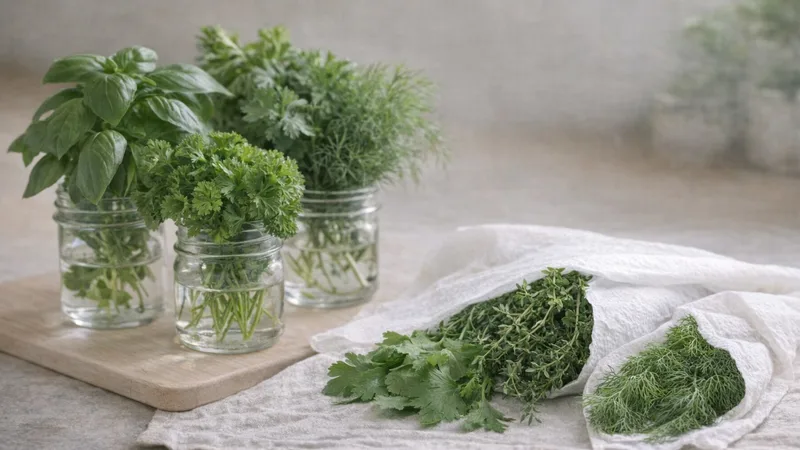
You bring home a bright, fragrant bunch of basil or cilantro, tuck it in the fridge, and three days later it is a sad, slimy handful headed for the trash. Learning how to store fresh herbs so they last longer is one of the highest-impact kitchen skills you can pick up. With the right method, tender herbs like parsley, cilantro, and mint stay fresh for two to three weeks, and hardy herbs like rosemary and thyme last even longer. All you need is a glass of water, a paper towel, and a little knowledge of what makes herbs wilt.
Why Fresh Herbs Wilt So Fast
A cut herb is still a living thing. Even off the plant, its cells keep respiring — burning stored sugars and losing moisture through the leaves. Herbs are especially vulnerable because they have a huge leaf surface area relative to their volume: plenty of surface for water to escape from and very little stem or flesh to hold reserves.
Two forces work against herbs in the fridge. The first is moisture loss: cold refrigerator air is dry, and leaves droop as their cells lose turgor pressure, the internal water pressure that keeps them firm. The second is excess moisture: a sealed produce bag traps evaporating water, so condensation pools on the leaf surfaces, creating a breeding ground for the bacteria and fungi that cause sliminess and black spots.
So storage is a balancing act: supply enough water to keep cells plump, but keep liquid from sitting on the leaves. Tender, soft-stemmed herbs like basil, parsley, cilantro, dill, and mint behave like cut flowers — they drink through their stems. Hardy, woody-stemmed herbs like rosemary, thyme, oregano, and sage lose water slowly and prefer a humid but not soaking environment. Match the method to the herb type and you will double or triple its fridge life.
The Water-Glass Method for Tender Herbs
For tender herbs, the single most effective storage method is to treat them like a bouquet of flowers. Stand them upright in a jar with a couple of inches of water, and they will keep drinking through their stems for weeks.
Step-by-step: storing parsley, cilantro, mint, and dill
- Trim the stems. Use a sharp knife or kitchen shears to cut about half an inch off the bottom of each stem at an angle. The angled cut exposes more surface area for water uptake, and the fresh cut removes any dried or sealed end that blocks absorption.
- Remove lower leaves. Strip off any leaves that would sit below the waterline. Leaves left in water rot quickly and cloud the water, which shortens the life of the whole bunch.
- Stand them in water. Place the bunch in a jar, mug, or glass with about two inches of clean, cool water — enough to cover the cut ends but not the leaves.
- Cover loosely. Drape a plastic bag loosely over the herbs like a little greenhouse — it traps humidity without pressing on the leaves. A rubber band around the rim keeps it in place.
- Refrigerate. Put the whole setup in the fridge. Check every few days: change the water if it looks cloudy and snip any leaves that have yellowed so they do not drag the rest down.
Stored this way, parsley and cilantro routinely last two weeks or more, and mint can go even longer. Dill is the most delicate of the group — expect seven to ten days, far better than the two or three days it survives in its original twist-tied bundle.
Basil is the exception
Basil uses the same bouquet setup but stays out of the fridge — cold turns its leaves black, a form of cold damage called chilling injury. Leave the water glass on your kitchen counter, away from direct sunlight, and change the water every day or two. It typically stays fresh for a week to ten days.
The Damp Paper Towel and Bag Method for Hardy Herbs
Woody herbs — rosemary, thyme, oregano, sage, and marjoram — need the opposite approach. Their stiff stems and waxy leaves lose water slowly, so standing them in water gains little and can encourage rot. What they need is steady, gentle humidity with no puddles.
Step-by-step
- Do not wash yet. Wait to rinse until just before you use them. Washing adds surface moisture that invites mold during storage.
- Spread them on a damp paper towel. Lightly dampen a paper towel or clean kitchen towel — moist, not dripping. Lay the herbs in a single layer on the towel.
- Roll loosely. Roll the towel up with the herbs inside, like a soft cigar. Do not roll it tight; the herbs need air circulation.
- Bag and refrigerate. Slide the roll into a zip-top bag or reusable silicone bag. Press out most of the air but do not vacuum-seal it, then store the bag in the crisper drawer. Check once a week and replace the towel if it dries out completely.
Hardy herbs stored this way commonly last three to four weeks. Rosemary is the champion — a well-wrapped bundle can stay usable for a month. Sage and oregano are close behind, while thyme lands around two to three weeks.
Herb-by-Herb Quick Reference
Most herbs fall neatly into the two camps above, but a few have quirks worth knowing.
Chives
Chives are hollow, so they do not drink through their stems well. The damp paper towel method works best: lay the bunch on a damp towel, roll loosely, and bag it for ten days to two weeks. Do not chop chives before storing — keep them whole until you snip them over a dish, such as a stack of fluffy pancakes topped with sour cream and chives for a savory brunch twist.
Dill
Dill’s feathery fronds are the most fragile herb in most kitchens. Use the water-glass method with only a very loose drape — heavy condensation crushes the delicate fronds. Expect seven to ten days. If you bought more than you can use in a week, dill is a great candidate for freezing (see below).
Tarragon
Tarragon has soft stems but smallish leaves. The damp paper towel and bag method gives the best results, with a typical life of two weeks. Keep it away from strong-smelling foods — tarragon picks up refrigerator odors readily.
Bay leaves
Fresh bay leaves barely wilt at all. Wrap them in a dry paper towel inside a bag and refrigerate for weeks, or simply air-dry them (see below) — bay is one of the few herbs arguably better dried than fresh. Never eat a bay leaf whole; fish it out of the pot before serving.
What NOT to Do: Common Mistakes That Kill Herbs Fast
Avoiding these habits matters as much as choosing the right method.
- Washing before storing. Water clinging to leaves is the number one cause of premature slime. Wash herbs right before you cook with them. If they are visibly gritty, rinse, then dry thoroughly in a salad spinner or between towels before wrapping.
- Leaving them in the original packaging. The twist-tied sleeve squeezes stems together, trapping moisture and blocking airflow. Unwrap every bunch the day you buy it and re-store it with one of the methods above.
- Storing in the fridge door. The door is the warmest, most temperature-volatile spot in the refrigerator. Keep herbs on a middle or lower shelf, or in the crisper drawer, where the temperature stays steadier.
- Crushing or bruising the leaves. Tightly packed herbs bruise, and bruised cells leak and spread rot to their neighbors. Give herbs room: loose rolls, loose covers, gentle handling.
- Mixing past-their-prime herbs with fresh ones. One rotting stem releases moisture and decay-spreading compounds into the whole bunch. Pull out any yellowed, blackened, or slimy pieces immediately.
- Storing near the freezer vent or back wall. The coldest spots can partially freeze delicate leaves, and freeze-thawed basil or cilantro turns to black mush. Keep herbs toward the front of a shelf or in the crisper.
Freezing Herbs: The Best Backup Plan
Sometimes you simply have more herbs than you can use fresh. Freezing locks in flavor far better than drying does. Frozen herbs lose their crisp texture, so they are best for cooked dishes — soups, stews, sauces, sautés — where texture does not matter but flavor does.
Oil cubes: the flavor-bomb method
Chop tender herbs — basil, parsley, cilantro, dill, oregano — and pack them into an ice cube tray, filling each compartment two-thirds full. Pour olive oil over the herbs to cover them, then freeze until solid. Pop the cubes out and store them in a labeled freezer bag. Each cube is a ready-made flavor base: drop one straight into a hot pan as the start of a sauce or stir-fry. The oil protects the leaves from freezer burn and preserves aroma well. These cubes keep their flavor for about three months.
Water trays: the simple method
For herbs destined for soups and braises, plain water works fine. Chop the herbs, fill tray compartments halfway, top up with water, and freeze — the cubes melt directly into the pot. Note that basil frozen without oil darkens (harmless but less pretty), so use the oil-cube method for basil when appearance matters.
Drying Herbs at Home
Drying suits woody herbs best — thyme, rosemary, oregano, sage, and bay — because their low moisture content dries evenly without molding. Tender, high-moisture herbs like basil, parsley, and cilantro dry poorly at home; freeze those instead.
Gather small bundles of four to six stems, tie them at the stem ends with kitchen string, and hang them upside down in a warm, dry, well-ventilated spot out of direct sunlight. A paper bag with a few holes in it, slipped loosely over each bundle, catches falling leaves. Most herbs dry fully in one to two weeks; they are done when the leaves crumble easily between your fingers.
Strip the dried leaves from the stems and store in airtight jars away from light and heat. Home-dried herbs keep their potency for about six months to a year. Label each jar — dried oregano and dried marjoram look surprisingly alike off the stem.
How to Tell When Herbs Have Gone Bad
Even with perfect storage, herbs eventually reach the end. Use your senses.
- Look: yellowed leaves, spreading black or brown spots, or a slimy film on the stems mean the herbs are done. A few yellow outer leaves can simply be picked off, but widespread discoloration means compost the bunch.
- Smell: fresh herbs smell bright and characteristic of their type. If the bunch smells sour, musty, or like nothing at all, its flavor is gone even if it looks okay.
- Feel: leaves should feel supple and springy. Mushy, waterlogged, or papery-dry-and-crumbly leaves (on herbs meant to be fresh) have crossed the line.
A word on safety: do not try to rescue herbs that are slimy or smell off — decaying leaves can harbor bacteria. Compost them and move on. Slightly wilted but otherwise clean and good-smelling herbs are perfectly fine; see the revival trick below.
How to Revive Slightly Wilted Herbs
Even when you know how to store fresh herbs so they last longer, a busy week can leave a bunch drooping. Herbs that have gone limp but show no sliminess, dark spots, or off smells are not dead — they are just thirsty.
- Fill a large bowl with ice water.
- Trim a fresh half-inch off the stem ends.
- Submerge the whole bunch — stems and leaves — for fifteen to thirty minutes.
- Lift them out, shake off excess water, and pat gently dry.
The cold water rehydrates the cells, and parsley, cilantro, and mint often perk up dramatically — sometimes looking nearly as good as the day you bought them. This trick also works right before serving: a quick ice bath makes herbs look their crisp best as a garnish. It will not save herbs that have already turned slimy or black, so act while they are merely droopy.
Using Stems and Leftover Bits So Nothing Goes to Waste
Well-stored herbs give you more usable herb — including the parts most cooks throw away. Tender stems from parsley, cilantro, and dill are packed with flavor; finely chopped, they disappear into sauces, dressings, and marinades. Parsley stems simmered in a stock pot give up their flavor to the broth before being strained out.
Woody stems from thyme and rosemary make excellent grilling skewers — thread vegetables or shrimp onto a sturdy rosemary stem for an aromatic upgrade. Leftover basil can be pounded into pesto or stirred into a pan sauce. When a handful of mixed herbs is nearing the end of its fresh life, plan an herb-forward meal: fold chopped parsley, dill, and chives into a savory pancake batter, or scatter fresh herbs over a plate of crispy tofu to turn a simple weeknight dinner into something restaurant-worthy. One “use up the herbs” meal a week ensures none of your careful storage work goes to waste.
Frequently Asked Questions
Quick answers to the most common questions about how to store fresh herbs so they last longer.
Should you wash fresh herbs before storing them?
No — store herbs unwashed and rinse them just before use. Surface moisture encourages mold and sliminess, the fastest way to ruin a bunch. If the herbs are visibly dirty, rinse and dry them completely in a salad spinner or between towels before storing.
How long do fresh herbs last in the fridge?
Tender herbs like parsley, cilantro, and mint last two to three weeks standing in a water glass with a loose cover in the fridge. Hardy herbs like rosemary, thyme, and sage last three to four weeks wrapped in a damp paper towel inside a bag. Basil lasts longest on the counter in water — about a week to ten days — because fridge temperatures turn its leaves black.
Can you freeze fresh herbs instead of drying them?
Yes — for most herbs freezing preserves flavor better than drying. Chop tender herbs into an ice cube tray, cover with olive oil, and freeze into flavor cubes for cooking. Use frozen herbs in cooked dishes, where their softened texture will not matter.
Why does basil turn black in the refrigerator?
Basil is a tropical plant and suffers chilling injury in the cold, which damages leaf cells and causes spreading black patches. Store basil in a glass of water on the kitchen counter instead, away from direct sun, changing the water every couple of days.
Is it safe to use herbs that are slightly wilted?
Yes, as long as they still look and smell clean. Wilting just means the leaves lost water — a fifteen-minute ice-water soak often revives them completely. Discard herbs that are slimy, have spreading dark spots, or smell sour or musty.
What is the best way to store leftover cut herbs like chives?
Keep cut herbs whole as long as possible — chopping exposes more surface area and speeds up decay. Wrap whole chives in a damp paper towel, roll loosely, and refrigerate in a bag. They will keep for ten days to two weeks, ready to snip fresh over whatever you are cooking.