
For too long, young people from Arunachal Pradesh’s villages have had to leave the state — or leave everything to chance — just to find a decent livelihood. That may be about to change.
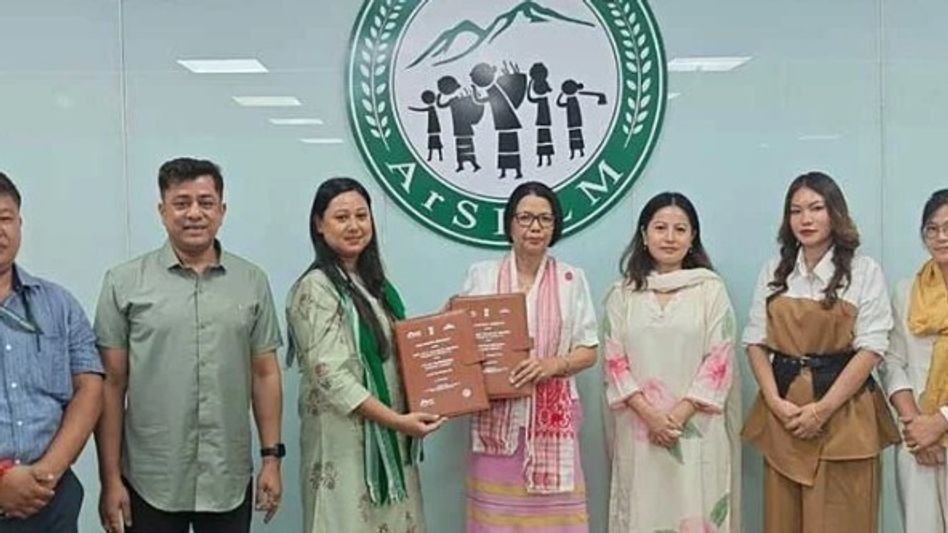
The Arunachal State Rural Livelihoods Mission (ArSRLM) took a significant step forward on Monday, September 28, inking memoranda of understanding with seven organisations to roll out placement-linked skill development training for rural youth across the state. The programmes fall under the Deen Dayal Upadhyaya Grameen Kaushalya Yojana 2.0 — a centrally sponsored scheme under the Ministry of Rural Development designed specifically to link skill training to actual wage employment.
The seven organisations that signed on are Assam Professional Academy, Nitya Foundation, Skills2Skills LLP, Spurthi Rural Development Society, Sundyne Solar Solution Private Limited, Nurture Employability & Economic Development Society (NEEDS), and SHEEP Society. That’s a fairly diverse mix — ranging from professional academies to development societies — which signals that the mission isn’t putting all its eggs in one basket.
What makes this push different from earlier, often tokenistic skill training initiatives is the emphasis on placement. Not just training for training’s sake, but training that ends with a job. That’s the DDU-GKY 2.0 promise, and it’s one Arunachal’s mission leadership appears serious about holding partner agencies to.
ArSRLM Chief Executive Officer and State Mission Director Sangeeta Yirang was direct about what she expects. She underlined that skill development is critical to empowering rural youth and creating genuine employment, but also made clear the success of DDU-GKY 2.0 will hinge on institutional commitment, accountability, and the active participation of every stakeholder involved. Implementing agencies were specifically asked to ensure quality training, follow prescribed standards, and coordinate placements directly with the mission. No room left for vague assurances.
ArSRLM Chief Operating Officer for Skills, Ruzing Bellai, echoed the same no-nonsense tone — stressing strict adherence to the scheme’s guidelines and standard operating procedures. He also flagged that regular monitoring and post-placement support will be essential to make sure employment outcomes actually stick. Because placing someone in a job on paper and ensuring they stay employed are two very different things. Anyone who has worked in the development sector knows that gap is often where these programmes fall apart.
There’s a real urgency behind all of this. Arunachal Pradesh is a state where geography and connectivity have historically made it harder for rural youth to access mainstream economic opportunities. Villages tucked away in valleys or perched along mountain ridges don’t always have the luxury of a coaching centre down the road or a recruiter showing up for a job fair. Programmes like DDU-GKY 2.0, when implemented well, try to bring that opportunity to the doorstep rather than asking young people to uproot themselves to find it.
The real test, of course, will come not at the signing ceremony but months from now — when the first batch of trainees completes their programmes and the placement numbers come in. That’s when the promises made on September 28 will either hold up or hollow out.
For Arunachal’s rural youth, there’s cautious hope in the air. And frankly, after years of being overlooked, they deserve more than cautious. They deserve results.