
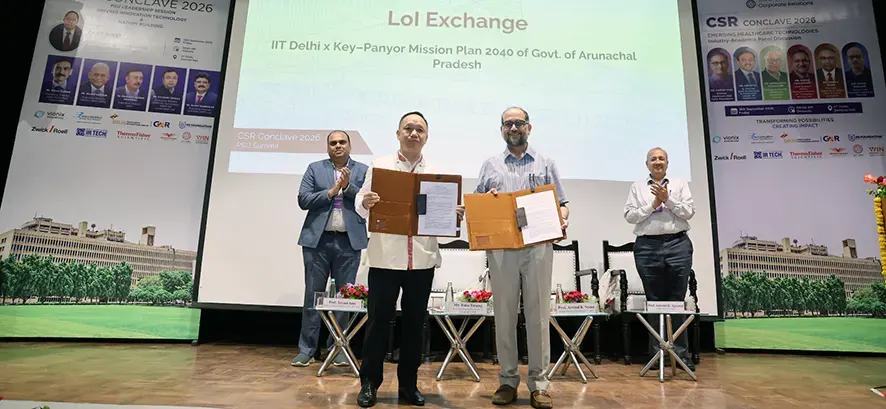
NEW DELHI, September 19: A new collaboration between IIT Delhi and the Keyi Panyor Mission Plan (KPMP) 2040 is set to bring research, technology and institutional expertise closer to one of Arunachal Pradesh’s newest districts.
The Indian Institute of Technology Delhi and KPMP 2040 have signed a Letter of Intent (LoI) to begin the process of establishing a Centre of Excellence aimed at supporting the long-term development priorities of Keyi Panyor district. The agreement was signed and exchanged at IIT Delhi on September 18 during the institute’s CSR Conclave 2026.
The LoI, signed by Yachuli MLA and KPMP 2040 political champion Toko Tatung and IIT Delhi Corporate Relations Dean Prof Jayant Jain, provides a framework for both sides to work together on research priorities, technical cooperation, governance arrangements and programmes for the proposed centre.
The initiative is still at an early stage. According to an official release cited by The Arunachal Times, its detailed structure and programmes will be worked out through further discussions, along with the necessary institutional and government approvals.
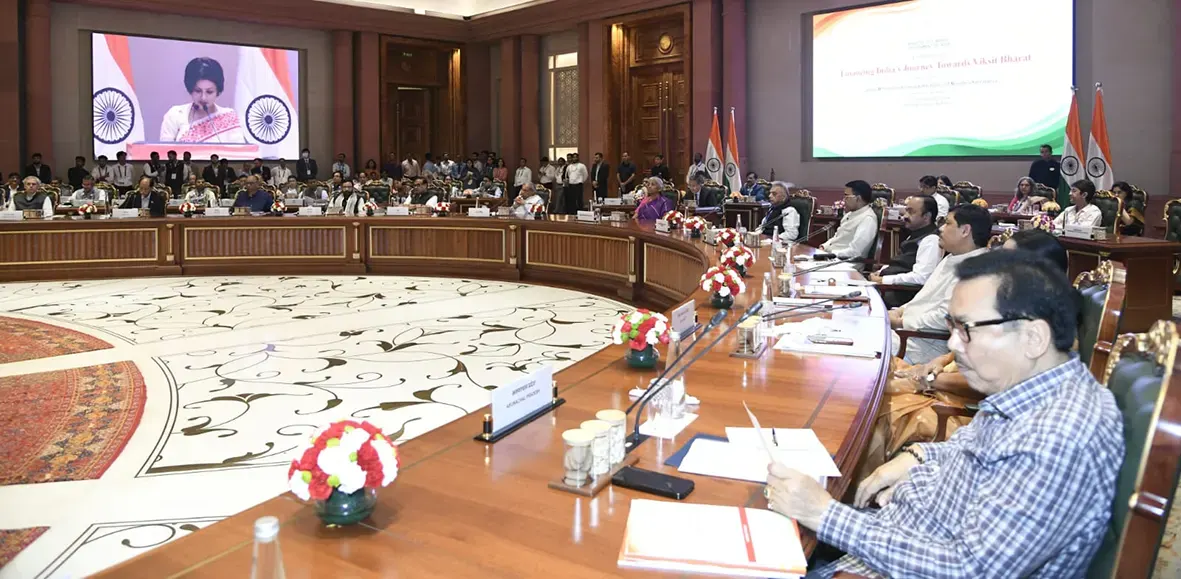
Tatung made the case for stronger research and knowledge partnerships while speaking at the PSU leadership session titled “Driving Innovation, Technology and Nation Building.” The session brought together representatives from major public-sector institutions including Delhi Metro Rail Corporation, Konkan Railway Corporation, Grid Controller of India, GAIL, Indian Oil Corporation and NTPC’s NETRA, along with SBI representatives and IIT Delhi officials.
During his address, Tatung outlined KPMP 2040 as a long-term and participatory development framework covering 20 thematic areas. He highlighted the district’s ambition to become a “bio-happy district”, with development focused not only on improving livelihoods and public services but also on protecting forests, water resources, biodiversity and indigenous ways of life.
Education was another major focus. Tatung presented the Comprehensive Action Plan for Education (CAPE) and stressed the role of teachers in shaping the district’s development. He also invited PSU leaders to explore CSR, technical and knowledge-based partnerships with Keyi Panyor.
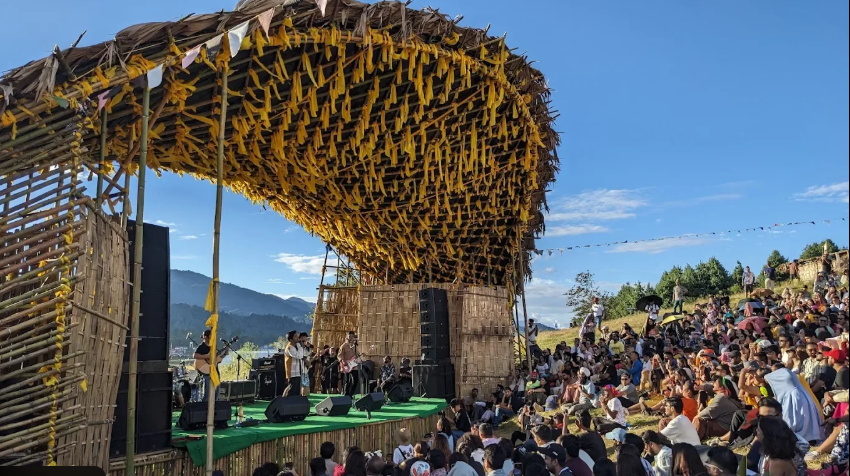
The proposed mini secretariat for Keyi Panyor was also presented through a video walkthrough. Its design takes inspiration from the traditional long houses of the Nyishi community and is intended to reflect the cultural character of the region. The design has been conceived by scenographer and Padma Bhushan awardee Rajeev Sethi and has received approval from the Arunachal Pradesh government.
The KPMP delegation also visited IIT Delhi’s research and innovation facilities, looking at work in healthcare, renewable and efficient energy, early-warning systems, robotics, artificial intelligence and other appropriate technologies.
Discussions with IIT Delhi’s Centre for Rural Development and Technology examined how technical expertise could support participatory assessment of Keyi Panyor’s land, water and livelihood resources. Springshed protection, water security, waste management and technologies suited to the district’s terrain and rural settlements were among the areas discussed.
The delegation also met Arunachal students studying at IIT Delhi. Tatung encouraged them to maintain their connection with the state and consider contributing their knowledge and experience to Arunachal and initiatives such as KPMP 2040.
For Keyi Panyor, the proposed partnership could mark an important shift toward development shaped by local needs, scientific research and indigenous knowledge. The real test, however, will be how these ideas move from discussions and plans into practical projects on the ground.