
Deep in Pasighat, a quiet building is now holding the weight of an entire civilization.
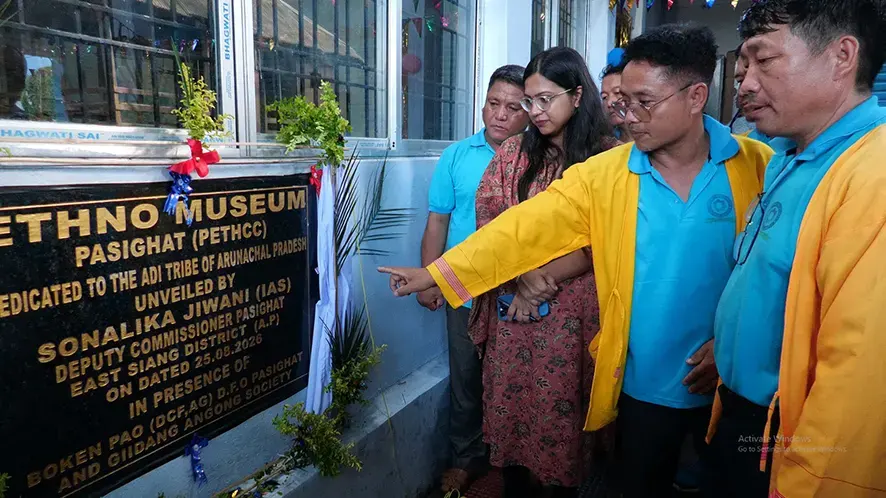
The Giidang Angong Society (GAS) on Tuesday unveiled its long-awaited ethno museum in Pasighat — a space dedicated entirely to keeping the traditions, practices, and living identity of the Adi community right where they belong: alive and visible. It’s the kind of initiative that doesn’t make noise with grand speeches alone. It speaks through the artifacts, the crafts, and the stories pinned inside those walls.
A Vision That Finally Has Four Walls
East Siang Deputy Commissioner Sonalika Jiwani, who attended the unveiling, didn’t hold back her appreciation. She said the museum was something she had actually envisioned and discussed with various department heads when she was first posted in the district — and seeing it come together through community effort clearly meant something to her. She assured the administration’s full backing, and wasted no time making it concrete: the district administration will immediately take up the flooring work of the museum. That kind of swift, practical support is exactly what grassroots cultural projects need to survive.
Not Just a Display — A Living Space
DFO Boken Pao brought a sharp, grounded perspective to the event. He suggested that the information displayed inside the museum be clear and readable from at least two metres — a small detail, but a crucial one for any visitor experience. He also nudged GAS to think about making the museum financially sustainable by introducing revenue-generating activities. Pao didn’t stop there. He offered to support tree planting in the surrounding area and proposed that each tree be labelled with both its botanical name and its Adi name — turning the museum’s surroundings into an outdoor learning space. He also floated the idea of building accommodation for visiting guests, hinting at a larger cultural tourism vision taking shape around this space.
What the Museum Is Really About
GAS spokesperson Tobom Dai put it simply: the museum exists to represent and preserve the traditional methods, practices, and cultural identity of the Adi tribe. That sentence sounds straightforward, but the work behind it is anything but. Keeping a culture’s memory intact — especially in a world that moves fast and forgets faster — takes deliberate, consistent effort. GAS has taken that responsibility seriously.
District art and culture officer Monnong Tayeng and district tourism officer Lina Perme were also present, underscoring the official recognition this initiative is already earning.
Pasighat Just Got a Reason to Visit
There’s something quietly powerful about a community building a museum for itself — not waiting for the government to do it, not waiting for outside validation. The Giidang Angong Society has done something rare here. If the administration follows through on its promises and the museum grows into the tourist destination the DC envisions, Pasighat may soon be known not just as a scenic river town, but as the cultural heartbeat of the Adi world.
Some things are worth preserving. This is one of them.
HASHTAGS
#AdiTribe #EthnoMuseum #Pasighat #ArunachalPradesh #AdiCulture #TribalHeritage #GiidangAngongSociety #CulturalPreservation #EastSiang #NortheastIndia #TribalMuseum #IndigenousCulture #AdiCommunity #HeritageConservation #PasighatTourism #CulturalTourism #AbotaniTV #AdiTraditions #TribalIdentity #NortheastHeritage