
Deep in the mist-covered mountains of Tawang, scientists have stumbled upon something that has never been officially recorded on Indian soil before — a rare, solitary Himalayan bee that was, until now, known only to Bhutan and China.
The Bee That Crossed Borders
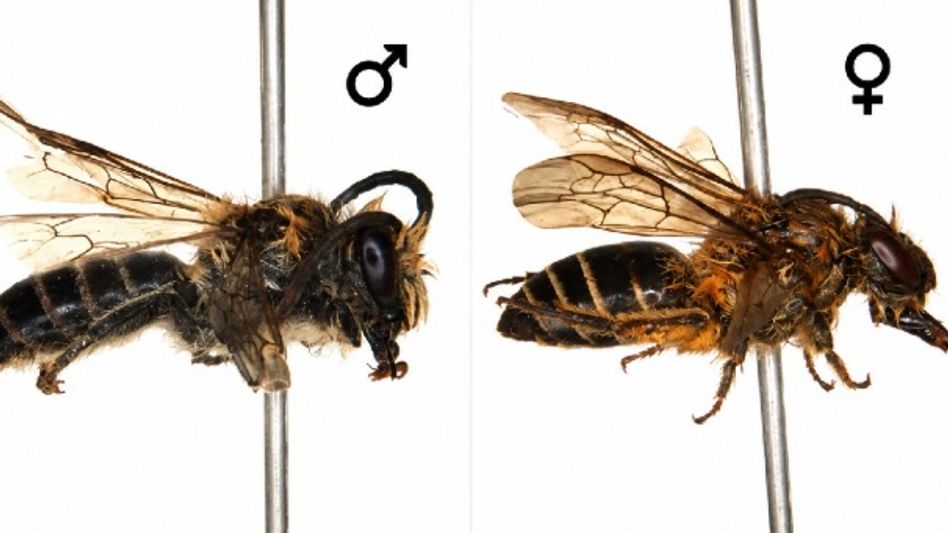
The species in question is Colletes bhutanicus, a rare solitary Himalayan bee, documented for the first time in India from Tawang district of Arunachal Pradesh by scientists of the Zoological Survey of India (ZSI). The team behind this landmark find — ZSI scientists Dibyajyoti Ghosh, KA Subramanian, and Dhriti Banerjee — made the discovery during a recent field survey in the region. It’s the kind of find that reminds you just how much of the natural world is still waiting to be properly mapped, even in an age of satellites and smartphones.
Where It Lives and What It Does
Researchers found the bee at elevations ranging from 1,500 metres to 3,800 metres, and it was observed visiting 25 species of flowering plants, including mustard, buckwheat, coriander, beans, chilli, and eggplant. Think about that for a second — a bee making the rounds on crops that mountain farmers depend on for their livelihoods. Unlike honeybees, Colletes bees are solitary and do not live in large colonies. Individual bees generally build nests separately and contribute to pollination by moving between flowers to collect pollen and nectar. Quiet, independent, unnoticed. But absolutely essential.
A Species Already Known — Just Not Here
The bee had previously been recorded in Bhutan and China, including the Xizang region, and a 2014 study published in Zootaxa had listed the species among Colletes bees from China, while scientific records from Xizang documented it at several high-altitude locations. Its presence was well-established across the border. But India? This is a first. And it raises an obvious question — how long has this bee been quietly buzzing through Tawang’s meadows without anyone knowing?
Why Arunachal Pradesh Keeps Surprising the World
Arunachal Pradesh, with its wide range of altitudes, climate, and vegetation, is one of India’s most important biodiversity regions, and this latest finding highlights the need for continued biodiversity surveys in the state’s remote mountainous areas, where several species remain poorly documented. Deputy Chief Minister Chowna Mein described the discovery as a matter of pride for Arunachal Pradesh and noted it highlighted the potential role of native pollinators in supporting mountain agriculture. He’s right to be proud. Every new species documented here is proof that this land holds secrets science is still catching up to.
Tawang has long been celebrated for its monasteries and landscapes. Now it can add another title — the place where a rare Himalayan bee finally found its name on India’s map. If one survey can yield this, one can only wonder what the next expedition into these mountains will uncover.
HASHTAGS
#ColleetesBhutanicus #HimalayanBee #TawangDiscovery #ArunachalPradesh #RareBeeIndia #ZSIIndia #ZoologicalSurveyOfIndia #IndianBiodiversity #EasternHimalayas #NewSpeciesIndia #SolitaryBee #MountainPollinator #NativePollinators #ArunachalWildlife #TawangNature #IndiaScience #BiodiversitySurvey #NortheastIndia #HimalayanWildlife #AbotaniTV