
If you have ever wondered how to make fluffy pancakes without eggs step by step, the answer is simpler than you might think. Eggs are not what make pancakes rise or stay tender — leavening, liquid ratios, and technique do that work. Once you understand a few small adjustments, you can make a tall, golden, cloud-soft stack using pantry staples you already have. This guide walks you through the full process, from ingredients to freezing leftovers.
Why Eggless Pancakes Can Still Be Fluffy
Eggs do three jobs in a traditional pancake: they bind the batter, add moisture, and contribute a little structure through protein. But flour and baking powder already provide plenty of structure on their own. The real secrets to height are:
- Enough leavening: baking powder releases carbon dioxide twice — once when it hits liquid and again when it hits heat. That second lift is what makes pancakes puff in the pan.
- A slightly acidic liquid: vinegar or lemon juice plus baking soda creates an extra burst of bubbles.
- Thick batter: a batter that is too thin spreads out flat; a thick, barely-pourable batter holds its height.
- Resting time: a short rest lets the flour hydrate and the leavening get to work before the batter hits the heat.
Get those four right and nobody at the table will guess there are no eggs in the stack.
Ingredients You Will Need
This makes about 8 medium pancakes — enough for 3 to 4 servings.
Dry Ingredients
- 2 cups (250 g) all-purpose flour
- 2 tablespoons sugar
- 1 tablespoon baking powder
- 1/2 teaspoon baking soda
- 1/2 teaspoon salt
Wet Ingredients
- 1 3/4 cups (415 ml) milk of choice
- 1 tablespoon white vinegar or lemon juice
- 3 tablespoons melted butter or neutral oil, plus more for the pan
- 1 teaspoon vanilla extract
The Egg Replacer
- Option 1 (recommended): 1/4 cup (60 g) unsweetened applesauce — this is your binder
- Option 2: 1/4 cup mashed ripe banana (adds a faint banana flavor)
- Option 3: 2 tablespoons ground flaxseed mixed with 5 tablespoons water, rested 5 minutes (flax egg)
How to Make Fluffy Pancakes Without Eggs, Step by Step
Step 1: Make the “buttermilk”
Pour the milk into a large measuring cup or bowl and stir in the vinegar or lemon juice. Let it sit for 5 to 10 minutes while you gather the dry ingredients. It will look slightly curdled — that is exactly what you want. This acidified milk reacts with the baking soda to create extra lift.
Step 2: Whisk the dry ingredients
In a large mixing bowl, whisk together the flour, sugar, baking powder, baking soda, and salt until evenly combined. Whisking does double duty: it distributes the leavening so every pancake rises evenly, and it aerates the flour so you do not need to overmix later.
Step 3: Combine the wet ingredients
Add the melted butter or oil, vanilla extract, and your chosen egg replacer to the acidified milk. Stir with a fork until combined. It does not need to be perfectly smooth at this stage.
Step 4: Mix the batter — gently
Pour the wet mixture into the dry ingredients. Stir with a spoon or spatula just until the flour streaks disappear — about 10 to 12 gentle strokes. Lumps are fine and even desirable. Overmixing develops gluten, which makes pancakes tough and flat instead of tender and tall.
Step 5: Rest the batter
Let the batter rest for 5 to 10 minutes at room temperature. During this rest the flour fully hydrates and the baking powder begins its first round of bubbling. You will notice the batter thicken slightly — that is a good sign.
Step 6: Heat the pan properly
Place a nonstick skillet or griddle over medium heat for 2 to 3 minutes before adding any batter. The pan is ready when a drop of water sizzles and dances across the surface. Lightly grease with butter or oil, wiping away excess with a paper towel so the pancakes brown evenly instead of frying.
Step 7: Cook the first side
Scoop about 1/4 cup of batter per pancake into the pan, leaving space between them. Cook for 2 to 3 minutes, until bubbles form across the surface and the edges look set and matte. Resist the urge to press the pancake down with the spatula — that squeezes out the air you worked to create.
Step 8: Flip once and finish
Slide the spatula fully under the pancake and flip in one confident motion. Cook the second side for 1 to 2 minutes, until golden brown. Transfer to a plate and keep warm in a low oven (200°F) while you cook the rest. Repeat with the remaining batter, greasing the pan lightly between batches.
Step 9: Serve immediately
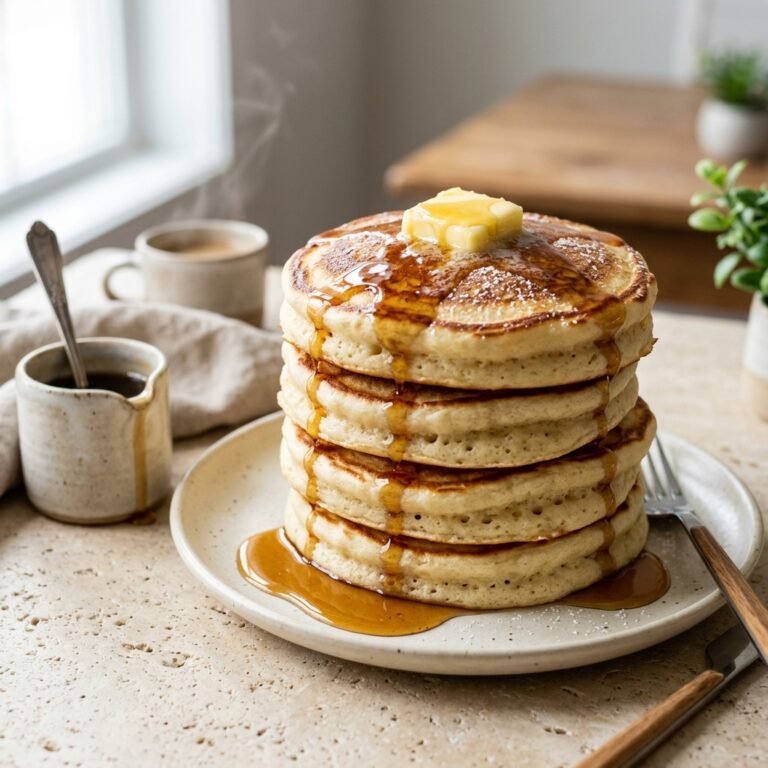
Stack them high and serve with warm maple syrup, fresh berries, a pat of butter, or any toppings you like. Eggless pancakes are at their absolute fluffiest in the first 10 minutes off the griddle.
Common Substitutions
One of the best things about this recipe is how flexible it is. Here are the most useful swaps:
- Dairy-free milk: oat, soy, or almond milk all work. Soy and oat give the richest results; avoid unfortified rice milk, which is too thin.
- Gluten-free: use a 1-to-1 gluten-free flour blend (one that contains xanthan gum). Add 2 extra minutes of rest so the starches hydrate.
- Sugar-free: reduce sugar to 1 tablespoon or use a sugar substitute; the pancakes will brown a little less but still taste great.
- Oil instead of butter: neutral oils like canola or melted coconut oil work equally well for moisture.
- No applesauce? plain yogurt or pumpkin puree can stand in for the binder in the same 1/4-cup amount.
- Add-ins: fold in 1/2 cup blueberries, chocolate chips, or chopped nuts after mixing — never before, so the base ratio stays right.
For more ways to cook light, satisfying meals without special equipment, check out this guide on crispy tofu without deep frying — the same gentle-pan technique mindset applies.
How to Store and Freeze Leftovers
Eggless pancakes store beautifully, which makes them ideal for meal prep.
- Refrigerator: cool pancakes completely, then stack with parchment paper between each one. Seal in an airtight container or zip bag and refrigerate for up to 3 days.
- Freezer: lay cooled pancakes in a single layer on a baking sheet and freeze for 1 hour (this stops them sticking together). Transfer to a freezer bag, squeeze out the air, and freeze for up to 2 months. Label the bag so you remember what is inside.
- Reheating: microwave a single pancake for 20 to 30 seconds, or warm a stack in a 300°F oven for 8 to 10 minutes. For a crispy edge, reheat in a dry skillet for 1 minute per side. From frozen, add an extra minute.
- Do not store batter in the fridge for later — the leavening loses its power once wet, so next-day batter makes flat pancakes.
Make-It-Your-Own Variations
Once you have the base technique down, this recipe is an easy template for dozens of variations:
- Blueberry lemon: fold in 1/2 cup fresh blueberries and 1 teaspoon lemon zest after mixing. The zest brightens the whole stack.
- Double chocolate: add 2 tablespoons cocoa powder to the dry ingredients and fold in 1/3 cup chocolate chips. Reduce sugar to 1 tablespoon.
- Cinnamon spice: add 1 teaspoon cinnamon and 1/4 teaspoon nutmeg to the dry mix — especially good with maple syrup and sautéed apples.
- Savory herb: skip the sugar and vanilla, add 1/2 teaspoon garlic powder and 2 tablespoons chopped chives. Serve with sour cream.
- Banana nut: use the mashed-banana binder option and fold in 1/3 cup chopped walnuts for a naturally sweet, protein-richer stack.
Whichever direction you go, keep the core ratios intact — the leavening balance and thick batter are what protect the fluff.
Mistakes to Avoid
- Overmixing the batter: the number-one cause of dense, rubbery pancakes. Stop stirring the moment the dry flour disappears.
- Wrong pan temperature: too hot and the outside burns before the inside sets; too cool and the pancakes soak up grease and stay pale. Medium heat with a proper preheat is the sweet spot.
- Flipping too early: if the surface bubbles have not formed and the edges are not set, the pancake will tear and deflate. Patience pays.
- Pressing pancakes flat: squashing with the spatula drives out the air bubbles. Let the leavening do its job untouched.
- Skipping the rest: going straight from mixing bowl to pan gives you thinner, less tender results. Five minutes of rest is worth it every time.
- Old baking powder: leavening loses potency after about 6 months opened. Test yours: drop 1/2 teaspoon into hot water — it should fizz vigorously. If it does not, replace it.
Frequently Asked Questions
Why are my eggless pancakes flat?
The usual culprits are overmixed batter, dead baking powder, a batter that is too thin, or skipping the rest. Fix those four things and you will see a dramatic improvement in height.
Can I make these pancakes fully vegan?
Yes. Use a plant-based milk, oil instead of butter, and applesauce, banana, or a flax egg as the binder. Serve with maple syrup (which is naturally vegan) rather than honey.
Which egg replacer works best?
For neutral flavor, unsweetened applesauce wins — it binds and adds moisture without changing the taste. Banana works well for sweet breakfasts, and flax egg gives a slightly heartier texture that suits whole-grain versions.
Can I make the batter ahead of time?
Cooked pancakes store well, but raw batter does not — the chemical leavening activates on contact with liquid and fades within an hour. If you want a head start, pre-mix the dry ingredients in a jar and add the wet ingredients in the morning. (A calm morning routine like planning your day the night before pairs nicely with a quick breakfast prep plan.)
Why do my pancakes stick to the pan?
Either the pan was not fully preheated, it needs a light grease, or the first side was flipped before it set. Use a nonstick skillet, preheat for 2 to 3 minutes, grease lightly between batches, and wait for bubbles before flipping.
Can I add protein powder or whole grains?
You can, with adjustments. Replace up to 1/2 cup of flour with protein powder and add an extra 2 to 3 tablespoons of milk, since protein powder absorbs more liquid. For a whole-grain version, swap half the flour for whole wheat flour and add 1 extra tablespoon of sugar to balance the flavor.