
The fate of one of the most ambitious — and most debated — infrastructure projects in Northeast India now rests on a single document.
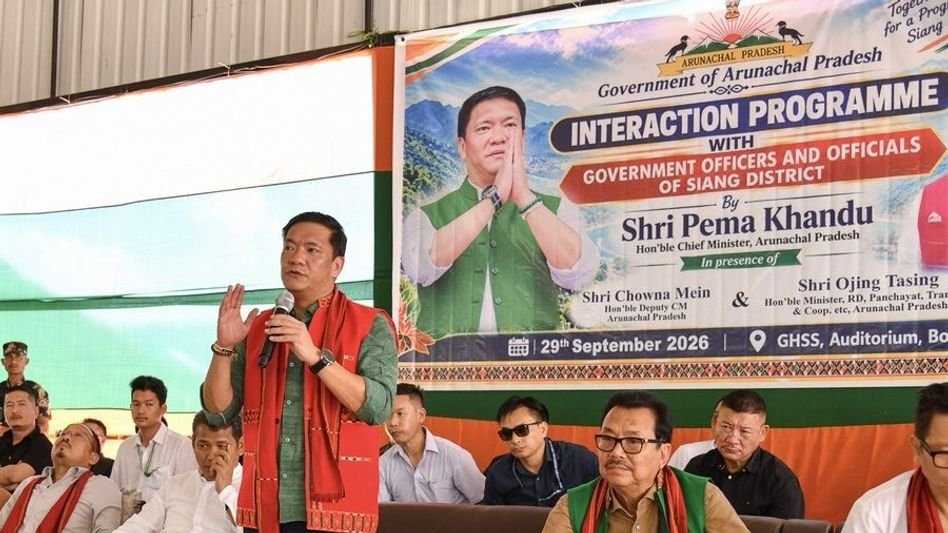
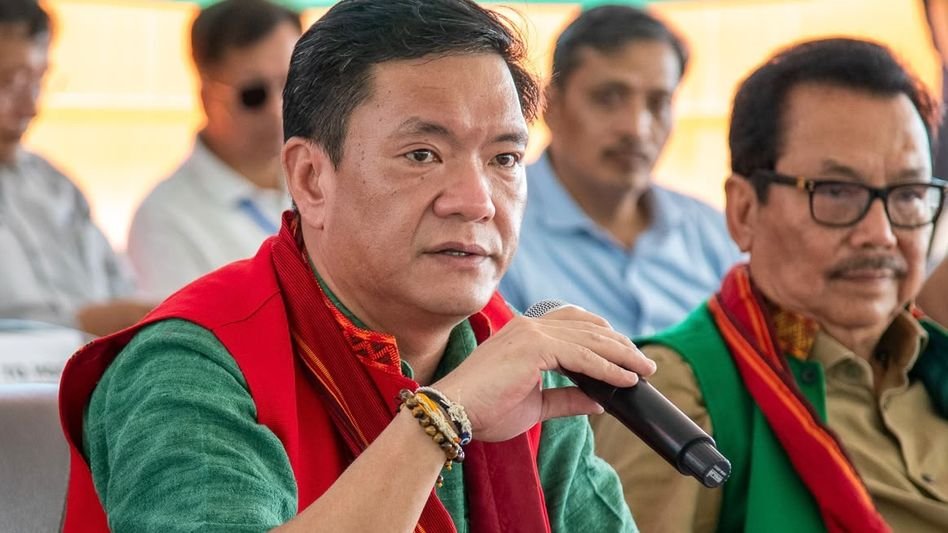
Arunachal Pradesh Chief Minister Pema Khandu said loud and clear on September 29 that the proposed Siang Upper Multi-Purpose Project, known as SUMP, will not move an inch forward unless the ongoing Preliminary Feasibility Report gives it the thumbs up. Speaking to government officials in Boleng, the headquarters of Siang district, Khandu left no room for ambiguity. “If the experts determine after the PFR that the project cannot be built, there will be no further process,” he said.
That’s a significant statement — and one the communities living along the Siang river have been waiting to hear.
The PFR is now the centrepiece of everything. It is expected to take three months — November, December, and January — to complete. And it’s not a routine paperwork exercise. The report will examine whether a massive structure can be safely built in a region classified as Seismic Zone V, one of the highest-risk earthquake zones in the country. It will also assess where exactly such a structure could stand and how it might protect downstream areas against a potential release of water from upstream. These are the hard, technical questions that need answers before anything else happens.
Khandu was clear — the science comes first, the politics comes later.
If the project clears that bar, the process shifts into a different gear. A Social Impact Assessment, an Environmental Impact Assessment, and a full Detailed Project Report would follow, all done within the framework of existing laws. No shortcuts. At least, that’s the promise.
What makes this project more than just a hydropower story is the strategic angle the CM brought up. He drew attention to a massive dam project China announced in 2021 on the upper reaches of the Brahmaputra. Both India and Bangladesh had sought discussions with China over water-sharing concerns — and were, notably, not accommodated. Khandu also mentioned water-diversion plans in China’s northern dry belt as a concern that needs to be seriously factored in. The Siang project, in his telling, isn’t just about megawatts. It’s about what happens when someone else controls the water tap upstream.
For the people of Siang, though, the more pressing concern is what happens to their land, their villages, and their lives. Khandu addressed that directly. He said that even a positive PFR would not bypass public consultations. Once a viable location is identified, the government would go village by village — through Gram Panchayats, community meetings, public hearings — and give people the information they need. And if those hearings establish that the project shouldn’t proceed, it won’t. That’s a strong commitment to hold him to.
Land acquisition and rehabilitation, he said, would be handled separately. Displaced communities would have a say in where they relocate. Landowners would receive compensation by the rules. And any resettled village would get roads, schools, electricity, and water — not just a new patch of ground.
The estimated investment figure he floated was staggering. Khandu put it at somewhere between Rs 1.5 lakh crore and Rs 2 lakh crore. If it ever gets built, the economic ripple effects — jobs in construction, transportation, quarrying, and supply chains — could be transformative for Siang’s young population.
Khandu also mentioned he plans to spend a week or ten days in the Siang region on his next visit, going door to door in villages to hear concerns himself. “My duty is to tell you everything. My duty is to listen to your questions. It is our responsibility,” he said.
Whether this project ever gets built is still an open question. But for now, the CM has made one thing very clear — no feasibility, no future. The river will have its say first.