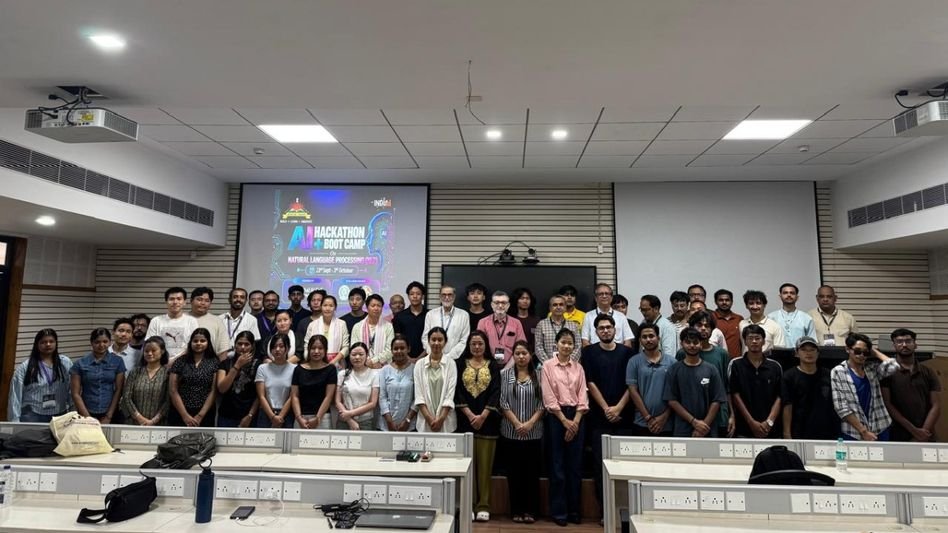

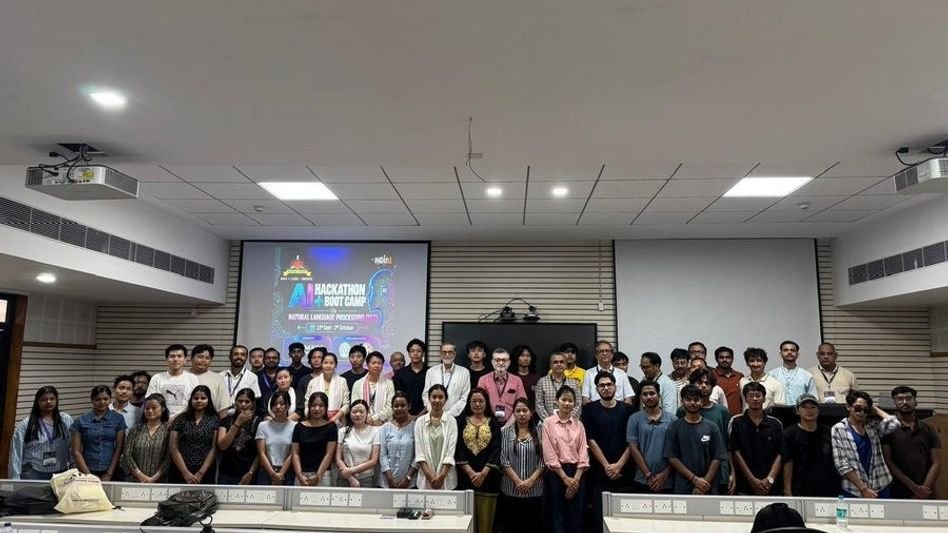
Forty young people from Arunachal Pradesh walked into IIT Guwahati on September 23 with something none of their predecessors ever had — a seat at the state’s very first AI Boot Camp. And Chief Minister Pema Khandu wants the world to know about it.
Khandu publicly praised the launch of the 10-day AI Boot Camp and Hackathon, describing it as a meaningful step toward building a future-ready digital workforce in a state that has historically been left behind in the technology race. The boot camp is being organised by the Arunachal Pradesh Centre of Excellence on Artificial Intelligence — better known as AI-CoE — at the prestigious IIT Guwahati campus.
The numbers alone say something. Out of 97 applicants who threw their names in, only 40 made the cut. That kind of competition for a programme in a northeastern state, where opportunities of this nature are still rare, signals a real hunger among young people to get into the tech space. You can’t ignore that.
What are they actually learning? The programme covers Artificial Intelligence, Machine Learning, Python programming and Natural Language Processing — essentially, the building blocks of modern AI development. Sessions are being led by domain experts and include practical exercises and one-on-one mentoring, not just classroom theory. The boot camp runs until October 1.
But the event doesn’t stop there. On October 2 and 3, participants will take part in a two-day Hackathon where they’ll go head-to-head solving real-world problems and building AI-driven solutions. That’s the part that matters most — not just learning the concepts, but actually doing something with them.
The initiative sits under the State Council of IT and eGovernance (SCITeG), operating through Arunachal Pradesh’s Department of IT and Communication. IIT Guwahati and NIT Arunachal Pradesh are collaborating on it, and the whole effort is being backed by the IndiaAI programme of the Ministry of Electronics and Information Technology. So this isn’t just a local experiment — it has national-level support and institutional weight behind it.
Khandu, in his remarks, said the programme would help build a stronger AI ecosystem in Arunachal Pradesh by enabling young people to learn, innovate and develop solutions that are actually relevant to the state’s needs. That last part is important. Tech education is one thing. Tech education that looks inward — at local problems, local contexts, local solutions — is something else entirely.
For a state that sits at India’s eastern frontier, often overlooked when it comes to digital infrastructure and tech investment, a programme like this carries more than symbolic weight. It plants a seed. These 40 participants aren’t just learning Python. They’re becoming the first generation of AI-trained minds that Arunachal Pradesh has ever produced — and that, quietly, is a big deal.
If the state nurtures what starts here, October’s hackathon might just be the first line of a much longer story.