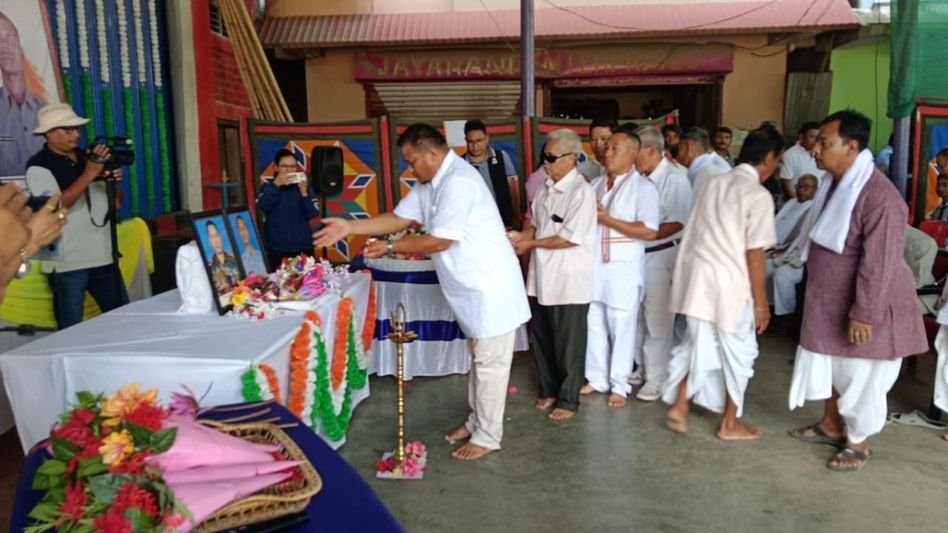

The Mebo area of East Siang finally has something it has long needed — a formal, unified platform where its young people can speak in one voice. On September 18, the Mebo Area Yameng Kebang, or MAYK, was officially constituted, bringing together youth representatives from villages spanning the stretch from Bodak to Mer and Sigar to Aohali. It was a moment that many in the community had been working towards for some time.
The gathering didn’t just produce another ceremonial body. Right there in the meeting, Indu Yommin was unanimously elected as MAYK’s first president. Kalen Pertin was appointed general secretary. The decisions were clean, swift, and carried the weight of consensus — exactly the kind of outcome you want when an organisation is trying to prove it’s serious from day one.
This wasn’t, however, a meeting that came out of nowhere. Groundwork had already been laid during earlier deliberations held at the ADC Conference Hall on August 16. By September 18, the participants had a clear enough direction to elect leadership and set out a concrete plan.
Bodong Yirang, Chief Advisor of the Adi Baane Kebang, was unanimously nominated to chair the September 18 meeting. His presence lent credibility and experience to the proceedings. Bogum Bokang Kebang President Nakmin Perme and senior social worker Gekong Pertin also sat at the table — figures whose involvement signals that MAYK has the backing of established community voices, not just youthful energy looking for an outlet.
The resolution adopted at the meeting was telling in its scope. MAYK has been constituted as a common and representative youth platform aimed at promoting peace, unity, welfare and the overall development of the Mebo area. Those words — peace, unity, welfare — aren’t just rhetoric when you understand how critical collective solidarity is in remote communities of Arunachal Pradesh, where infrastructure, resources and representation can be uneven.
There’s also a structural seriousness to how MAYK is being set up. The newly elected president and general secretary were authorised to constitute an Executive Body, with the specific condition that representation must be equitable from both Mebo Banggo and Monggu Banggo. That kind of deliberate inclusivity built into the founding charter is worth noting — it shows the organisation is thinking beyond just putting names in positions.
The next step will be drafting the organisation’s Constitution and Bye-laws, covering everything from objectives and membership to tenure of office-bearers, meetings and administrative procedures. Once complete, the document will be placed before a General Body Conference of Mebo area youth for deliberation and final approval. In other words, nothing is being handed down — it will go back to the people for a democratic mandate.
Perhaps one of the most genuine moments of the day came from Gekong Pertin, who voluntarily contributed ₹25,000 to the newly formed organisation. It’s a modest sum in the larger scheme of community development, but the symbolism of a senior figure putting his own money behind the youth’s initiative says something real about how this new body is being received.
The meeting closed with members pledging collectively to work towards peace, progress, welfare and development in the Mebo area. It’s easy to be cynical about such pledges. But MAYK arrives with structure, experienced mentors, a democratic foundation, and community backing — and that’s more than most new organisations start with. Whether it delivers will depend on what happens next. For now, Mebo’s youth have a seat at the table they built themselves.