
A young boy, barely old enough to be away from his parents, was found dead inside the premises of a government-run residential school in Arunachal Pradesh. And so far, there are more questions than answers.
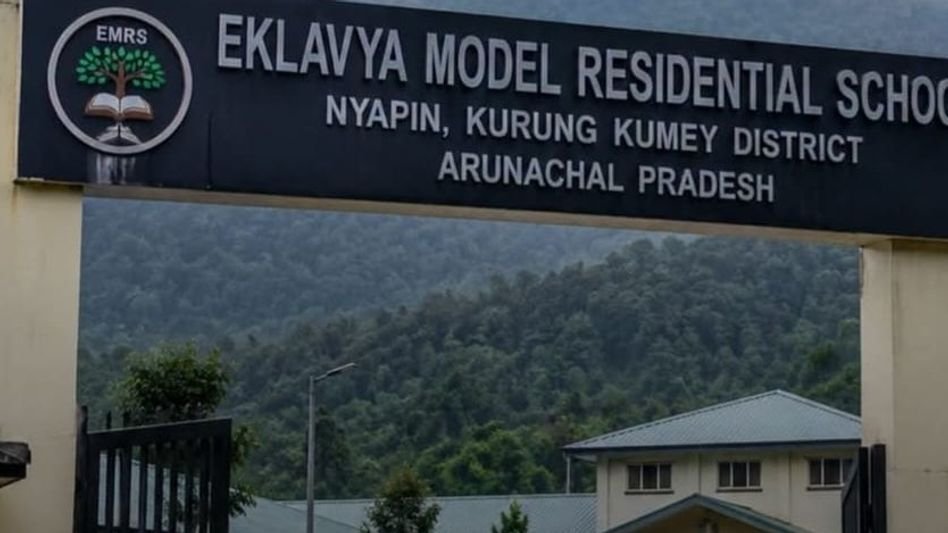
A Class 6 student of the Eklavya Model Residential School in Nyapin, located in the remote Kurung Kumey district, was discovered dead on the school campus on September 15. Police were alerted and a preliminary inquiry was set into motion. But that’s where the trail gets murky.
The family hasn’t filed an FIR. Without a formal complaint, police say their hands are legally tied — no official conclusion can be drawn, no case can be registered, no real investigation can move forward. The circumstances surrounding the child’s death remain, as of now, officially unknown.
Think about that for a moment. A child enrolled in a school meant to uplift tribal communities — a school built specifically to give students like him a future — is found dead. And the system is waiting on paperwork.
Eklavya Model Residential Schools, run under the Ministry of Tribal Affairs, were designed with a clear purpose: to provide quality education to children from Scheduled Tribe communities in remote regions of the country, giving them the kind of opportunity their geography might otherwise deny them. Parents in places like Kurung Kumey — one of Arunachal Pradesh’s most isolated districts, tucked deep in the hills — send their children to these schools with enormous hope and enormous trust. That trust is not a small thing. Sending a young child away to live in a boarding school, far from home, takes courage and faith.
What happened inside that campus, though, remains shrouded in uncertainty.
Police confirmed they conducted a preliminary inquiry but stopped short of any formal investigation. Their statement made one thing clear — without the family formally lodging a complaint, no conclusions can be officially drawn about how the student died. It is standard legal procedure, yes. But standard procedure has a way of feeling very hollow when a child’s body is at the center of it.
The Nyapin area in Kurung Kumey isn’t exactly easy to reach. It’s the kind of district where news travels slowly, where accountability often moves even slower, and where vulnerable families may not always know their rights or feel empowered to exercise them. Whether that’s a factor in the family’s silence, or whether there’s grief so raw it simply hasn’t translated into a formal complaint yet — that’s something we don’t know.
What we do know is this: a 11 or 12-year-old child is dead. He was under the care of the state. And the state currently has no official explanation for why.
Civil society groups, local organizations, and child rights activists in Arunachal Pradesh would do well to step in right now — not tomorrow, not next week. The family needs to be informed of their rights, needs to be supported, and the administration running this school needs to be held to account in a transparent way. Residential schools carry a duty of care that cannot be shuffled aside behind procedural language.
A child’s death on school grounds cannot just quietly fade into the hills. Someone must answer for what happened in Nyapin.