
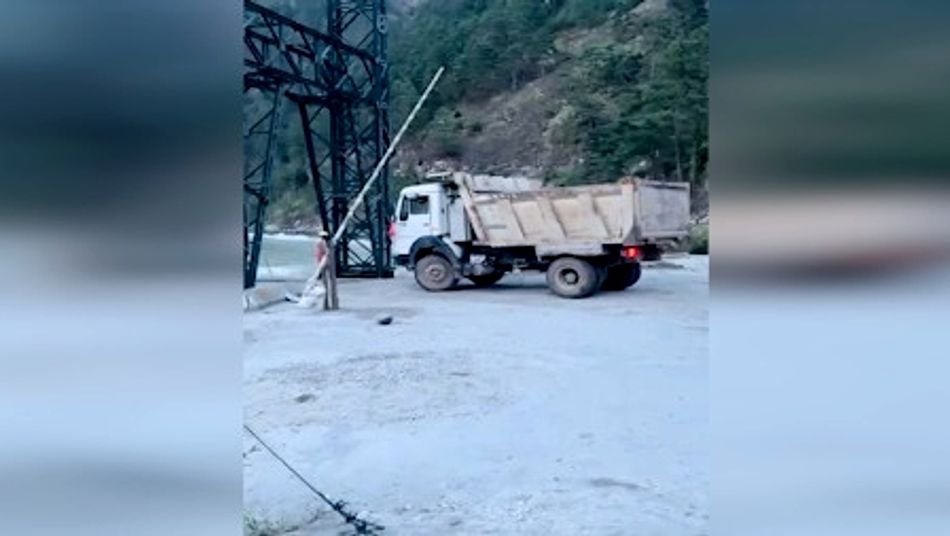
It took one reckless truck driver, and suddenly some of India’s most remote villages were cut off from the world. It took the Army and BRO eight relentless days to bring them back.
A critical Bailey bridge in Arunachal Pradesh’s Anjaw district — one that quietly holds together the lifeline of India’s easternmost frontier — has been restored and reopened, officials confirmed on September 14, 2026. The relief it brings is hard to overstate.
The KKG-BSB Bridge at Krowti, commonly known as the Karoti Bridge, sits in the Kibithoo Circle and stretches across the Lohit River. It doesn’t look like much on a map. But for the villages of Kaho, Musai, and Dong — communities perched right up against the Line of Actual Control with China — this bridge is essentially everything. It is their road to medicine, to supplies, to the outside world.
The trouble started when an overloaded truck carrying sand attempted to cross the steel suspension bridge and got stuck mid-way. Just like that. A single act of carelessness in one of the most sensitive border zones in the country, and the structure’s stability was thrown into serious question. Authorities had no choice but to shut it down completely.
For eight days, those forward villages were left without their primary surface link. In a region where terrain is already brutal and weather unforgiving, that kind of disconnection hits fast and hard. There are no alternative shortcuts in Kibithoo. The Lohit River doesn’t care about urgency.
What happened next, though, is the kind of thing that rarely makes front pages but absolutely should. Teams from the Indian Army and the Border Roads Organisation moved in and worked continuously — not in comfortable shifts, not under ideal conditions, but the way people work when they know communities are depending on them. Eight days of restoration under pressure, in a remote high-altitude zone near the China border.
On September 9, 2026, the bridge was declared safe again — at least for light and small vehicles. That declaration alone must have been a moment of genuine relief in villages like Dong, which holds the distinction of being home to the first sunrise point in India. These are not just strategic locations. Real families live here. Real people were waiting.
To be clear, the work isn’t entirely done. Technical assessments of the bridge structure are still ongoing, and strict weight restrictions remain in place. Authorities are being careful — and they should be. The bridge has to be trusted again, not just declared open. That trust is built slowly and precisely, and there’s no room for error this close to the LAC.
Still, the reopening signals something important. In a part of the country where geography has always made governance difficult, the Army and BRO’s response time and commitment stand out. No major fanfare, no long press conferences — just teams on the ground, tools in hand, getting a damaged bridge back up in eight days.
For the people of Kibithoo’s forward villages, the sound of vehicles crossing the Karoti Bridge again is probably the only announcement they needed.