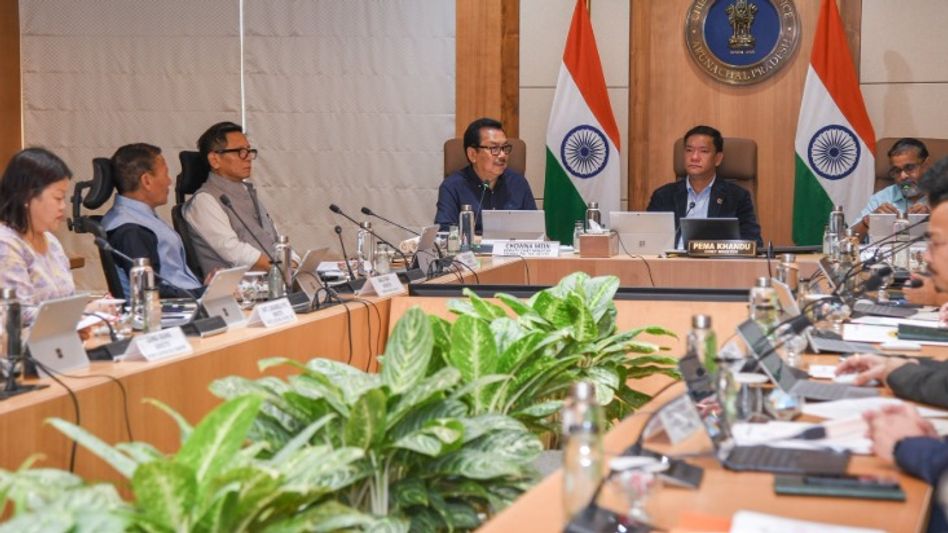
The Arunachal Pradesh government just made it clear — it is no longer willing to treat healthcare and drug abuse as two separate problems.
In a packed Cabinet meeting chaired by Chief Minister Pema Khandu on July 17, the state approved three sweeping initiatives that could genuinely reshape how Arunachal handles public health. It was one of those rare days where the decisions on the table actually matched the scale of the problems on the ground.
CM CARES: One Roof for Everything Health
The Cabinet launched CM CARES — which stands for Chief Minister’s Comprehensive Action for Resilient, Equitable and Healthy State — as an umbrella programme to integrate healthcare, social protection and citizen welfare schemes across the state. Think of it as the government finally deciding to stop running siloed schemes and bring everything under one coherent framework. Under CM CARES, the government will strengthen flagship schemes including the Chief Minister Arogya Arunachal Yojana, Chief Minister Organ Transplant Services, CM HELPS, Chief Minister Free Chemotherapy Services and the Chief Minister Social Security Schemes. The Cabinet also approved an increase of Rs 2.5 lakh each in financial assistance for kidney, liver and bone marrow transplants under CMAAY, over and above existing coverage. The expanded package will also include specialised procedures such as cochlear implantation and corneal transplantation, while new patient support facilities including guest houses and referral support services will be established.
Fighting Drugs With a Mission, Not Just Meetings
The Cabinet also approved Mission SURAKSHA — State Unified Response Against Drugs, Substance Harm and Addiction — a comprehensive mission-mode programme to address substance abuse and its impact on public health, youth, families and communities. That name is deliberate. This is a mission, not a committee. The mission will function through three key pillars — Demand Reduction, Harm Reduction and Supply Reduction. To strengthen implementation, the Cabinet approved the formation of district-level task forces, SATARK mechanisms, Sankalp community reporting systems and rapid response flying squads. The inclusion of flying squads tells you they mean business at the enforcement level too.
30 Days, Every Village, One Goal: TB-Free Arunachal
The Cabinet also approved the launch of Ayushman Aarogya Shivir, a 30-day state-wide integrated health campaign aimed at improving access to healthcare services, particularly in remote and geographically challenging areas. For a state where some villages are still days away from the nearest hospital, this kind of on-ground outreach is not optional — it is essential. The health camps will bring multiple services under one platform including tuberculosis screening and treatment, maternal and child healthcare, immunisation, screening for non-communicable diseases, mental health services, eye and oral healthcare, elderly care, nutrition services, AYUSH treatment and Ayushman Bharat enrolment.
Everyone Has a Role to Play
The Cabinet appealed to Members of the Legislative Assembly, panchayat representatives and municipal bodies to adopt tuberculosis patients under the Ni-kshay Mitra initiative to strengthen community support and accelerate the state’s tuberculosis elimination efforts. That is a significant ask — and a smart one. Policy only travels so far without people who are trusted at the village level pushing it forward.
Three big programmes. One Cabinet meeting. The real question now is whether the government can back up the ambition with delivery where it counts most — in the hills, the valleys and the villages that these schemes were always meant to reach.
HASHTAGS
#ArunachalPradesh #CMCares #MissionSURAKSHA #PemaKhandu #ArunachalCabinet #HealthcareArunachal #DrugAbuse #SubstanceAbuse #TBFreeArunachal #AyushmanAarogyaShivir #NortheastIndia #ArunachalNews #PublicHealth #CMAAY #NiKshayMitra #YouthAndHealth #DrugFreeArunachal #AbotaniTV #ArunachalGovernment #HealthForAll