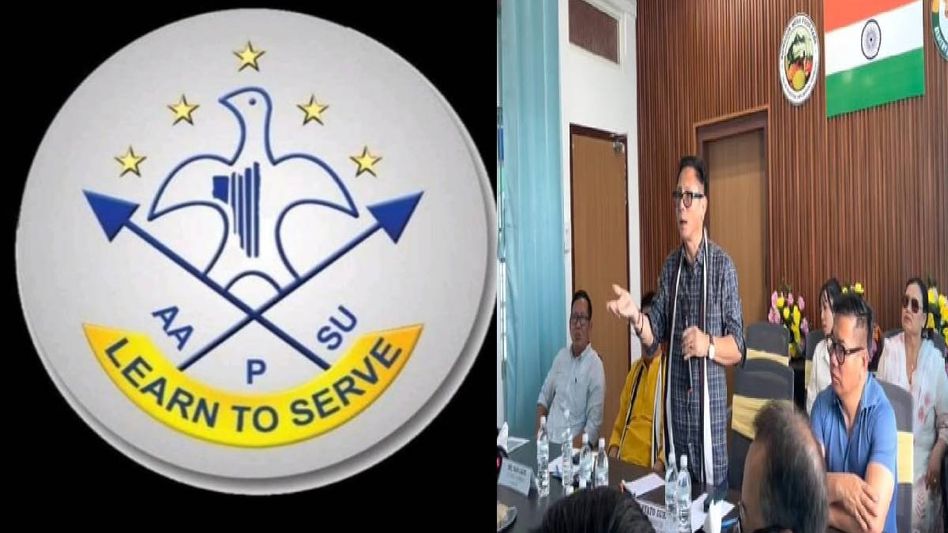
When a minister who’s supposed to lead the charge on reservation reform starts sounding like the opposition — people notice. And in Arunachal Pradesh, the students’ union has had enough.
The All Arunachal Pradesh Students’ Union (AAPSU) came out swinging on July 11, issuing a sharp public rebuke against Minister Nyato Dukam over his recent remarks on the state’s 80:20 job reservation policy. Not only did the union brand his comments as “immature” and “irresponsible” — it gave him a hard 12-hour deadline to issue a public clarification and apologise. No ambiguity. No room for diplomatic wiggle.
What Exactly Did Dukam Say?
The controversy stems from Dukam’s own cautionary remarks, in which he warned that any attempt to change the 80:20 reservation ratio could invite legal challenges and potentially result in the entire reservation framework being struck down by courts. On the surface, it might sound like a minister doing his due diligence. But here’s the problem — Dukam himself chairs the state government committee set up to examine the very demand to abolish this ratio. That’s the part that truly angered AAPSU. You don’t appoint someone to review a policy and then have them publicly undermine the review before it’s even concluded.
“Fear-Mongering” That Hit a Raw Nerve
AAPSU didn’t hold back. The union alleged that Dukam’s public statement, coming right at the time AAPSU was holding its own press briefing on the issue, created an unmistakable impression of hostility. They argued his remarks had demoralised those advocating for a review of the reservation policy and had raised unnecessary alarm among the public rather than offering legal clarity. AAPSU President Meje Taku put it plainly — the minister was spreading fear instead of building confidence in the process. Taku went further, asserting that neighbouring states have maintained similar reservation structures for decades without courts intervening.
The Constitutional Argument
This isn’t just political posturing. AAPSU grounded its position in constitutional text, pointing to Articles 15(4) and 16(4), which explicitly empower state governments to make special provisions for Scheduled Tribes. The union maintained there is no legal impediment to revising the existing ratio to better reflect Arunachal Pradesh’s overwhelmingly indigenous tribal population. The demand to abolish the 80:20 policy, AAPSU insists, is not just valid — it is constitutionally protected.
A Non-Negotiable Demand
AAPSU made its position crystal clear — the abolition of the 80:20 reservation ratio is its foremost and non-negotiable demand. They urged the state government to ensure the committee functions with diligence and seriousness. As for Dukam, the union wants two things: a retraction and an apology. Whether he delivers either within the given window remains to be seen.
What is clear, though, is that this issue cuts to the heart of what indigenous Arunachalis feel about their political representation, economic opportunities, and the pace of change. When a minister tasked with examining reform becomes the loudest voice against it — the people asking for that reform will push back. Hard.
HASHTAGS:-
#AAPSU #ArunachalPradesh #NyatoDukam #ReservationPolicy #8020Reservation #MejeTaku #IndigenousRights #ScheduledTribes #ArunachalNews #TribalRights #StudentUnion #ReservationReform #NortheastIndia #ArunachalPolitics #AbotaniTV #TribalCommunity #ApologyDemand #ConstitutionalRights #NortheastNews #ArunachalIndigenous