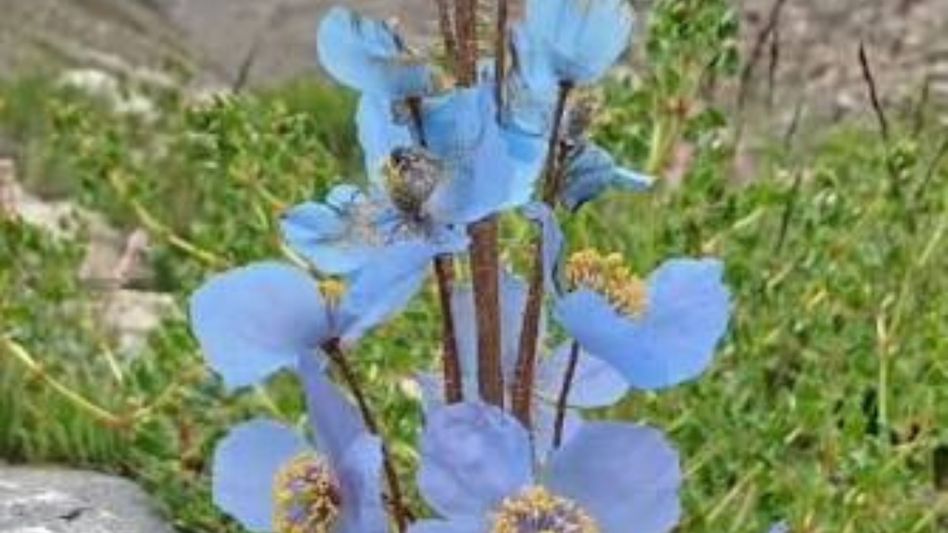
A tiny purple-blue flower hiding at 3,600 metres in the mountains of Tawang just rewrote a chapter of India’s botanical history — and it had been missing for 158 years.
Lost Since 1867, Found in Tawang
Cyananthus hookeri, a rare Himalayan flowering plant, has been rediscovered in Arunachal Pradesh’s Tawang district — marking its first confirmed sighting in India since the legendary British botanist Joseph Dalton Hooker last documented it in Sikkim back in 1867. That’s not just a long time. That’s nearly a century and a half of silence. The fact that this delicate little flower survived all those decades, somewhere in the folds of the Eastern Himalayas, quietly blooming without anyone noticing — that’s almost hard to believe.
BSI Scientists Made the Discovery Near Mago Village
Scientists from the Botanical Survey of India (BSI) recorded the species during a field survey near Chuna Valley, close to Mago village, at an altitude of about 3,600 metres. The survey was carried out in September 2025, and the findings have since been published in Oryx, an internationally recognised conservation journal. The team — BSI researchers Subhajit Lahiri, Monalisa Das, and Sudhansu Sekhar Dash — deserve a lot of credit for this. Field surveys at that altitude, in those conditions, are no small feat.
Fewer Than 50 Plants — And Already on the Edge
Here’s the sobering part. During the survey, scientists found fewer than 50 mature plants growing on alpine grassy and rocky slopes. Fifty. That’s it. The plant belongs to the bellflower family, Campanulaceae, and its striking purple-blue blooms are as beautiful as they are rare. Based on its small population and restricted distribution, the researchers have recommended that Cyananthus hookeri be classified as Endangered in India under IUCN criteria. The species does exist in Bhutan, China, and Nepal, but within India, finding it at all is extraordinary.
What This Means for Arunachal’s Biodiversity
Arunachal Pradesh Deputy Chief Minister Chowna Mein described the rediscovery as a significant milestone for India’s botanical heritage, saying it highlights the state’s extraordinary biodiversity and reinforces the need to conserve its fragile Himalayan ecosystems. And he’s right to say so. Arunachal is part of the Eastern Himalaya biodiversity hotspot — one of the most ecologically rich zones on Earth. Every new or rediscovered species here adds another reason to protect these landscapes before development swallows them whole.
A Reminder Hidden in the Mountains
Nature has a quiet way of reminding us that we haven’t seen everything yet. A flower that slipped out of scientific records before India was even independent just turned up again, clinging to a rocky alpine slope in Tawang. It waited. And now the question is whether we’ll do our part to make sure it doesn’t disappear again — this time for good.
— Naitik Abotani TV
─────────────────────────────
#ArunachalPradesh #RareFlower #CyananthusHookeri #Tawang #HimalayanFlower #BSI #BotanicalSurveyOfIndia #Biodiversity #EasternHimalaya #PlantDiscovery #IndiaScience #WildlifeConservation #ArunachalBiodiversity #EndangeredPlants #NatureIndia #TawangValley #BotanyIndia #HimalayanEcosystem #NortheastIndia #AbotaniTV