
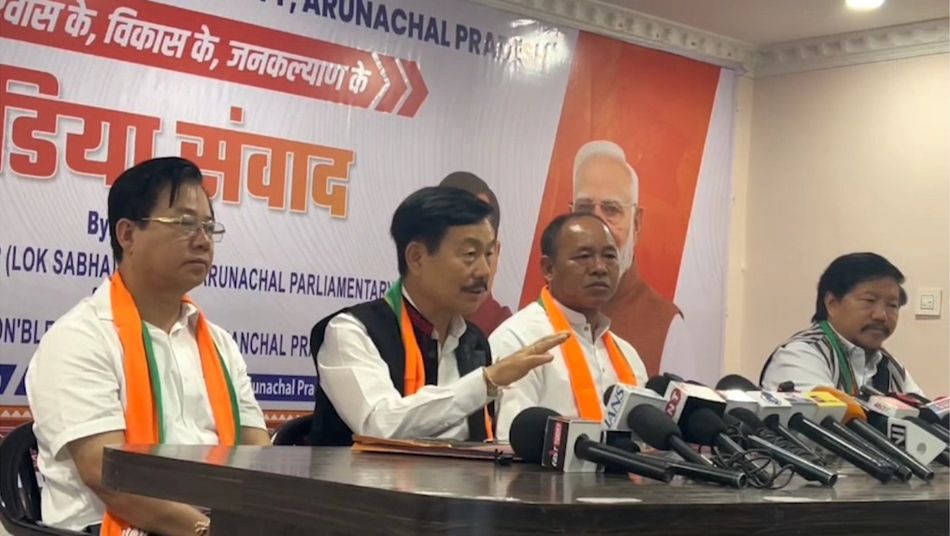
Arunachal East MP Tapir Gao has addressed ongoing discussions around the Tapir Gao APFRA remarks, stressing that the Arunachal Pradesh Freedom of Religion Act serves to protect identities without targeting any faith. His comments come as efforts continue to frame implementation rules for the long-standing legislation.
At a glance
- Tapir Gao serves as Arunachal East MP and represents the BJP.
- He states APFRA is neither against nor in favour of any religion.
- A High-Power Committee has submitted draft recommendations for the Act’s rules.
- Gao urges the Arunachal Christian Forum to refrain from organising protests.
- The legislation aims to provide a legal framework for religious identity and documentation.
Timeline of Recent Developments
On June 11, 2026, Tapir Gao responded to media queries about the contentious legislation. He highlighted the work of the High-Power Committee, which has already submitted its draft recommendations for framing the rules of the Arunachal Pradesh Freedom of Religion Act, originally enacted in 1978.
Gao’s intervention follows debates sparked by government moves to implement rules for the Act. Various civil society organisations and religious groups have shared differing perspectives on its potential effects.
What Officials Say About the Act’s Purpose
According to Gao, the Act focuses on safeguarding religious identities across communities. He clarified that the draft rules contain no provisions for applying the law differently to indigenous versus non-indigenous groups.
The MP described the legislation as a tool to create proper documentation of the religion individuals follow and preach. This framework, he noted, helps maintain clarity without favouring or opposing specific faiths.
Context (general): Laws related to freedom of religion exist in several Indian states and often aim to regulate conversions while protecting cultural identities. Readers should refer to official government notifications for complete legal details.
Key Statements from Tapir Gao
Gao directly addressed concerns from sections of the Christian community. He called on the Arunachal Christian Forum to avoid rallies or protests against the Act’s implementation.
He reiterated the BJP’s commitment to inclusive development under the principle of “Sabka Saath, Sabka Vikas.” The MP emphasised viewing the Act through a non-religious and non-political lens.
Official Response and Next Phase
The source reports that the High-Power Committee has completed and submitted its draft recommendations. However, the source did not specify the exact timeline for final rule notification or enforcement.
Gao’s remarks seek to reassure communities that the law intends to protect identity rather than create division.
Why This Matters for Arunachal Pradesh
Discussions around the Tapir Gao APFRA statements highlight broader questions about balancing religious freedom with the preservation of local identities in a diverse northeastern state. The 1978 Act has returned to public attention due to renewed efforts to operationalise it through formal rules.
Such conversations can influence community trust, administrative processes, and social harmony. Clear communication from leaders often helps reduce misunderstandings during periods of policy clarification.
Key Facts Summary
| Item | Details |
|---|---|
| Date | June 11, 2026 |
| Duration | Not specified (single-day media response) |
| Location | Arunachal Pradesh |
| Organizer/Speaker | Tapir Gao (Arunachal East MP, BJP) |
| Main issue raised | Implementation of APFRA rules |
| Official response | Act protects identity; no bias against religions; urge to avoid protests |
| Reported impact | Source did not specify disruptions to daily life, transport, or services |
What Residents and Businesses Should Expect Next
- Continued public discussion as rules are reviewed following the High-Power Committee’s submission.
- Possible official notifications from the state government on the finalised rules (The source did not specify exact dates).
- Further statements from community groups and leaders in response to the MP’s appeal.
- Focus on dialogue rather than protests, as urged by Gao.
- Monitoring of government channels for updates on the Act’s implementation framework.
The source did not specify any immediate changes to public services, schools, or business operations.
Moving Forward with Clarity
The recent Tapir Gao APFRA comments underscore efforts to frame the 1978 legislation as a neutral measure for religious documentation and identity protection. By urging the Arunachal Christian Forum to avoid protests, the MP has called for calm engagement during the rule-framing stage. As the draft recommendations move ahead, transparent communication will remain essential for all stakeholders in Arunachal Pradesh.